A banal iced coffee cup, a disposable plastic object that here becomes a tool for transformational games. Hot wax is poured into the cup, where it spreads uncontrollably and solidifies into amorphous, partly landscape-like, partly figurative forms. This practice recalls the New Year's custom of lead or wax pouring, in which meanings and visions of the future are read into accidental formations. The shapes are complemented by casts of rounded iced coffee lids translated into wax hemispheres, joined with the first pour to form a sculptural object. Subsequently, these are cast in bronze. As a heavy object held in the hand, the bronze evokes a globus cruciger ("cross-bearing orb"), the medieval symbol of Christian dominion over the world. At the same time, they reference traditional Korean Suseok stones,—ready-made found objects that invite the contemplation of landscapes, objects, or abstract forms in miniature. The work invites to reflect on everyday coffee waste to broader systems of consumption, labor, belief, and extraction.
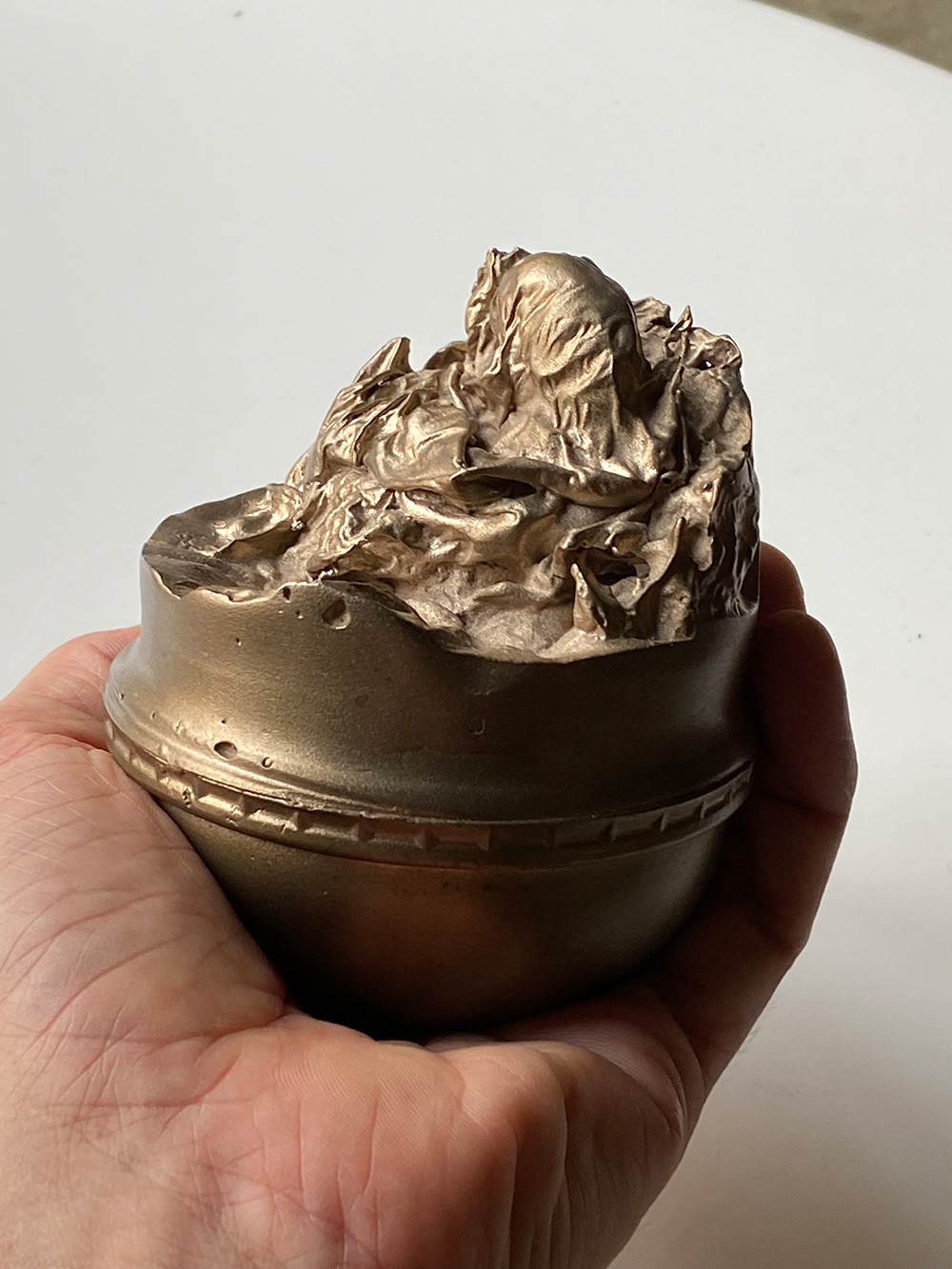
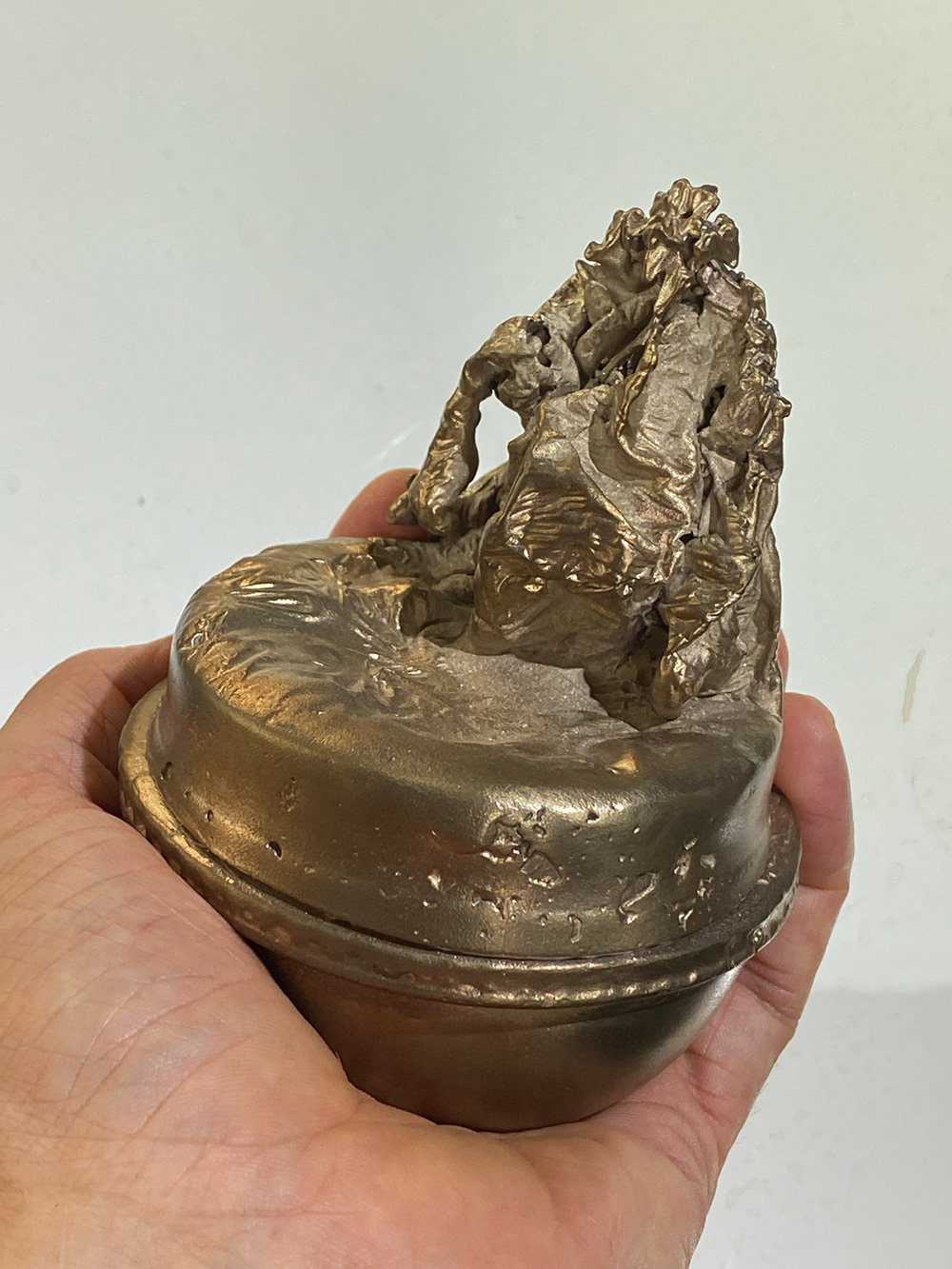


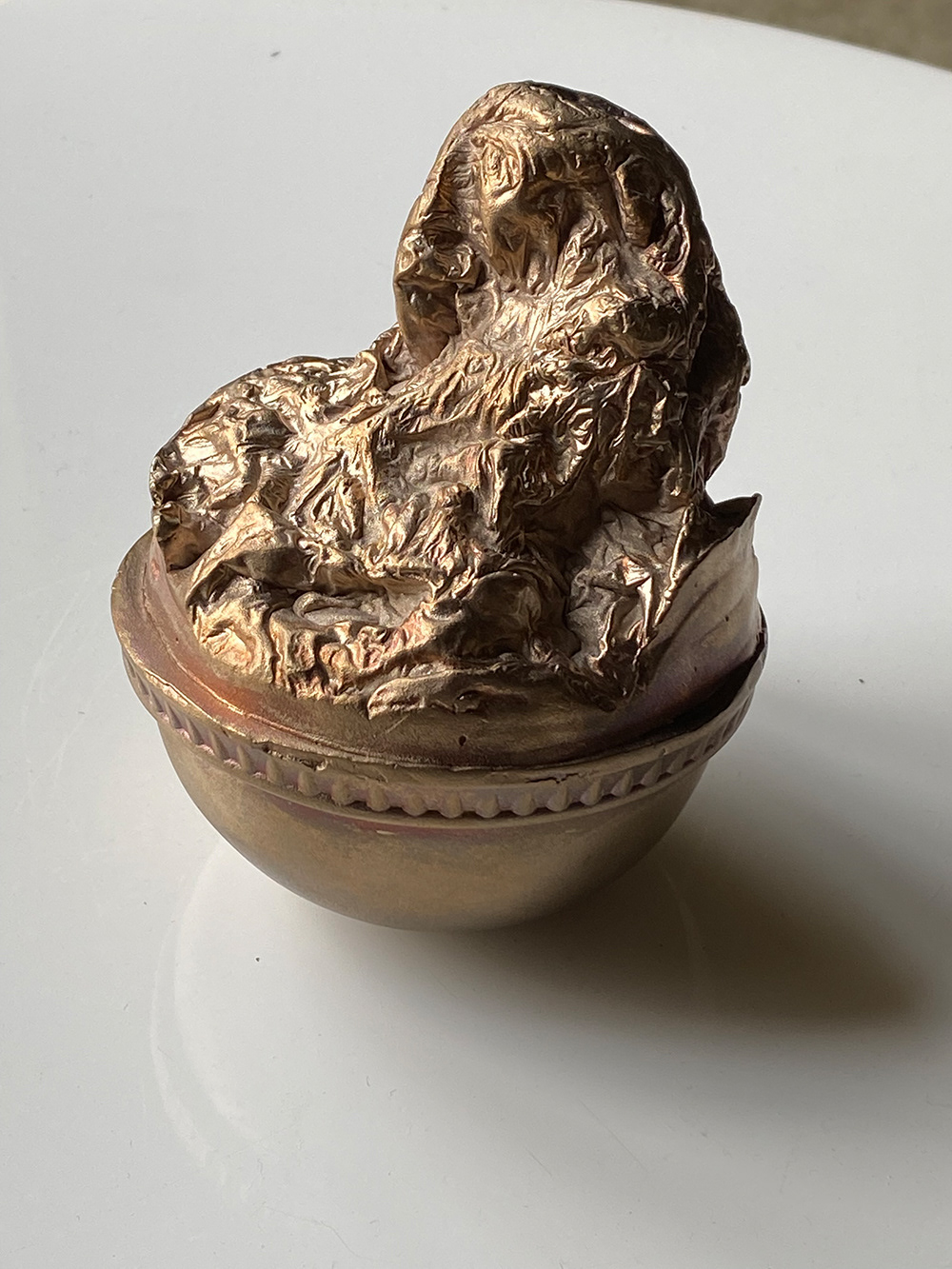

studio view