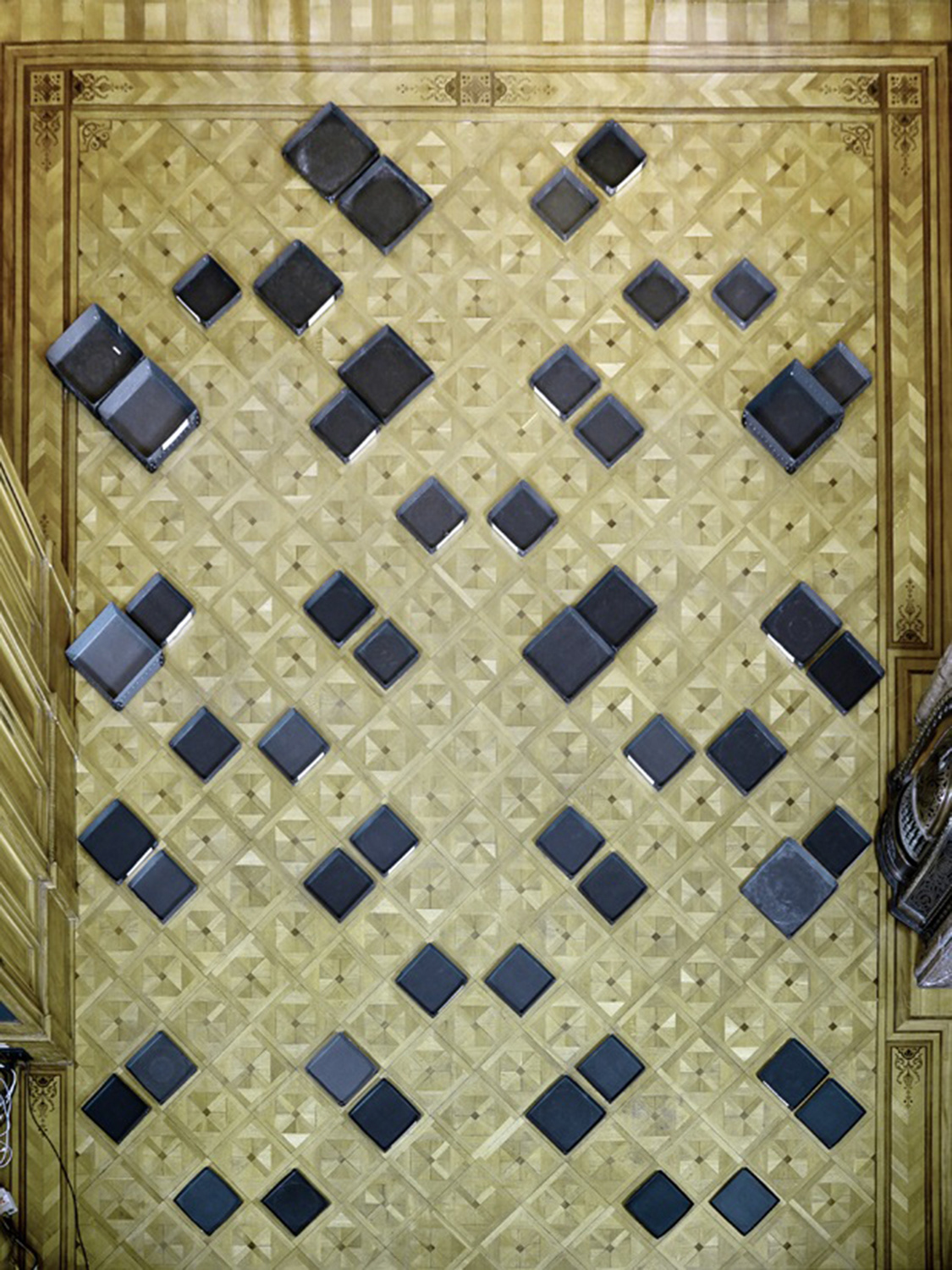
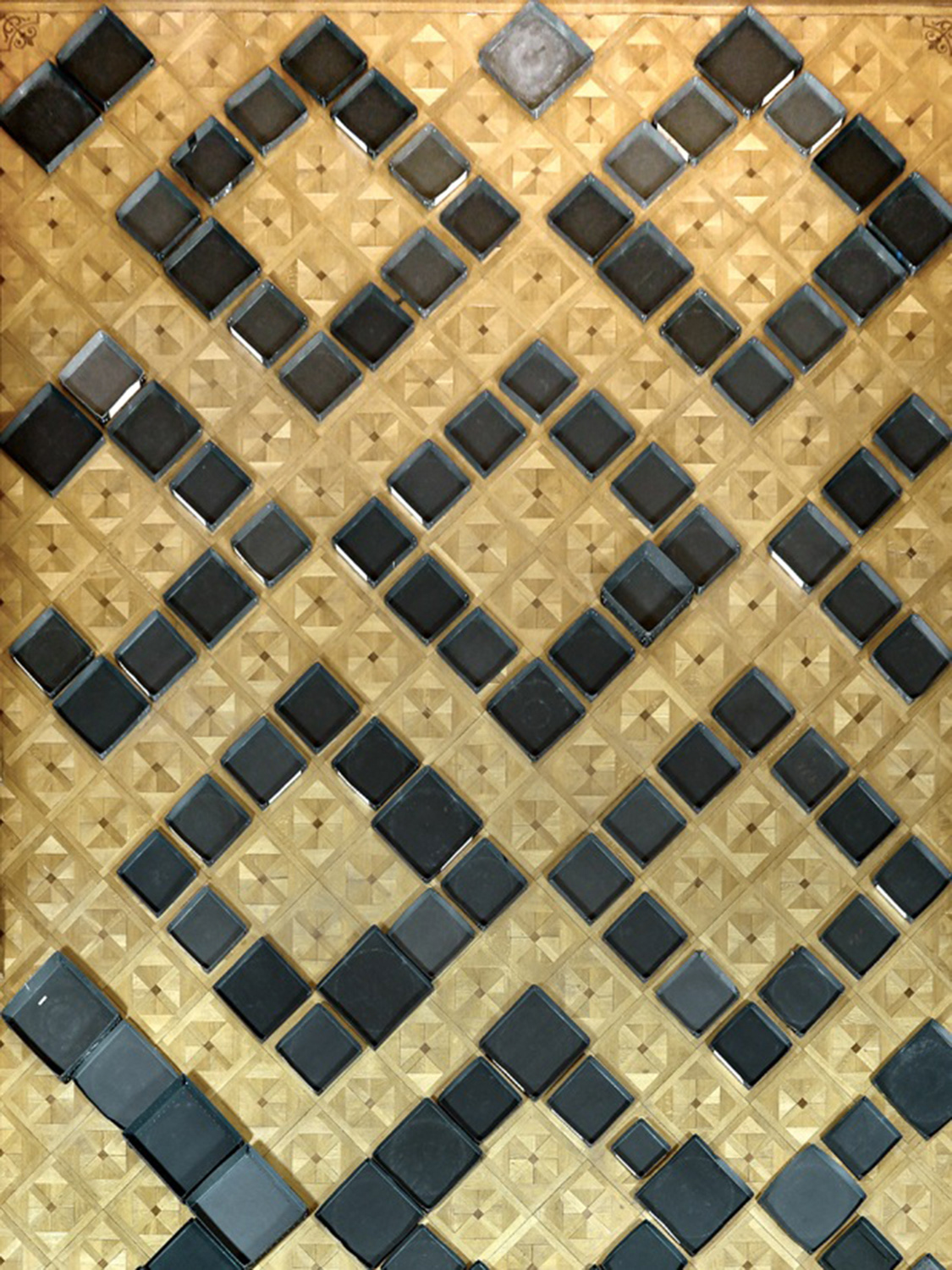
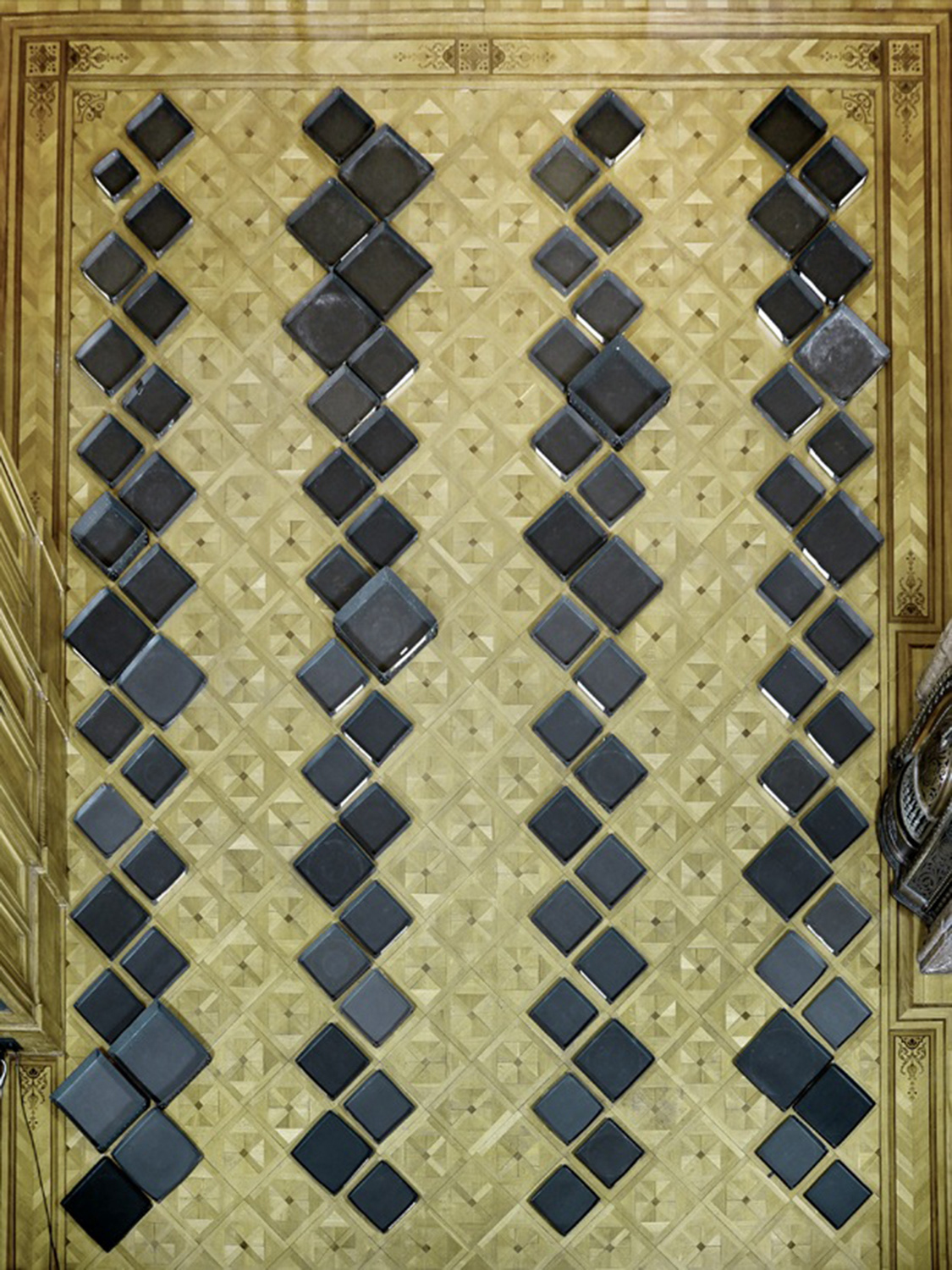
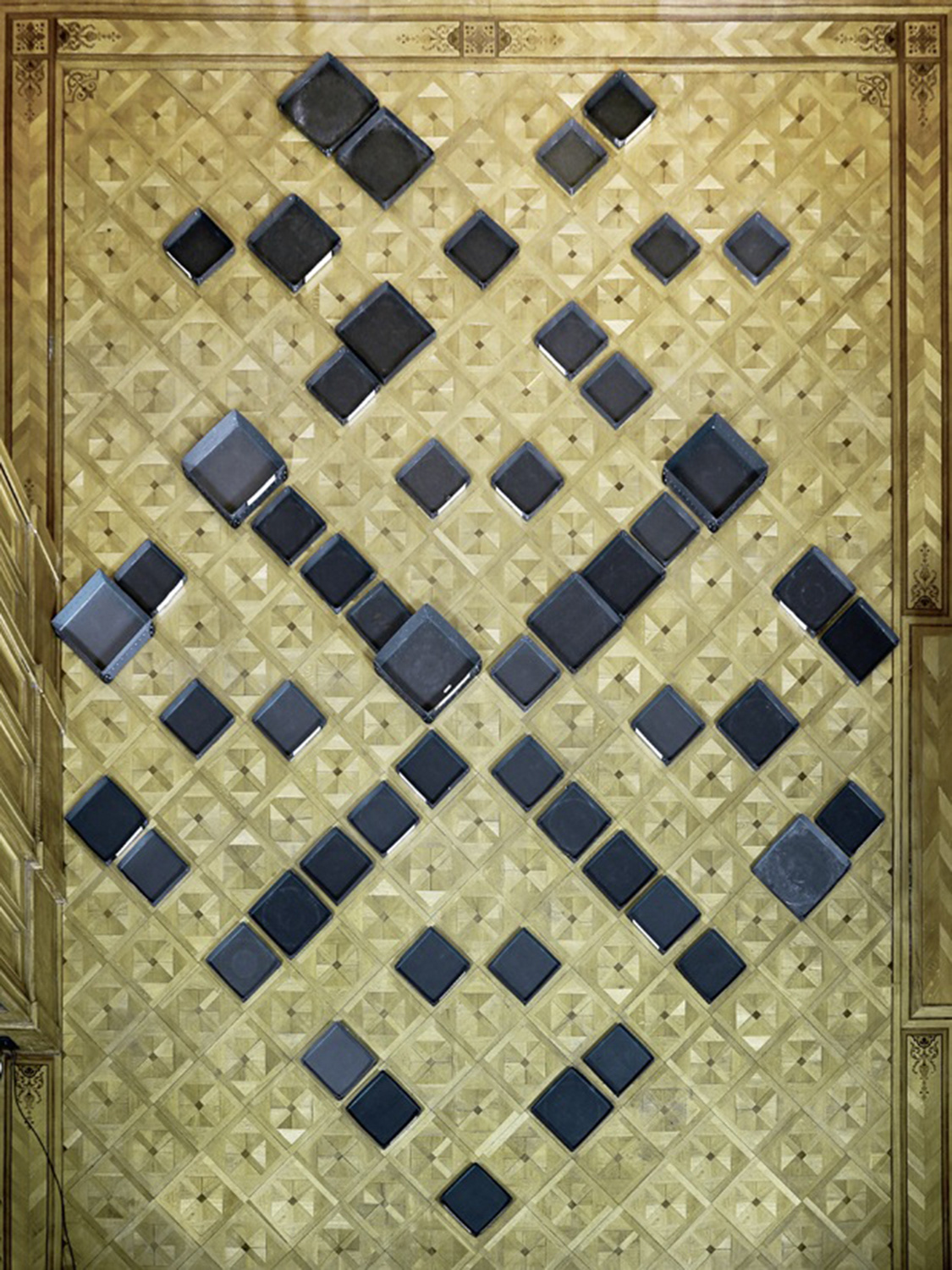
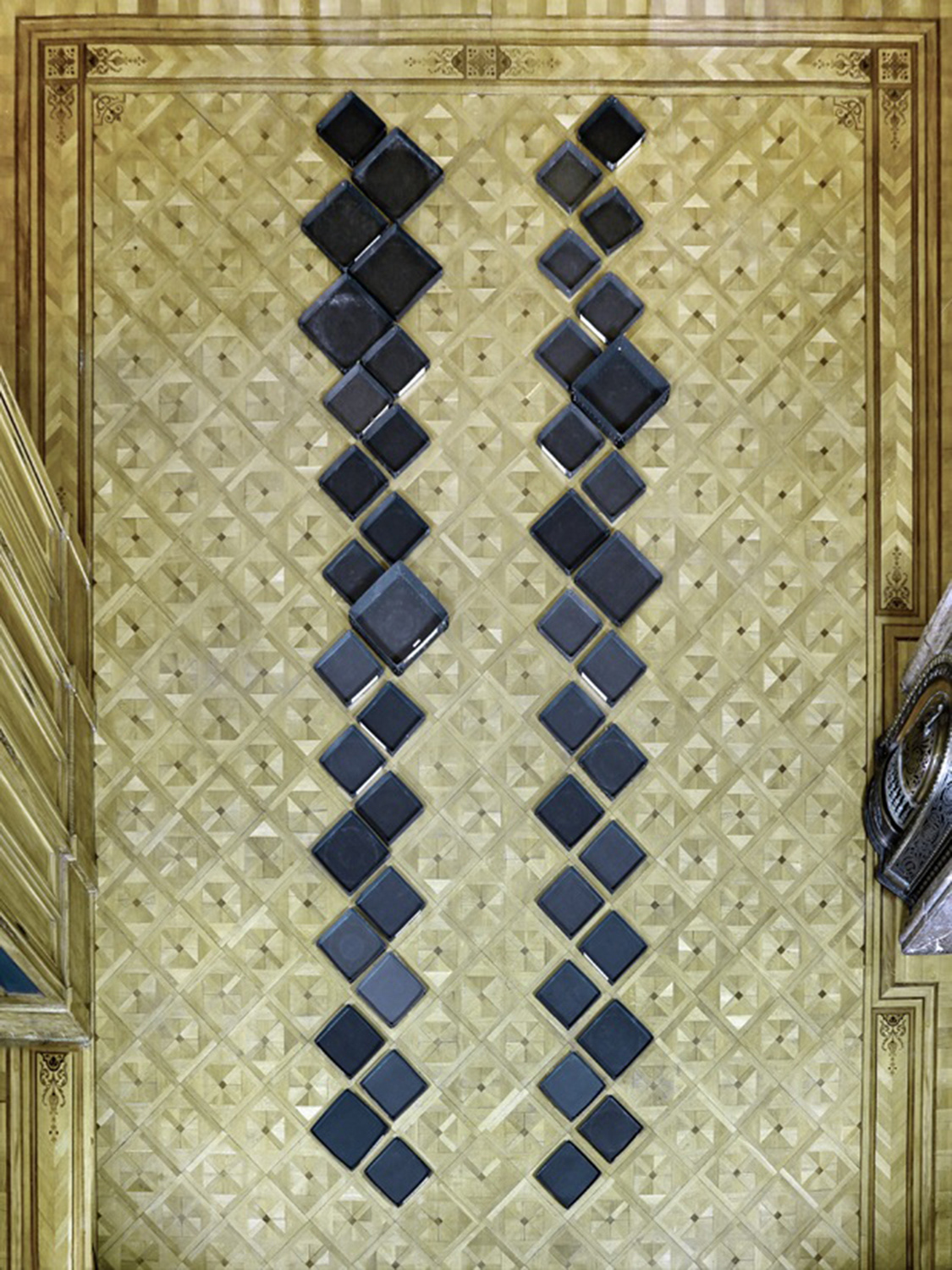
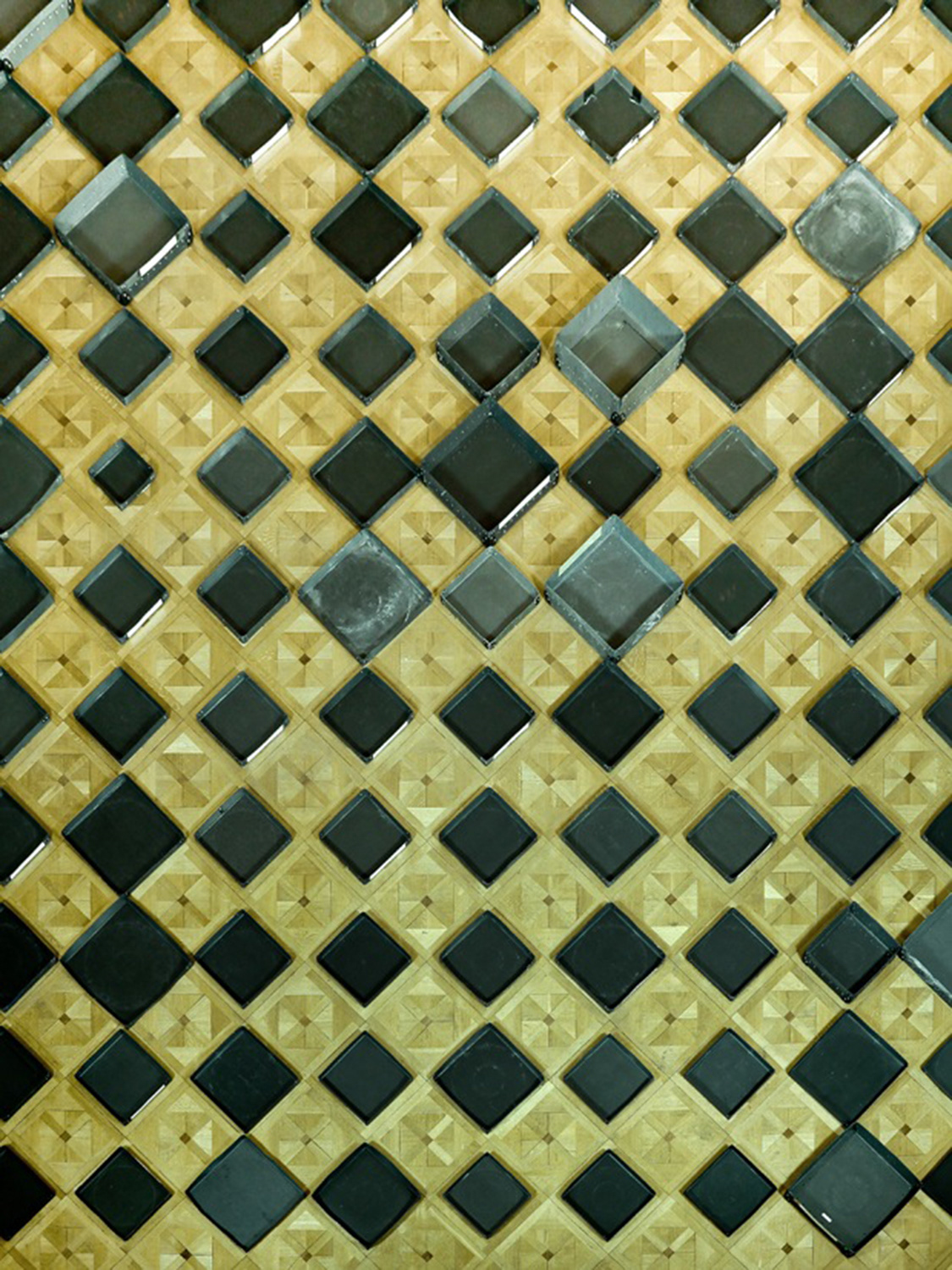
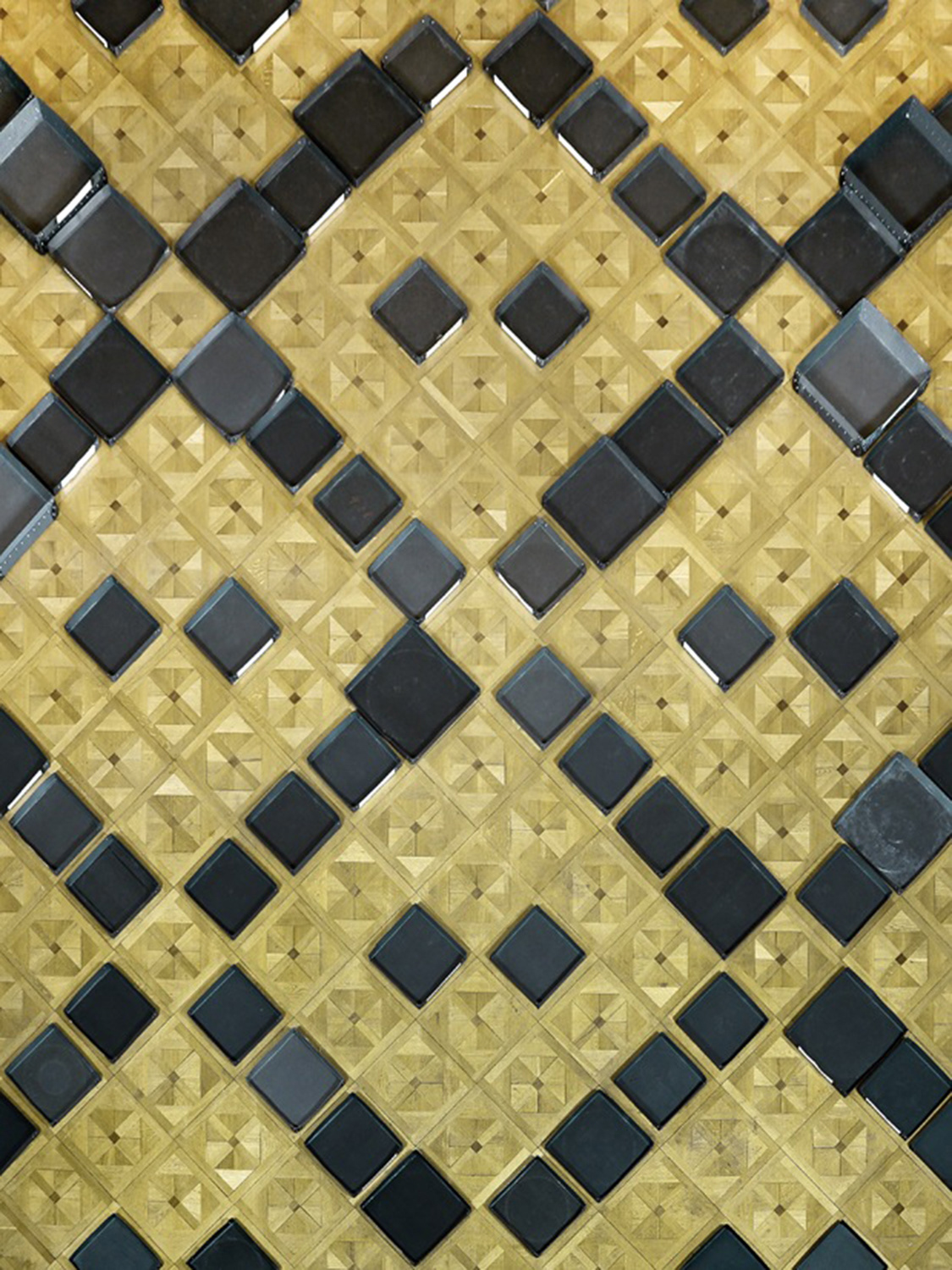
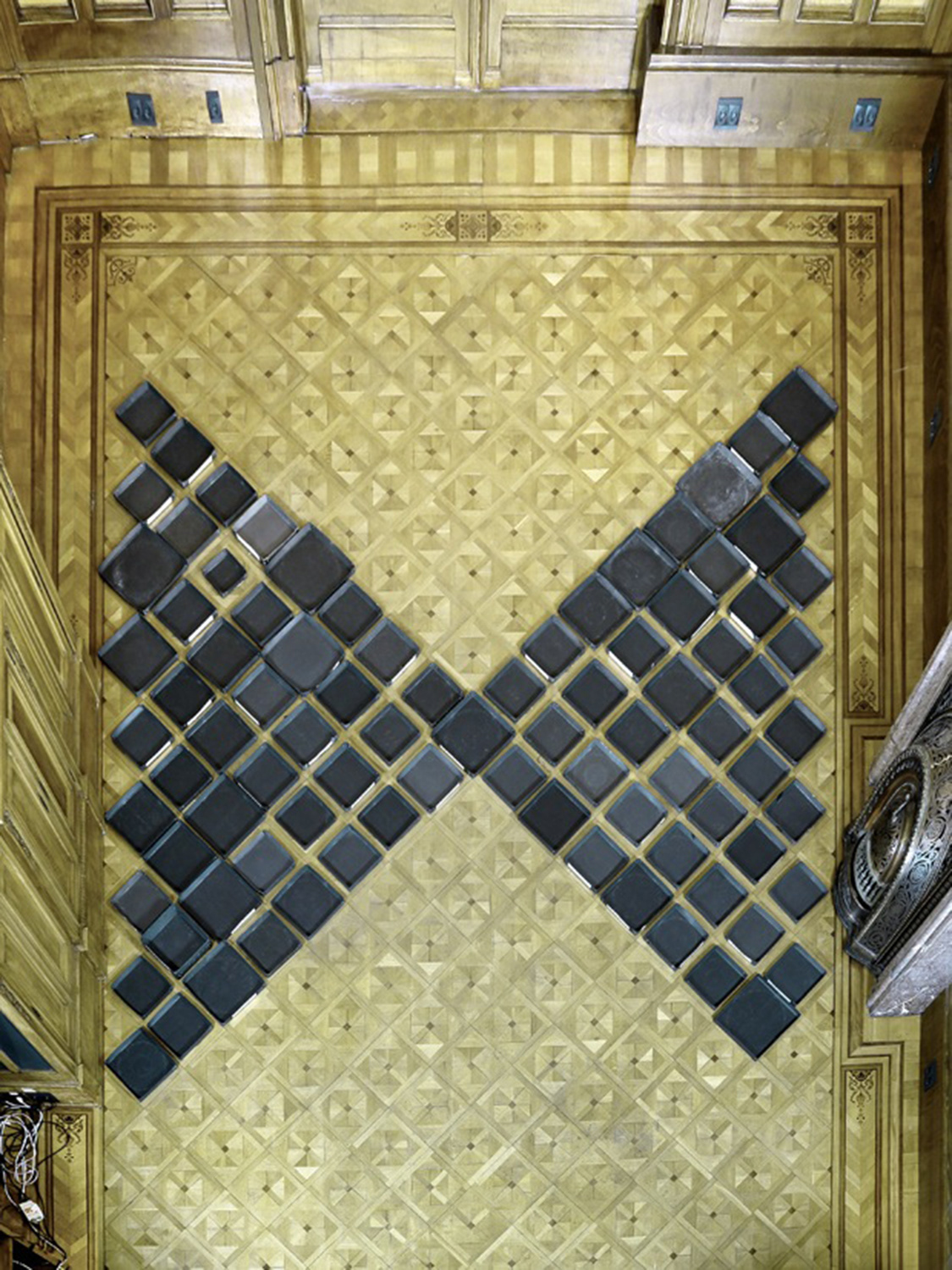
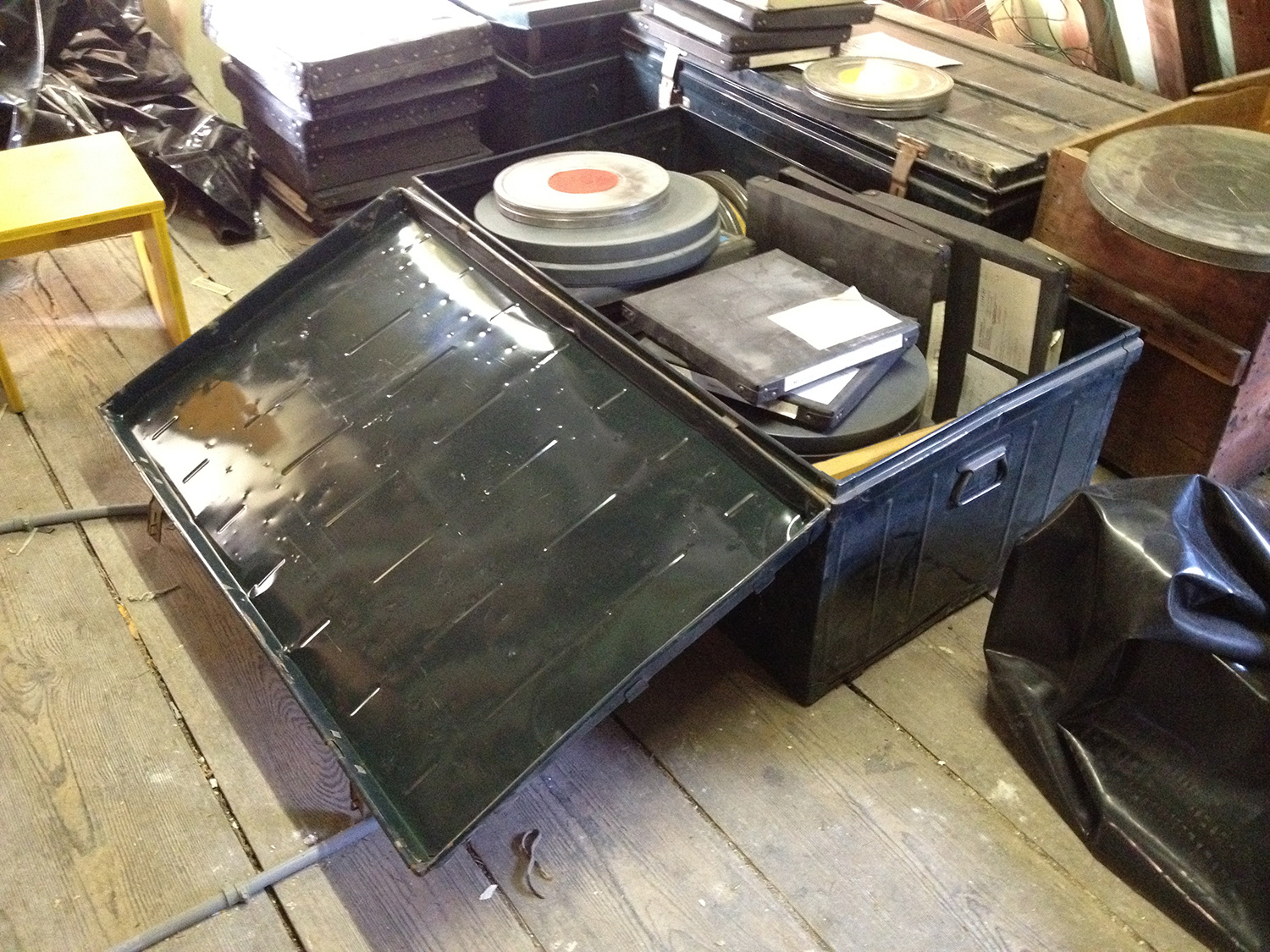
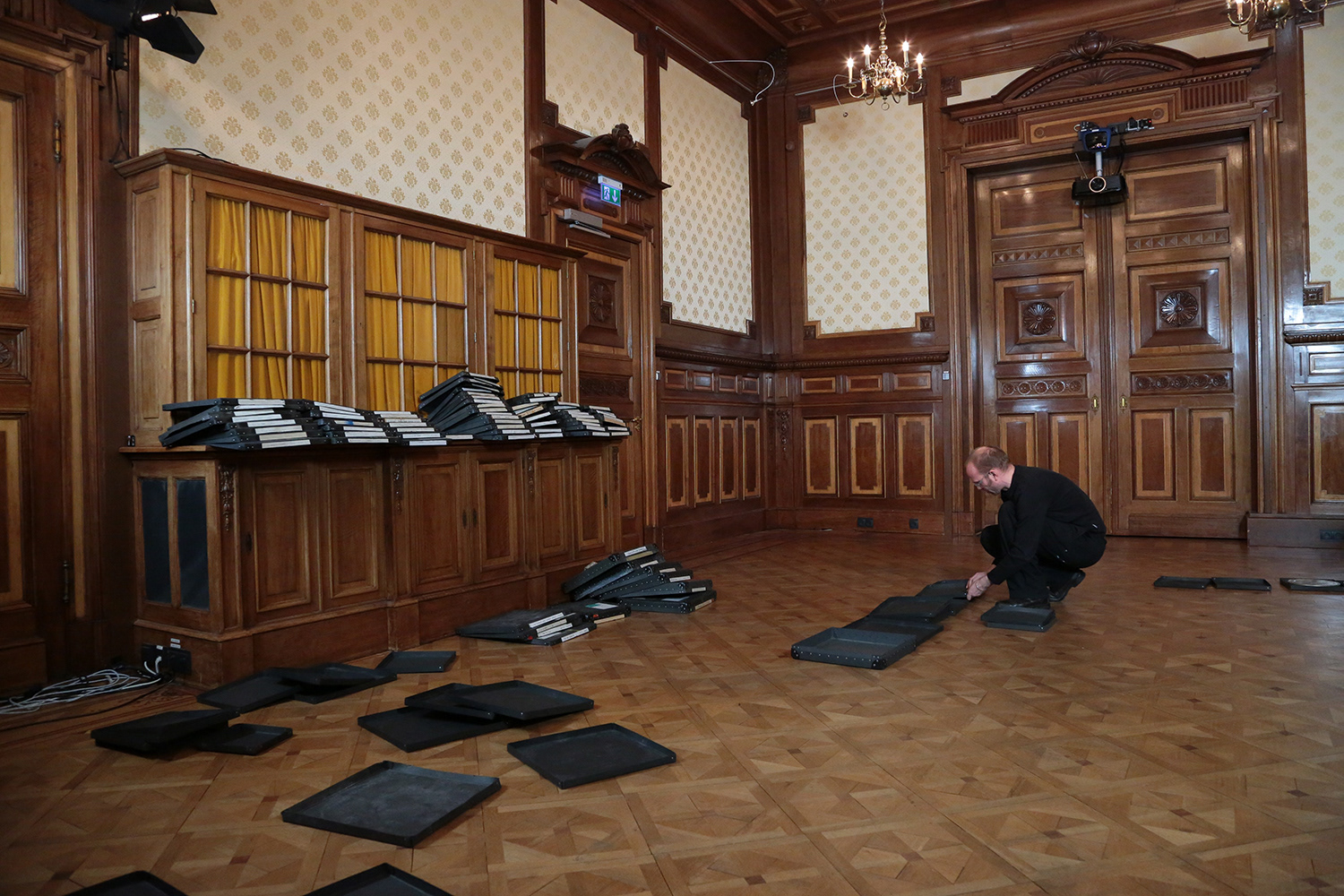
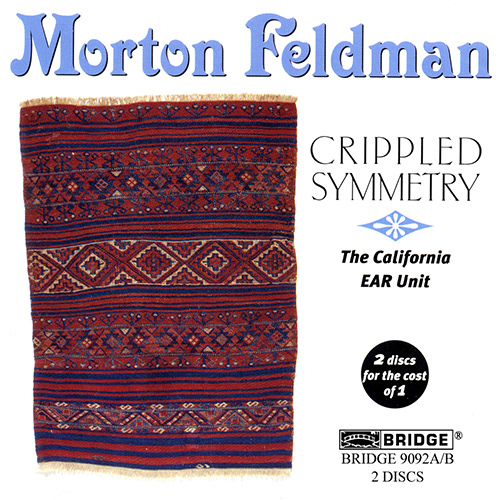
Crippled Symmetry renegotiates archival representation by reducing it to abstract form. Emptied 16mm film boxes discovered in the Goethe Institute Amsterdam attic become material for rearranging cultural memory through ornamental language. These empty boxes act as inverse spaces of absent film reels, indexing the institute's visual repository while evoking cultural motifs set in and out of alignment ("crippled") with the building's existing floor patterns. The work responds to surrounding 19th-century architecture—wall/floor tiles, patterned wallpaper, wooden panels, embellished glass windows, and stucco doorway arches. Framed as ornament, the national film heritage speaks a mixed decorative language that has migrated between cultures, losing original genealogy across time and space. The title borrows from Morton Feldman's composition, inspired by asymmetrical deviations in Turkish nomad carpets.
In collaboration with curator Christina Li, a 16mm film program featuring the same films was presented.
Curated by Christina Li: 'The Goethe-Institut's Reading Room Pyongyang,' Amsterdam, 2013
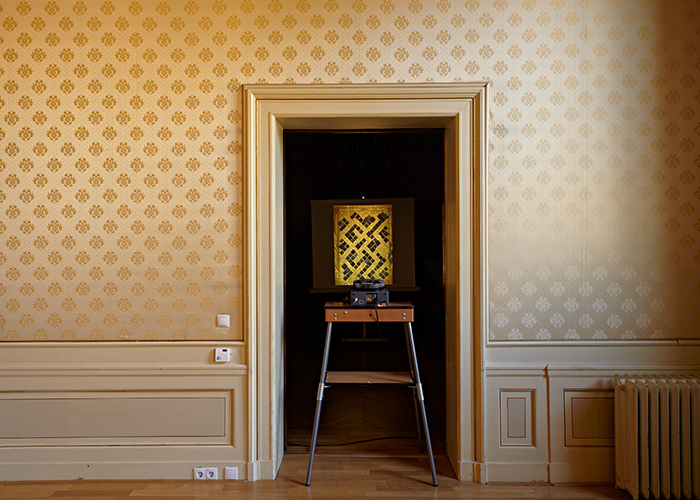
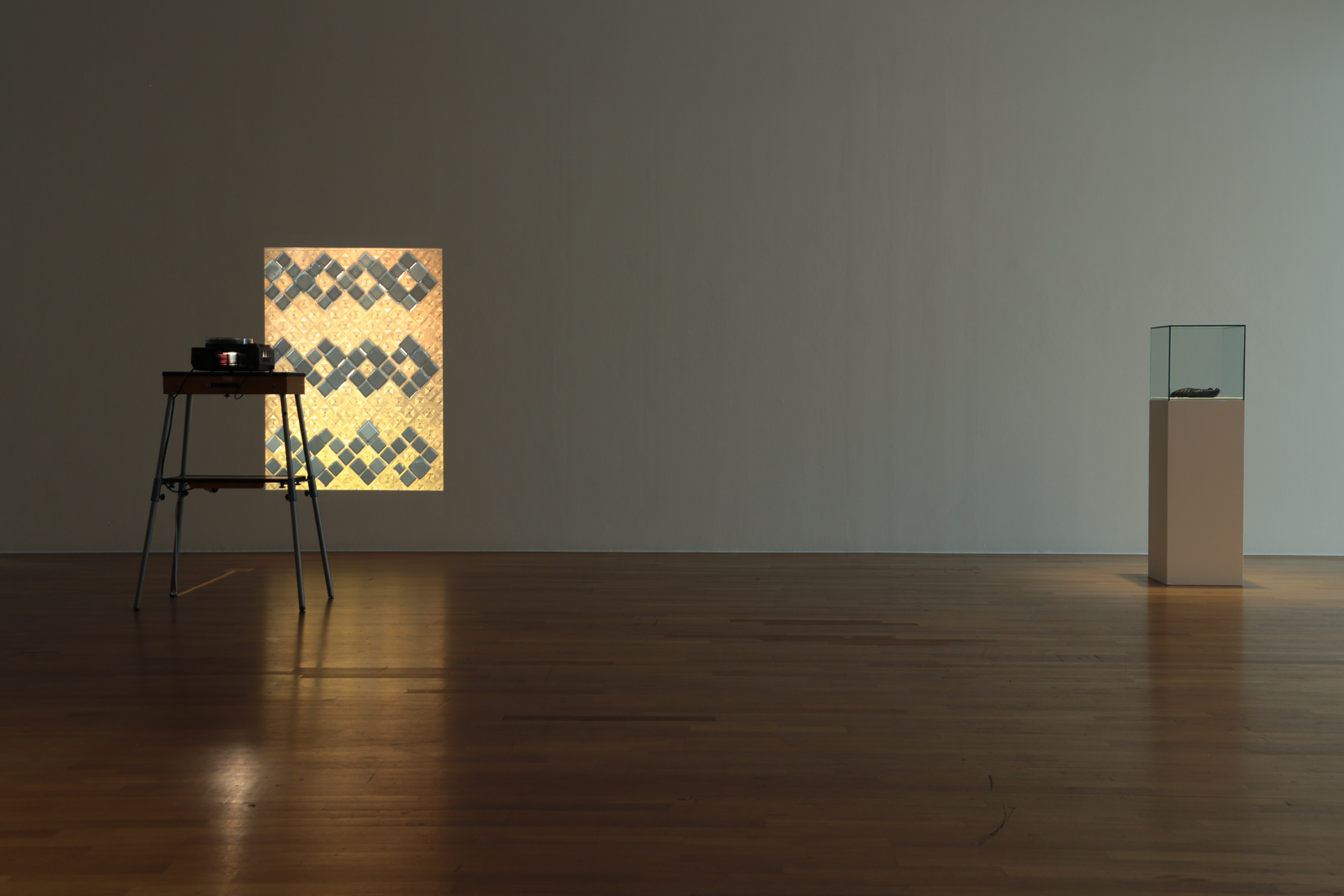
Installation view, 'The Goethe-Institut’s Reading Room Pyongyang: Between Object and Shadow', slide projection with 80 35mm slides, 2013 ( photo: Johannes Schwartz)
Installation view, 'The Goethe-Institut’s Reading Room Pyongyang: Between Object and Shadow', slide projection with 80 35mm slides, 2013 ( photo: Johannes Schwartz)
slides
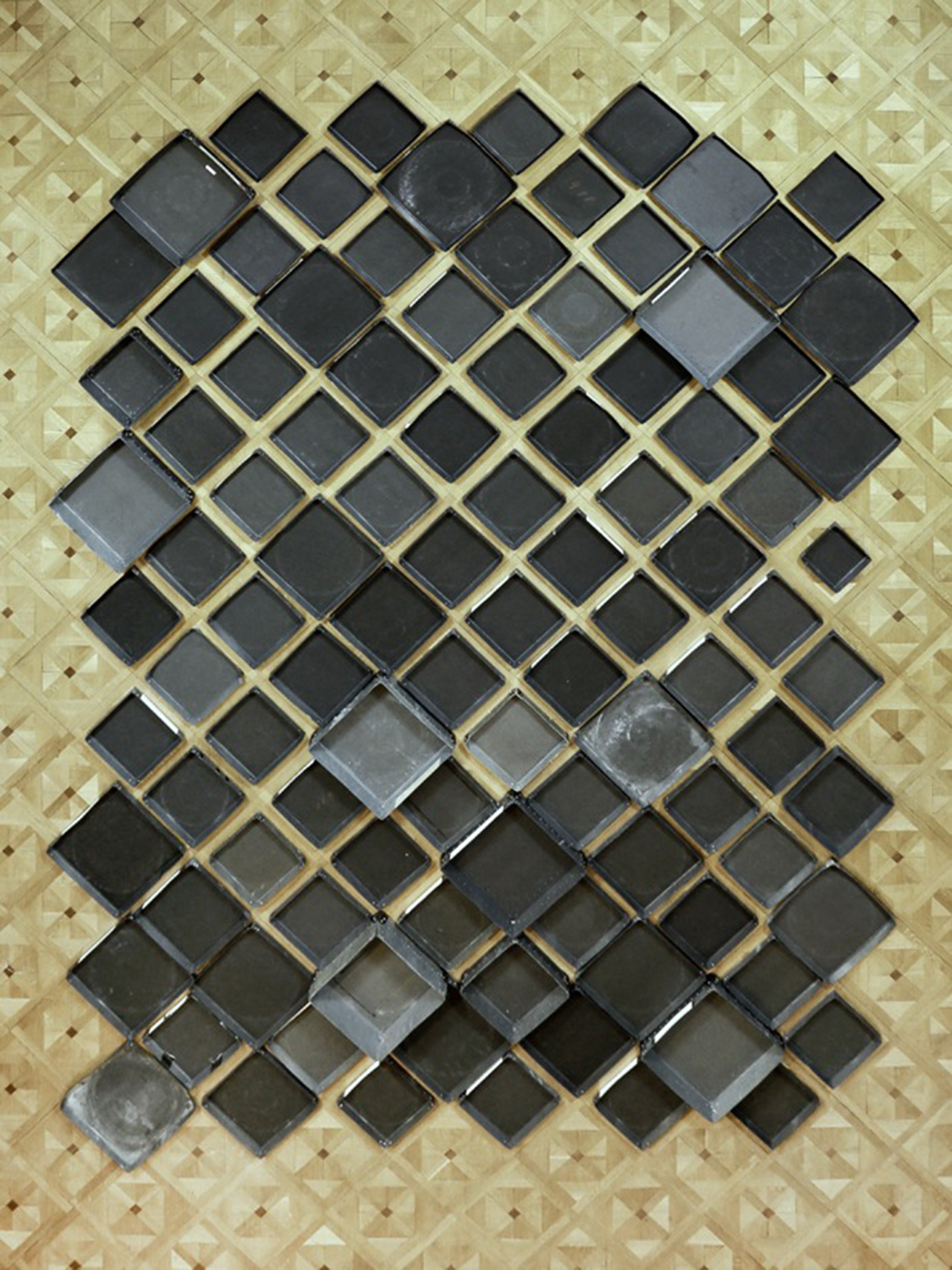
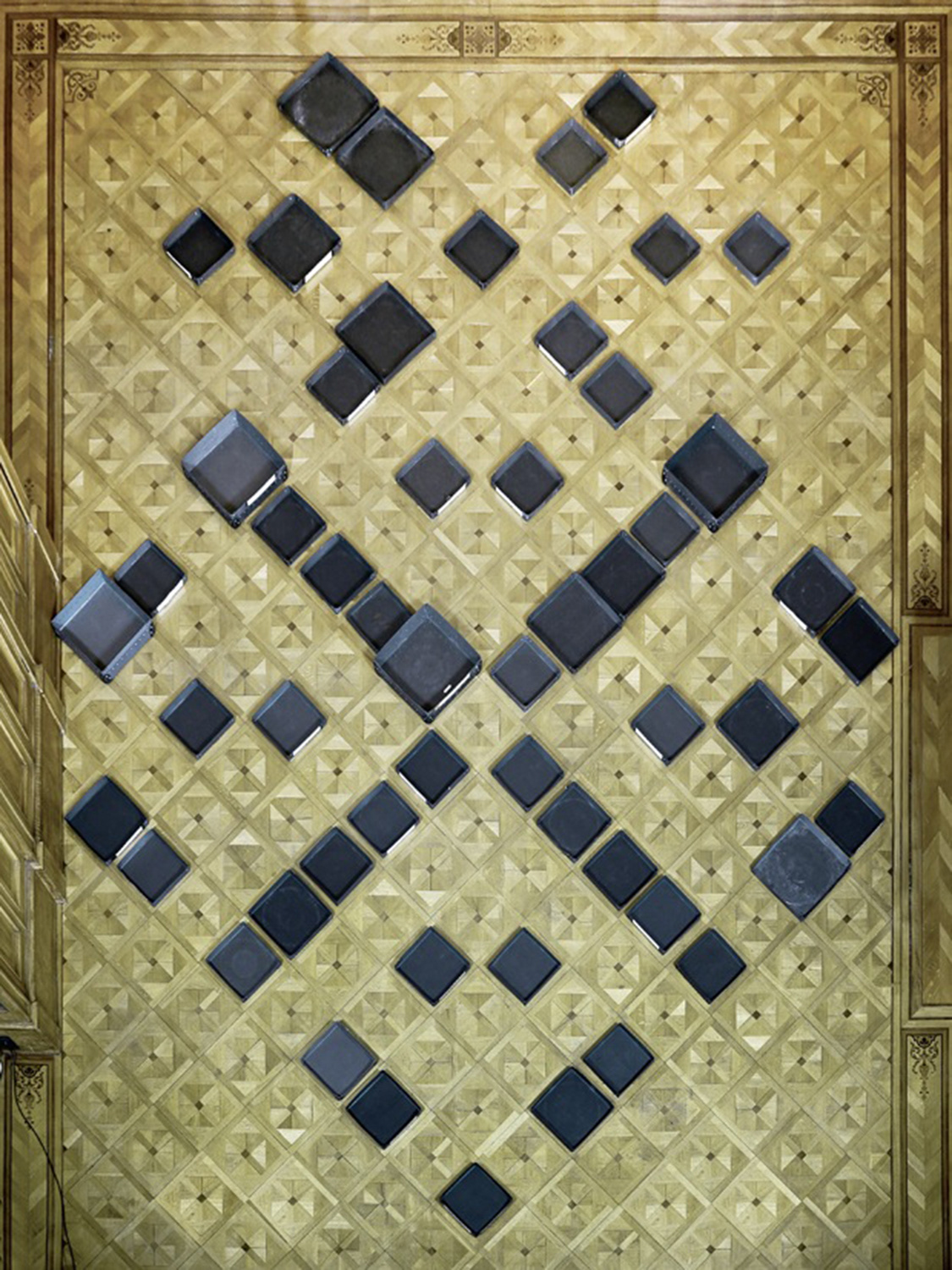
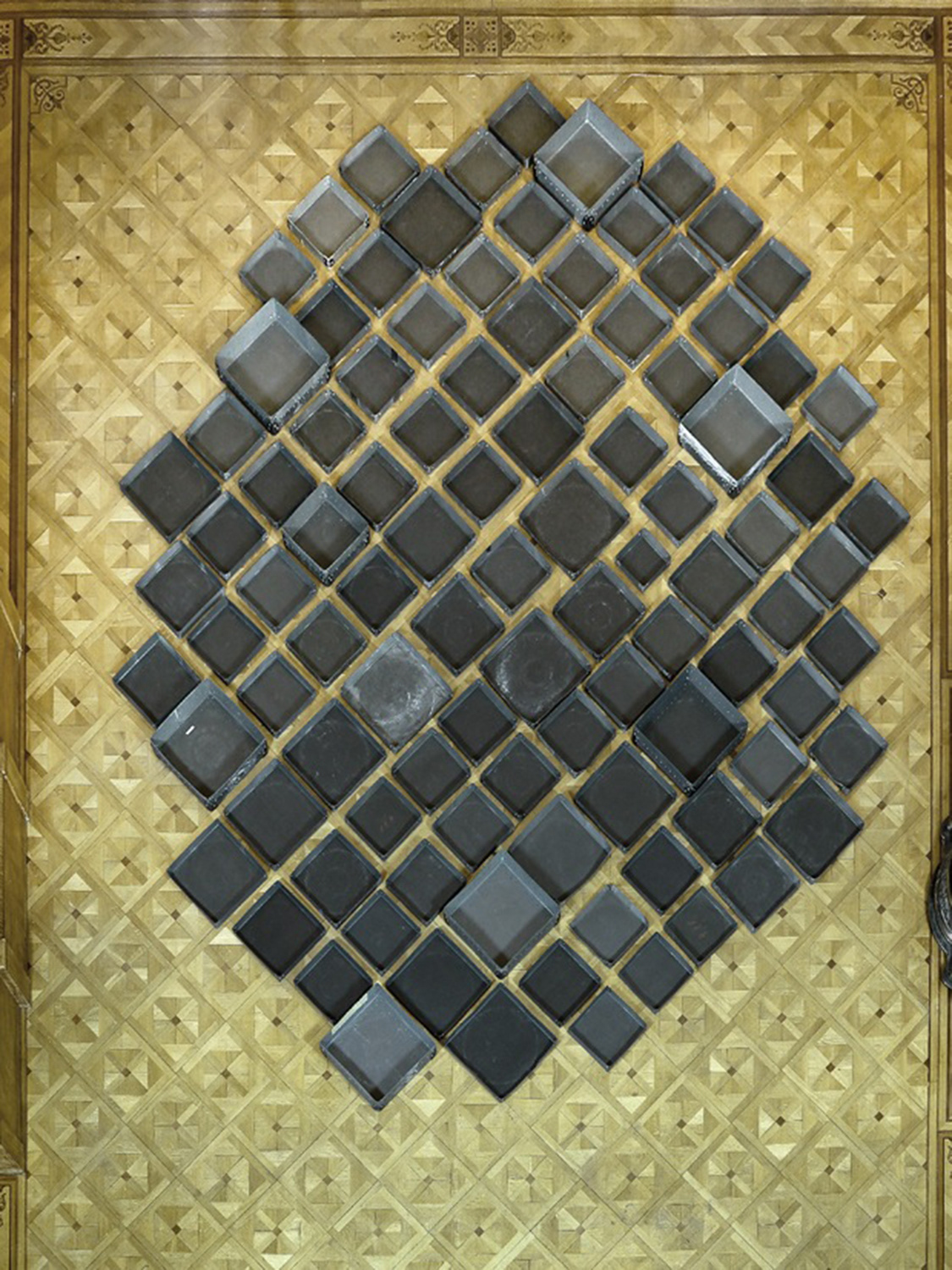
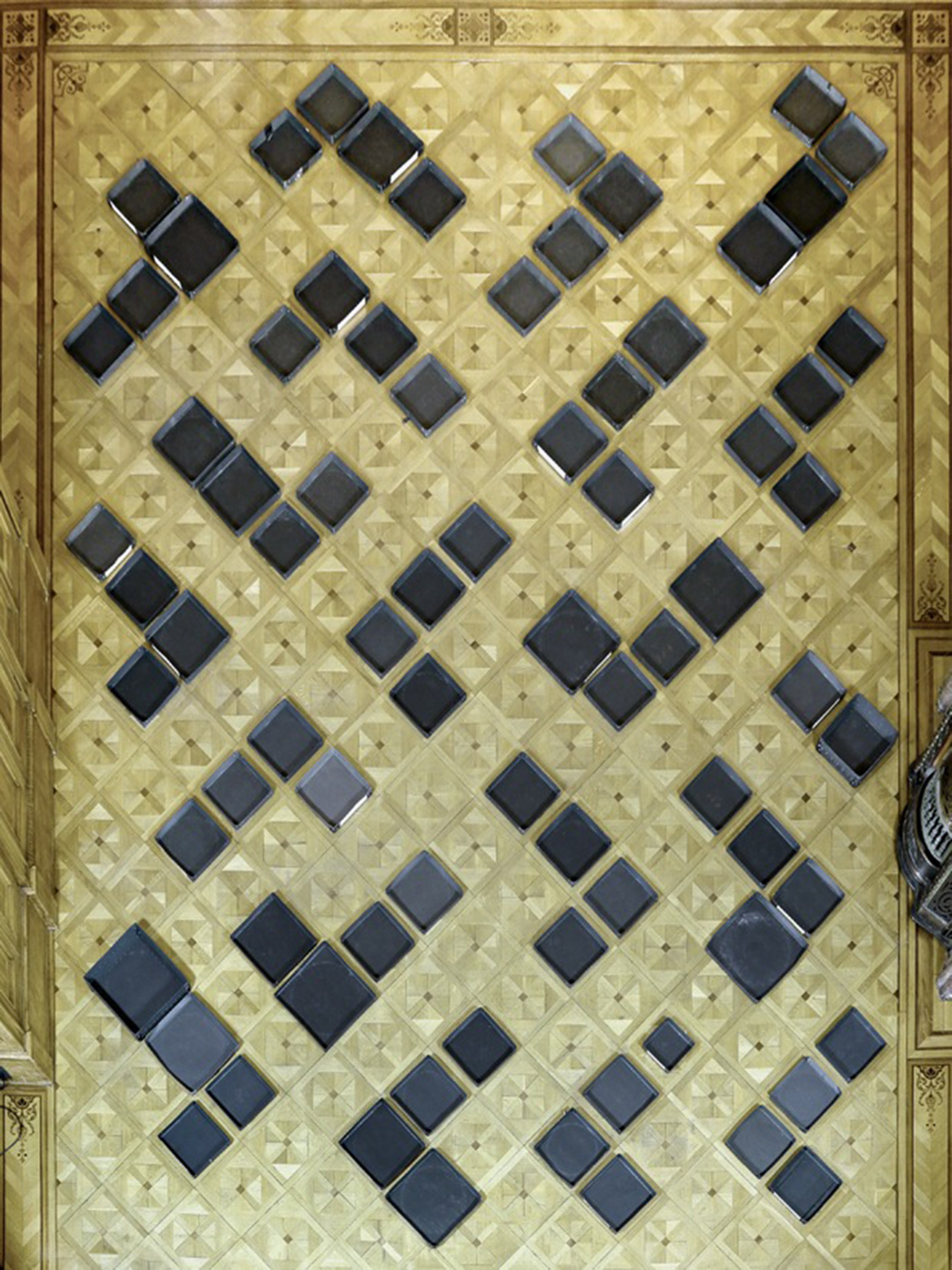
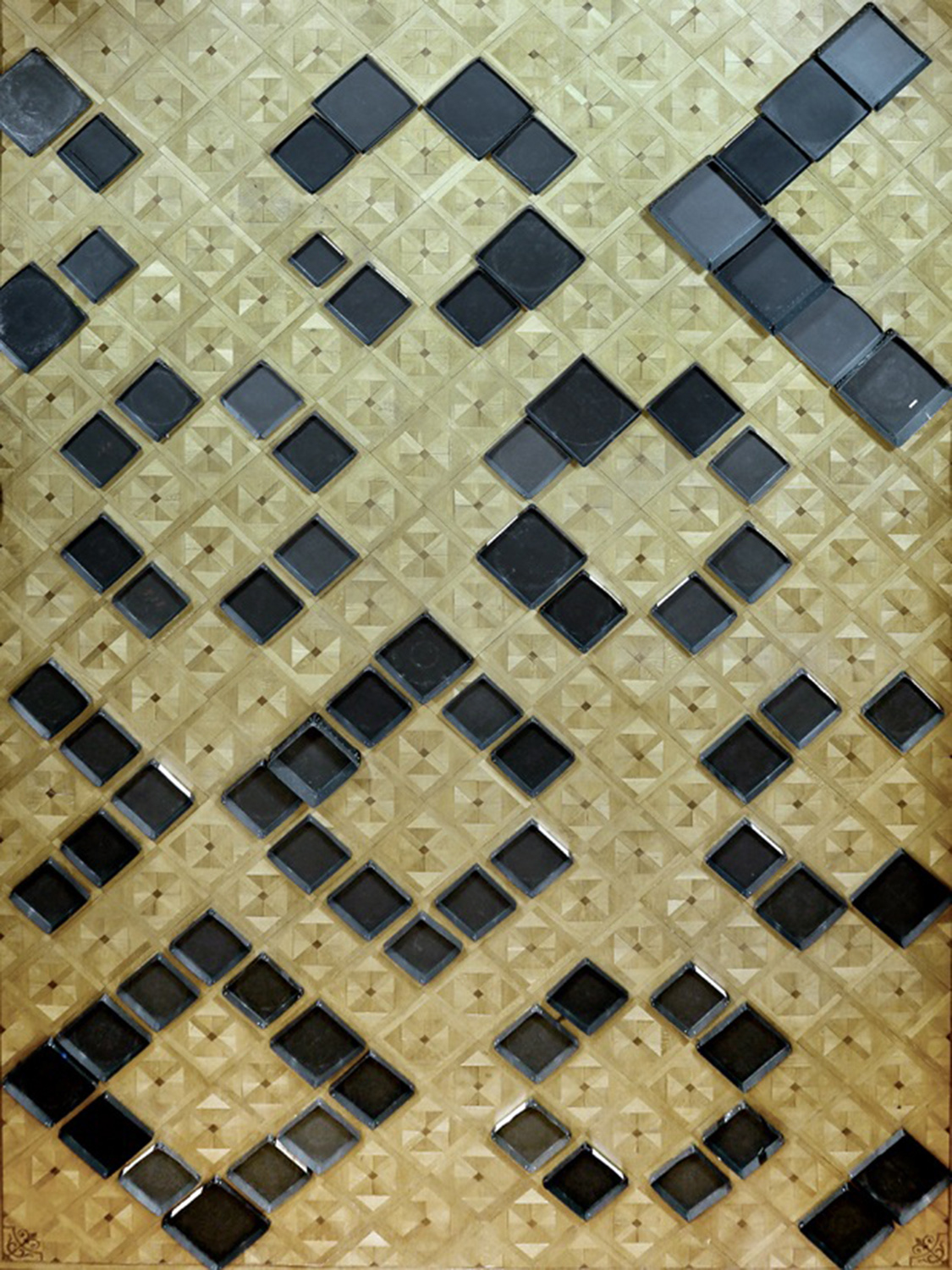
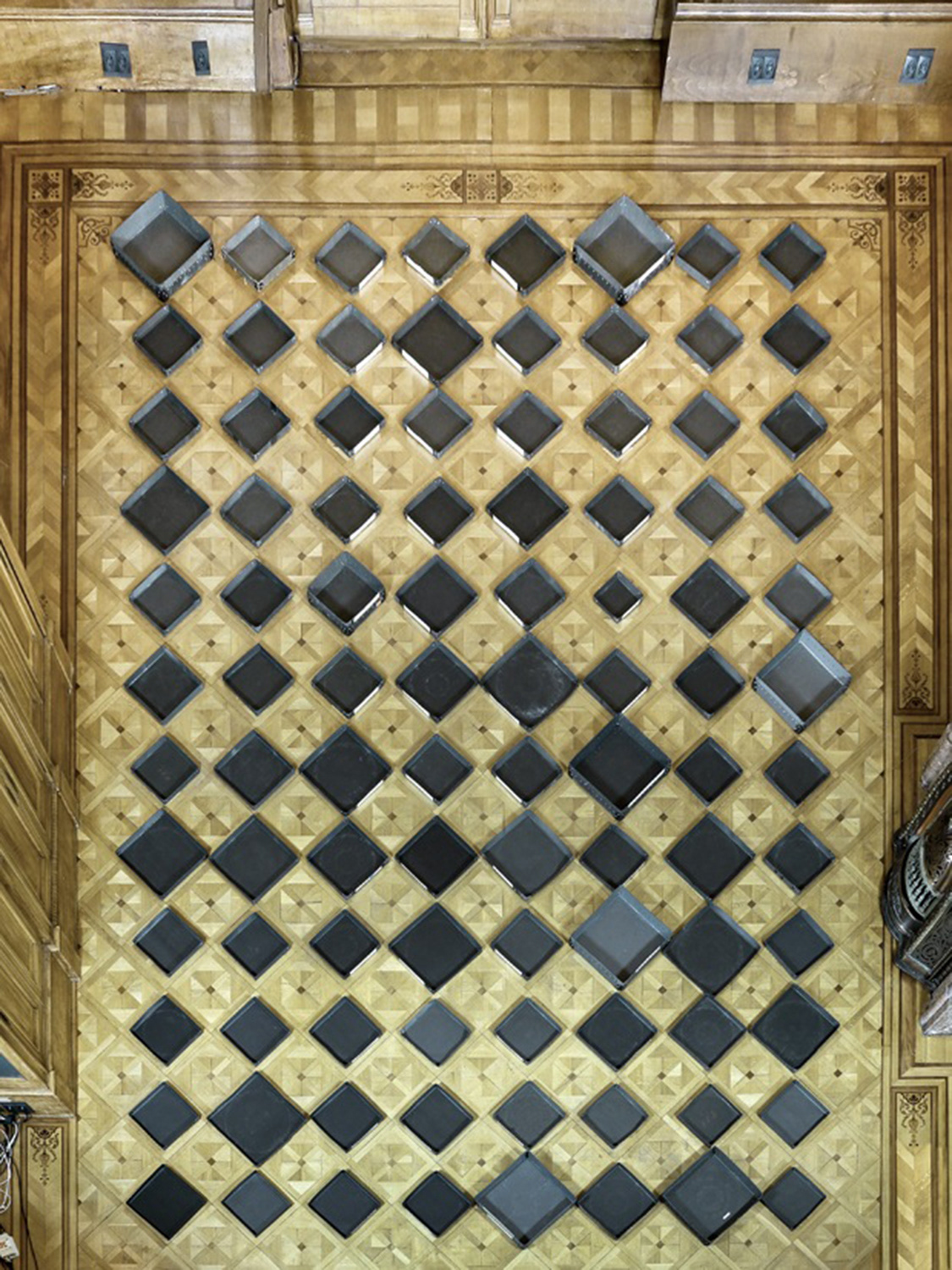
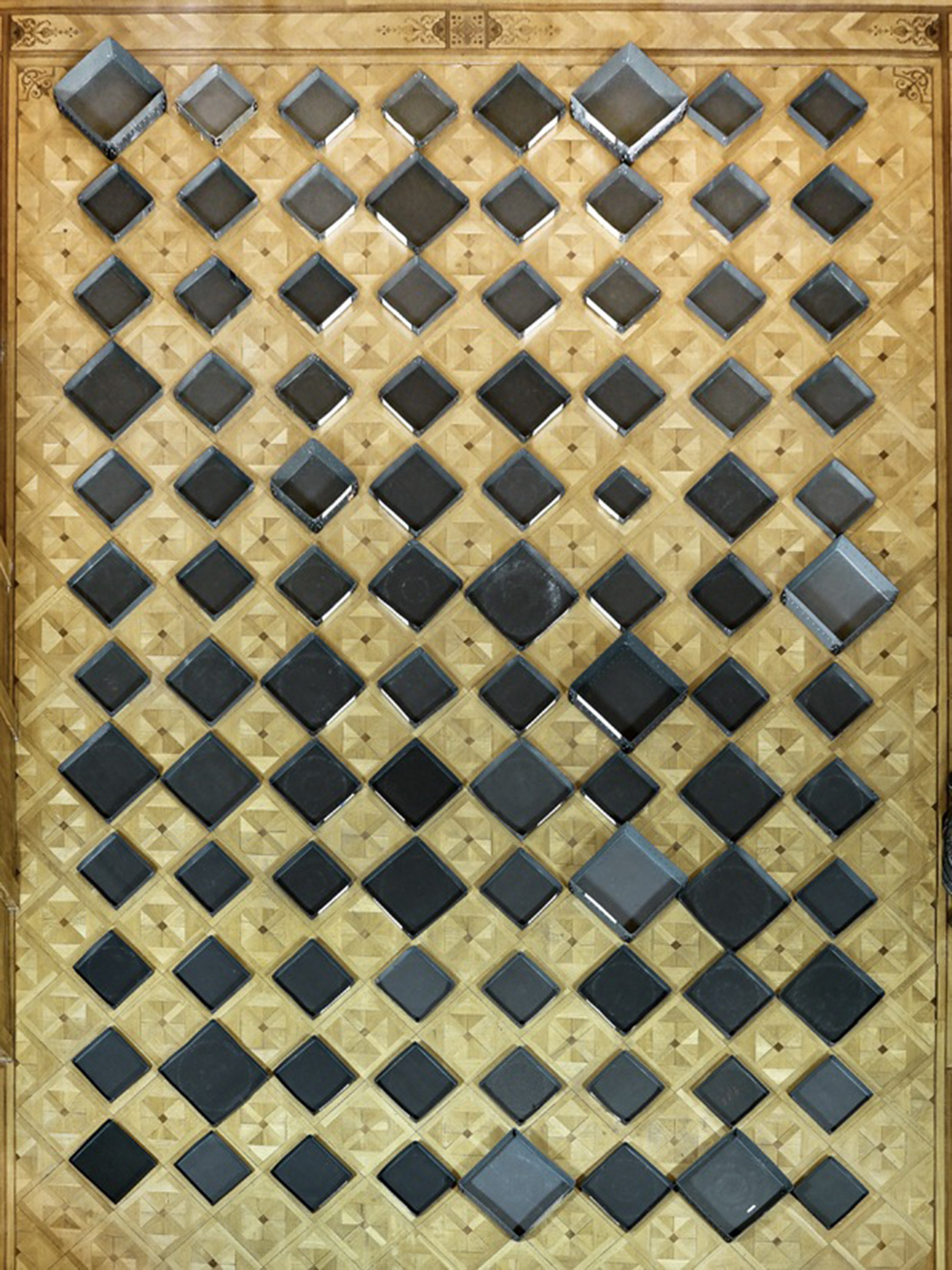
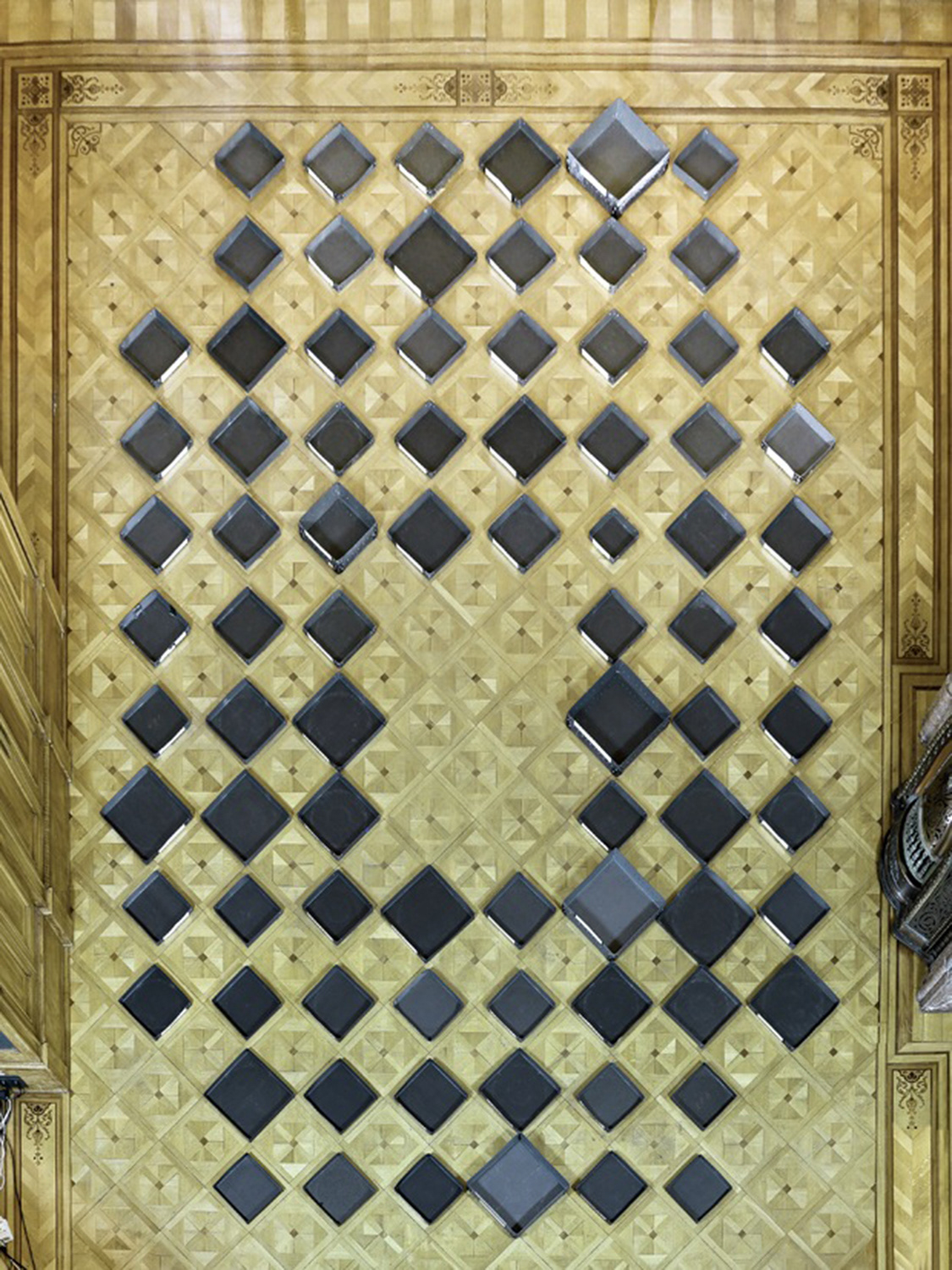
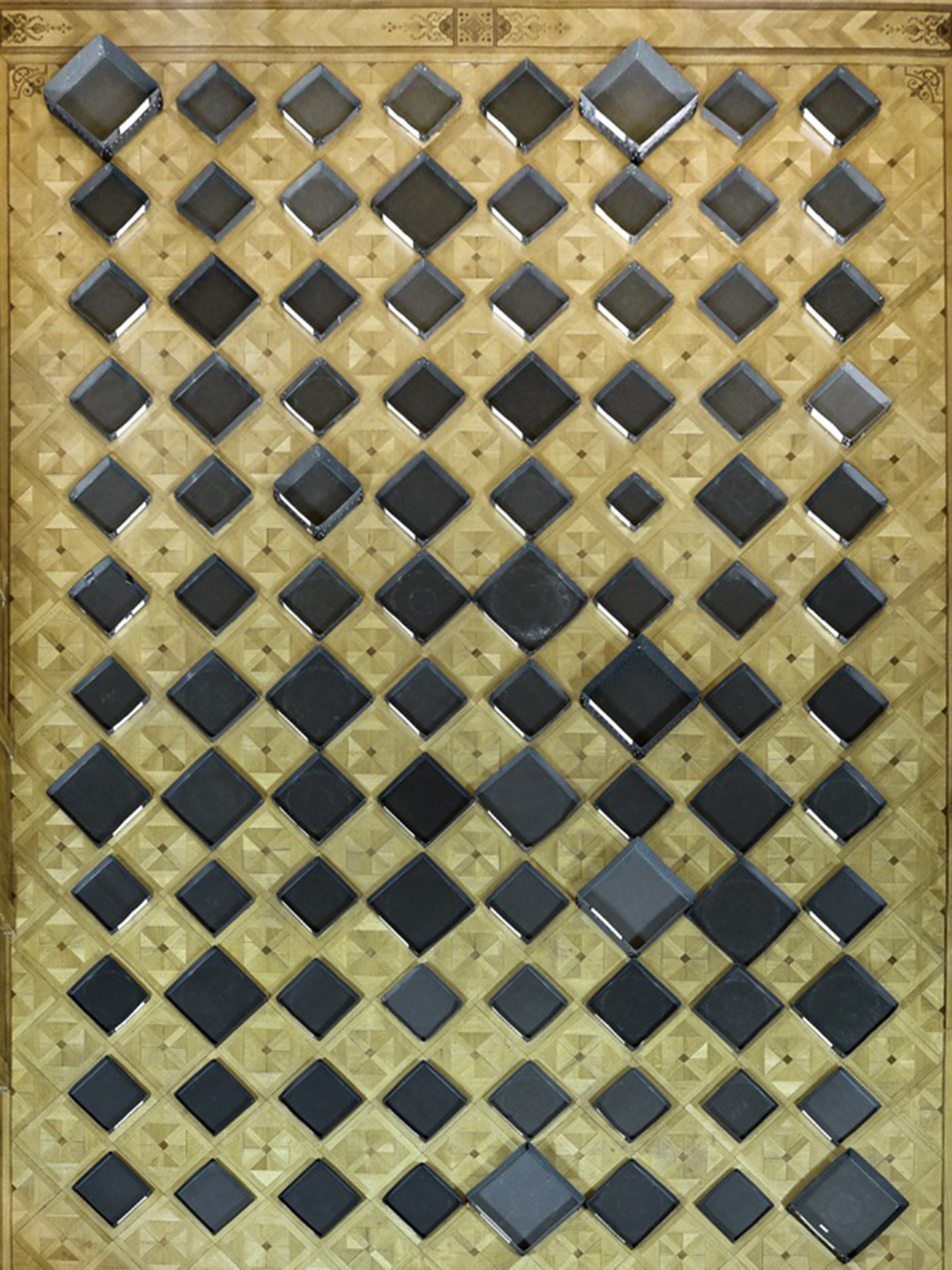
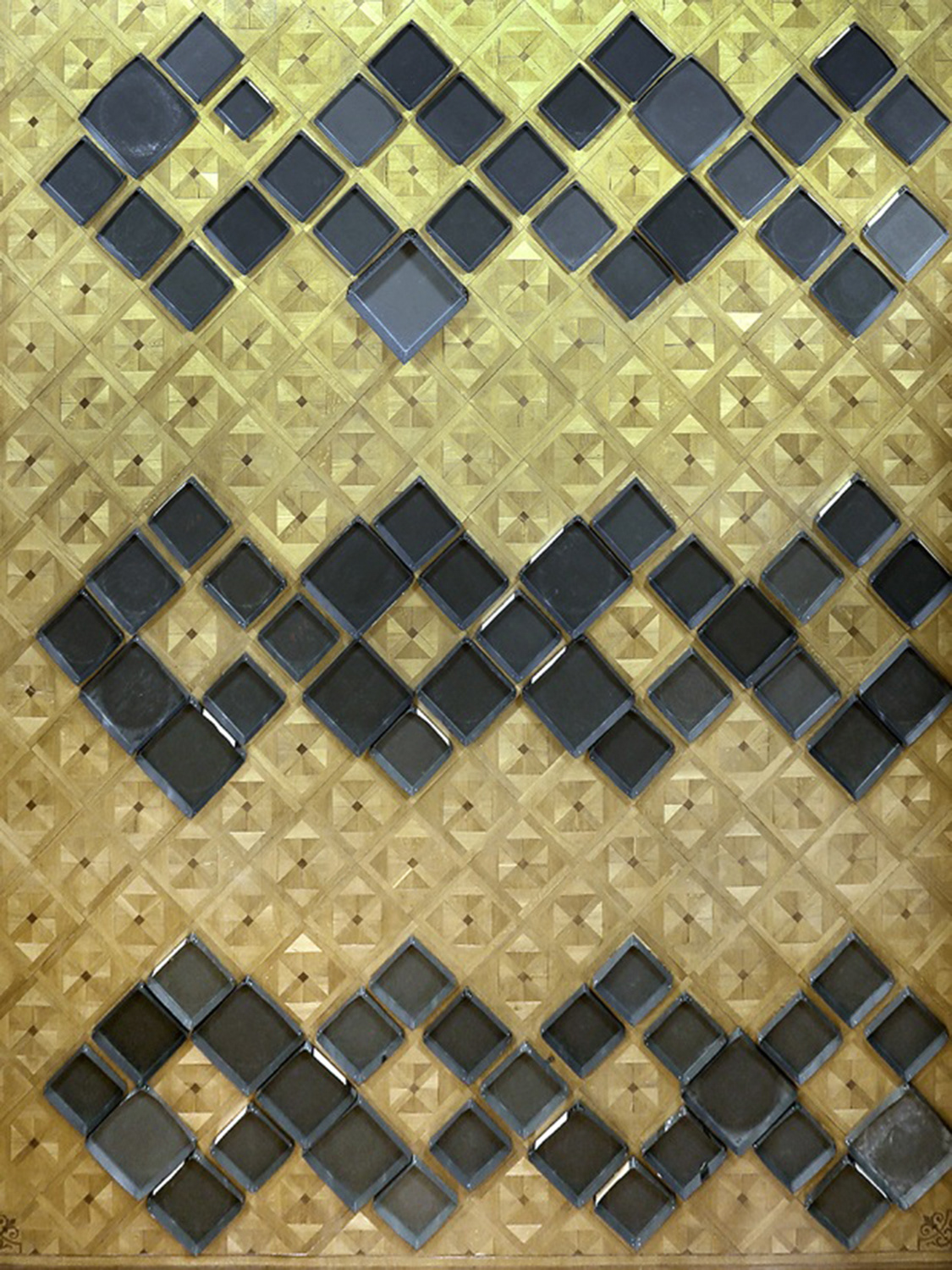
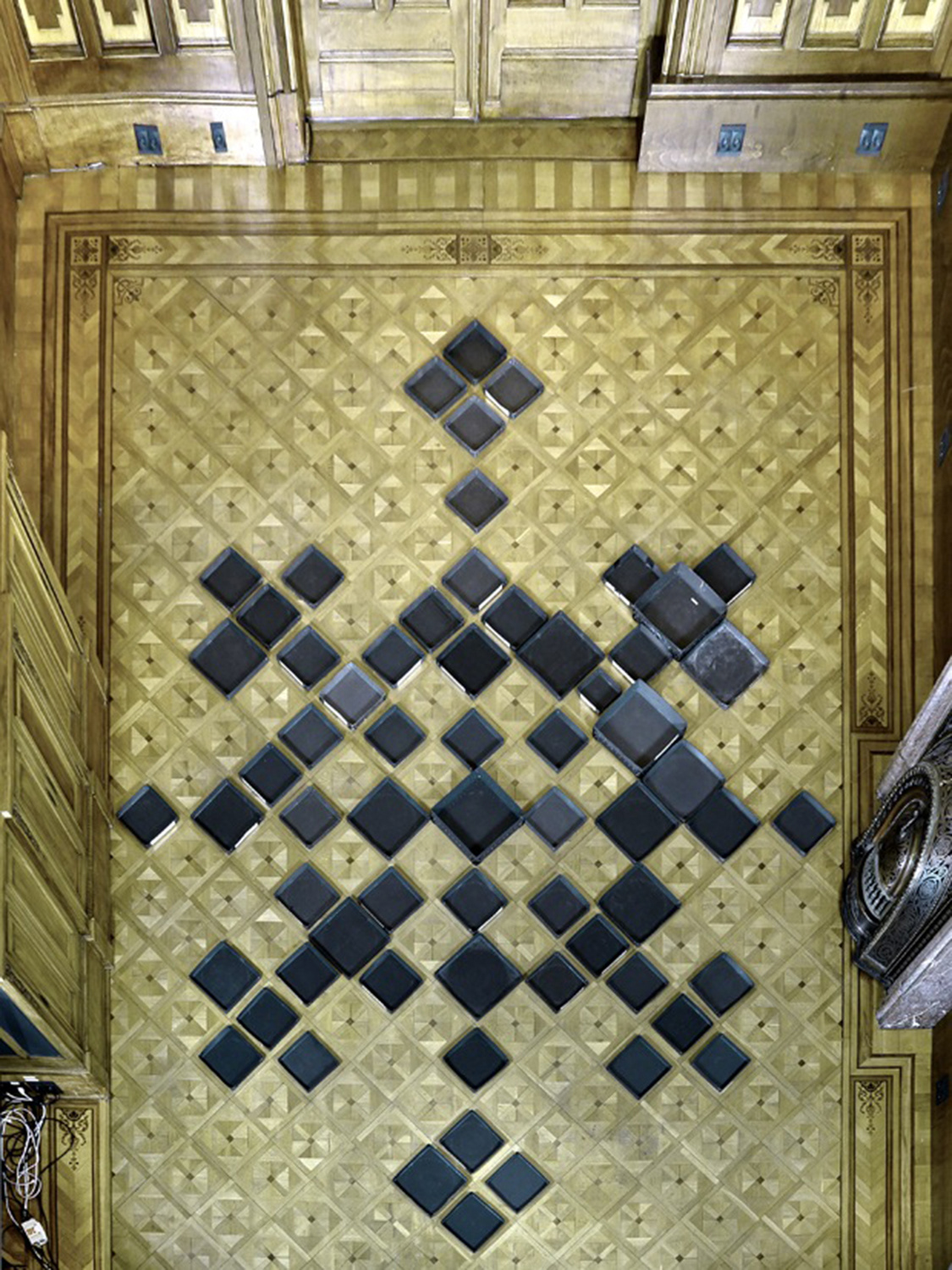
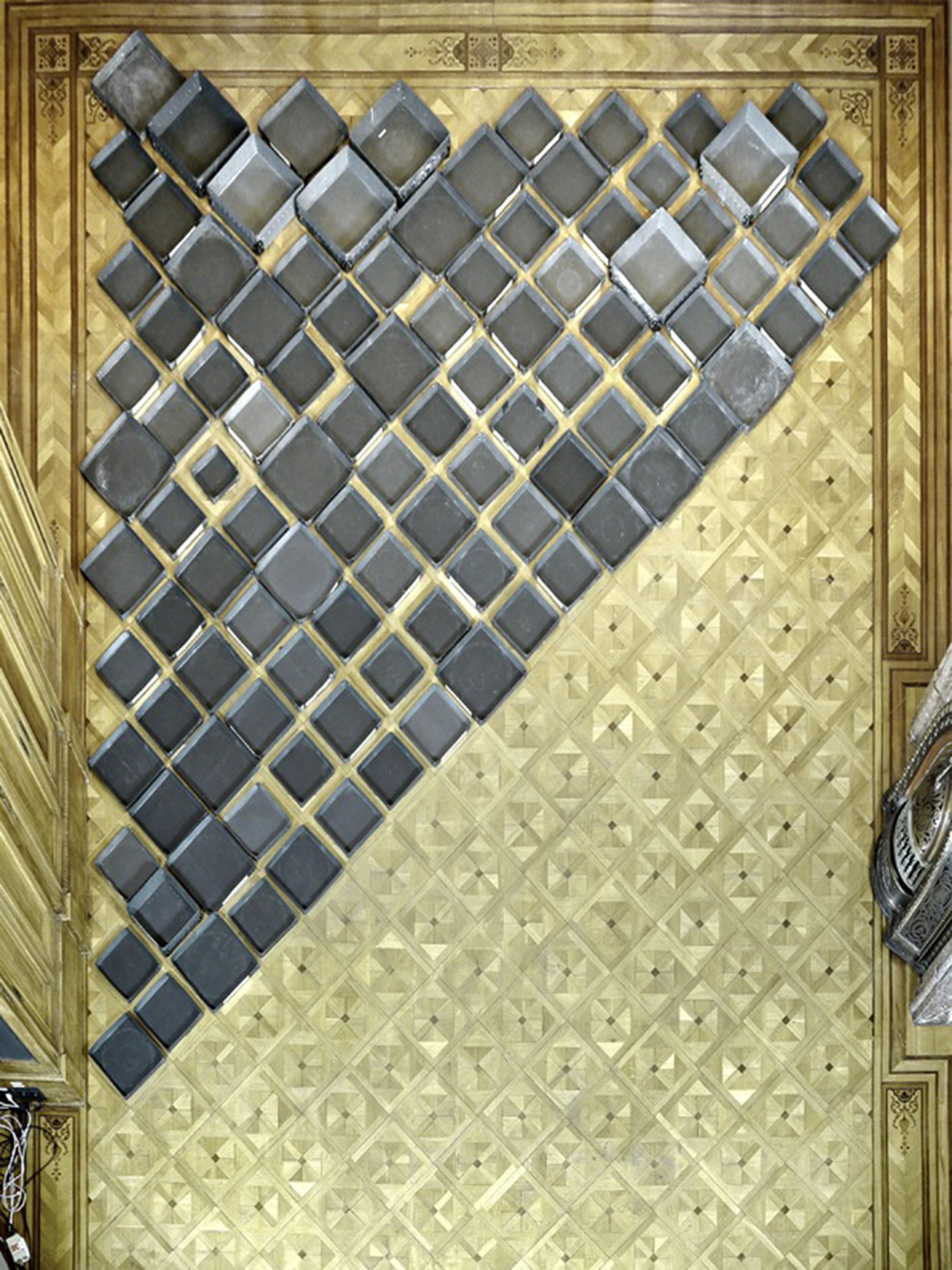
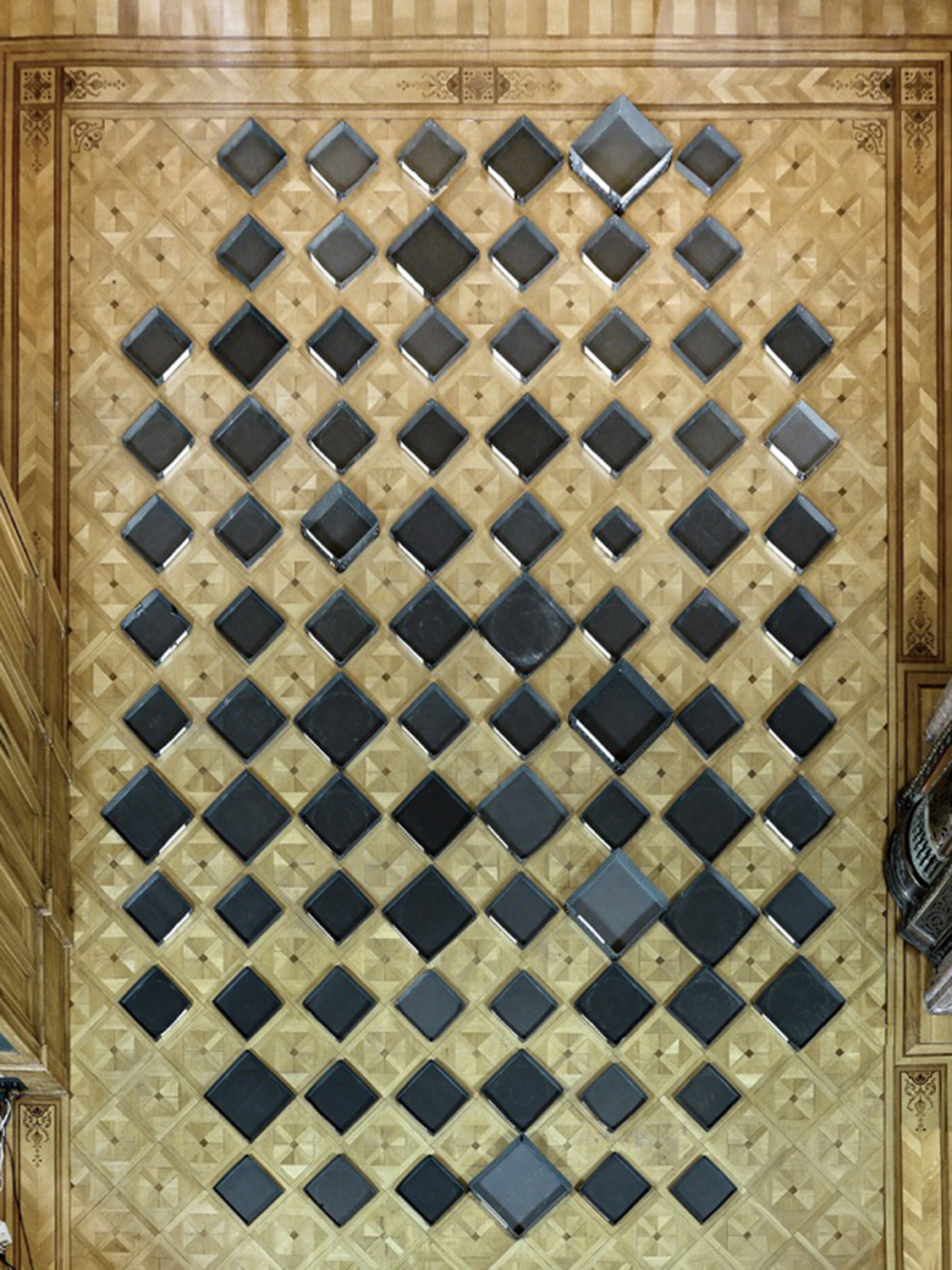
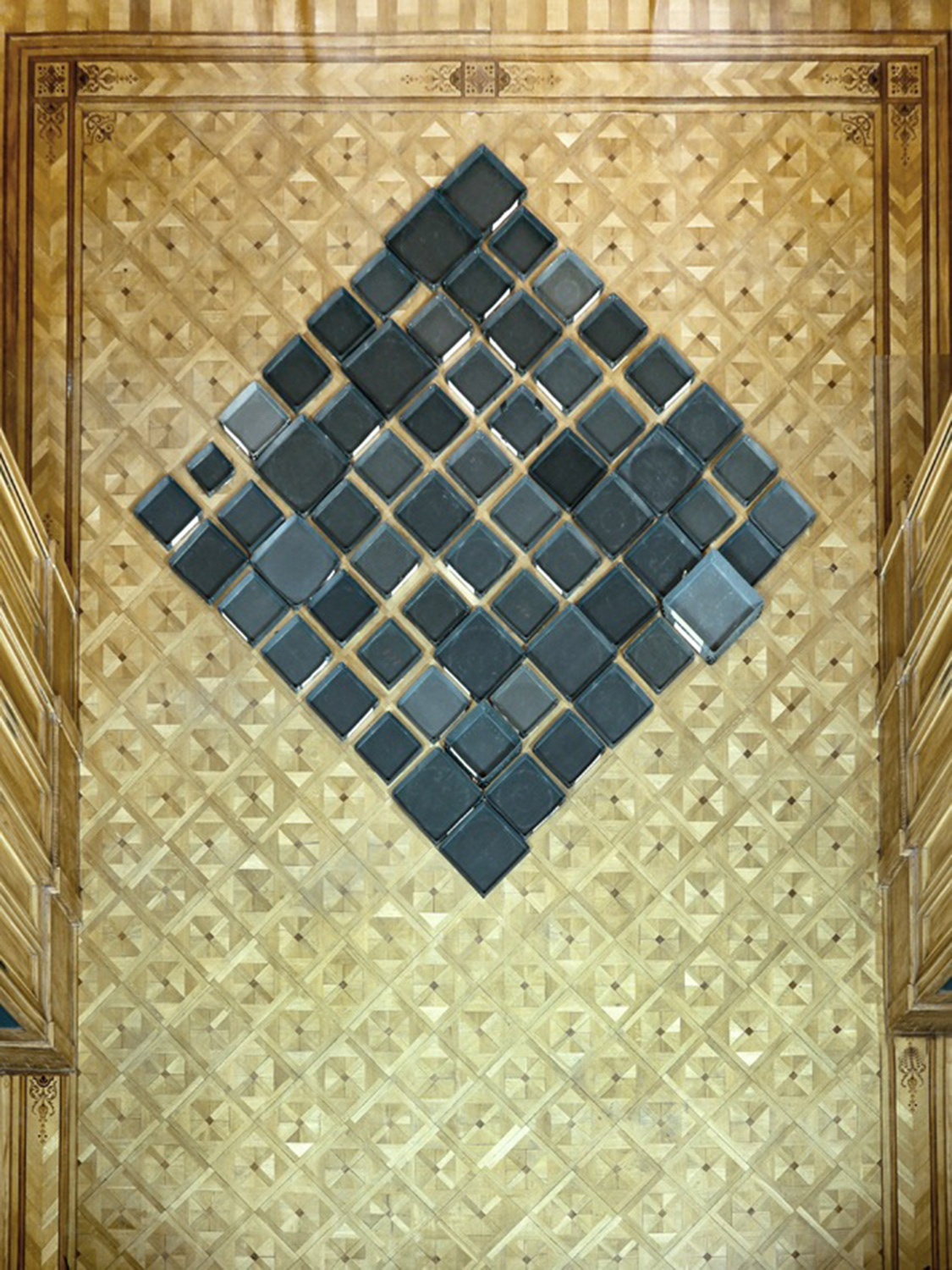
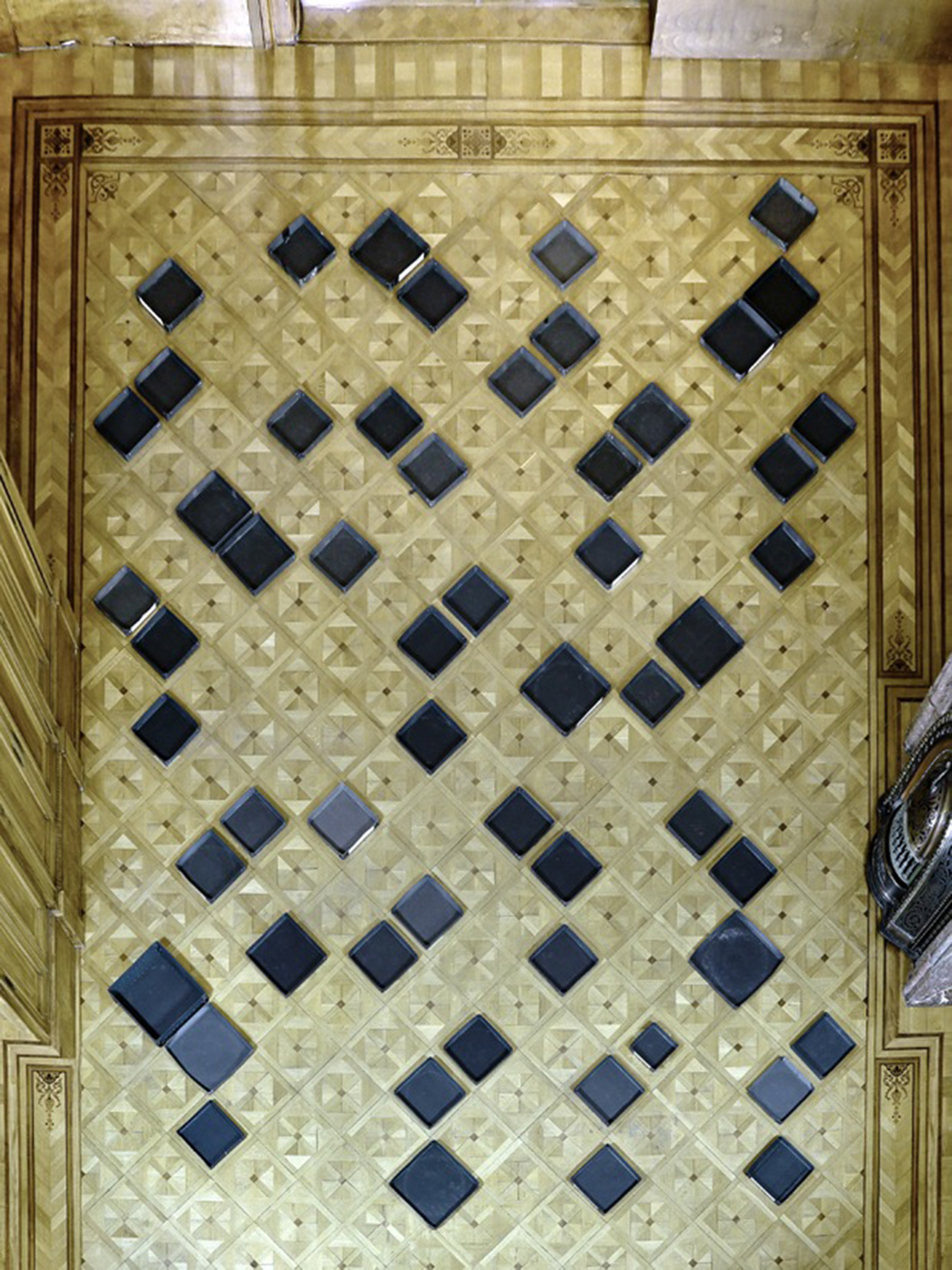
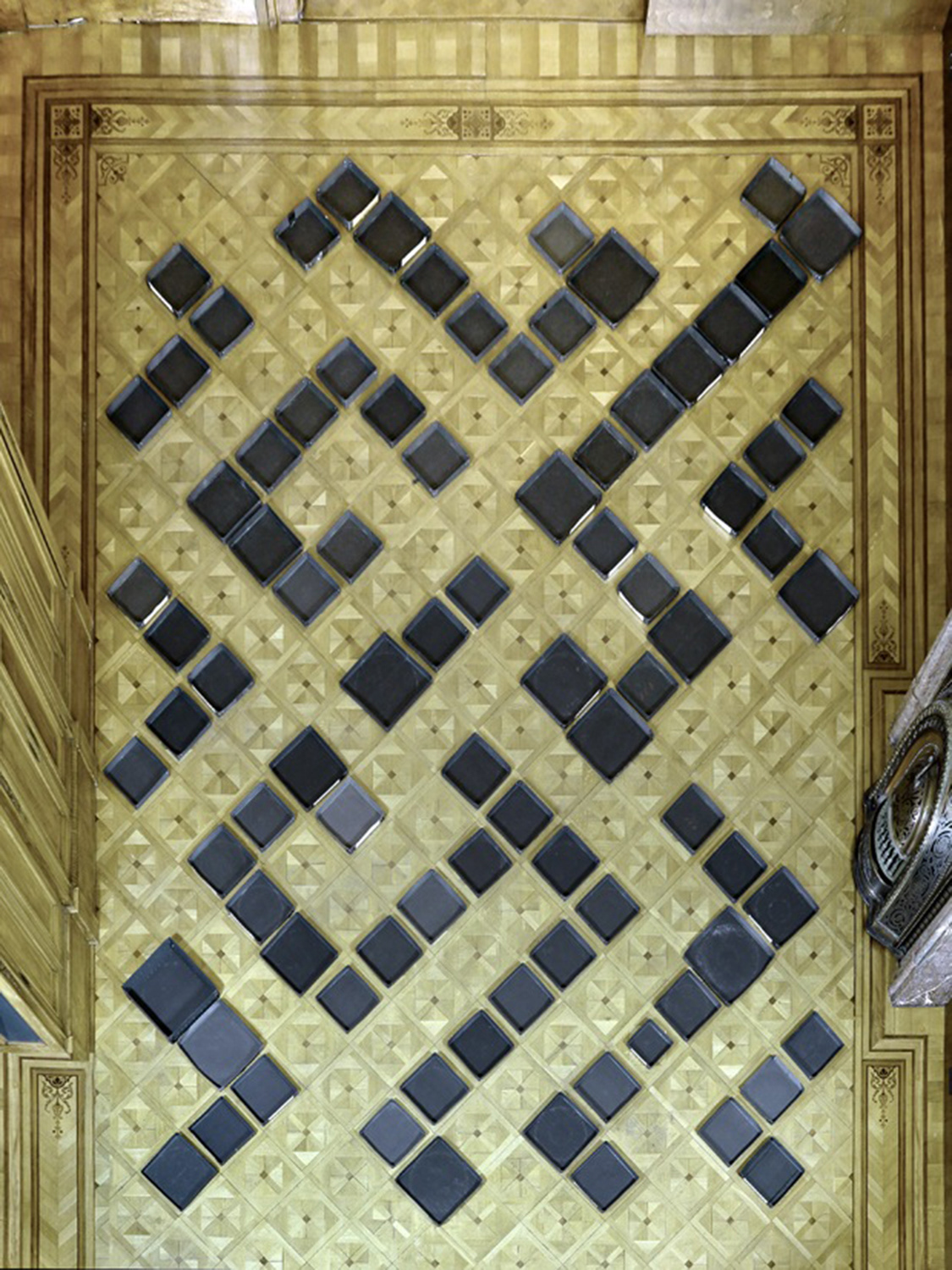
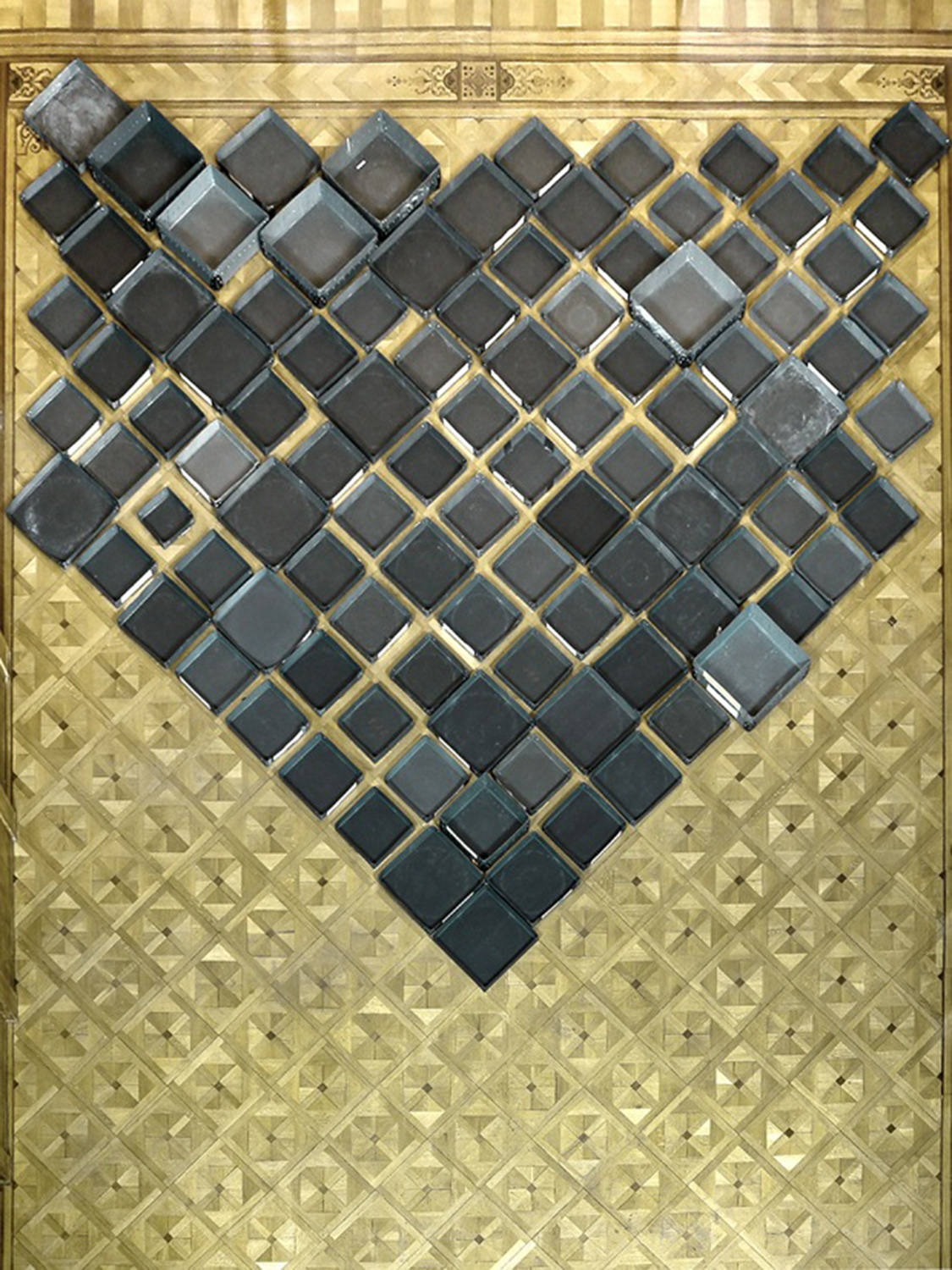
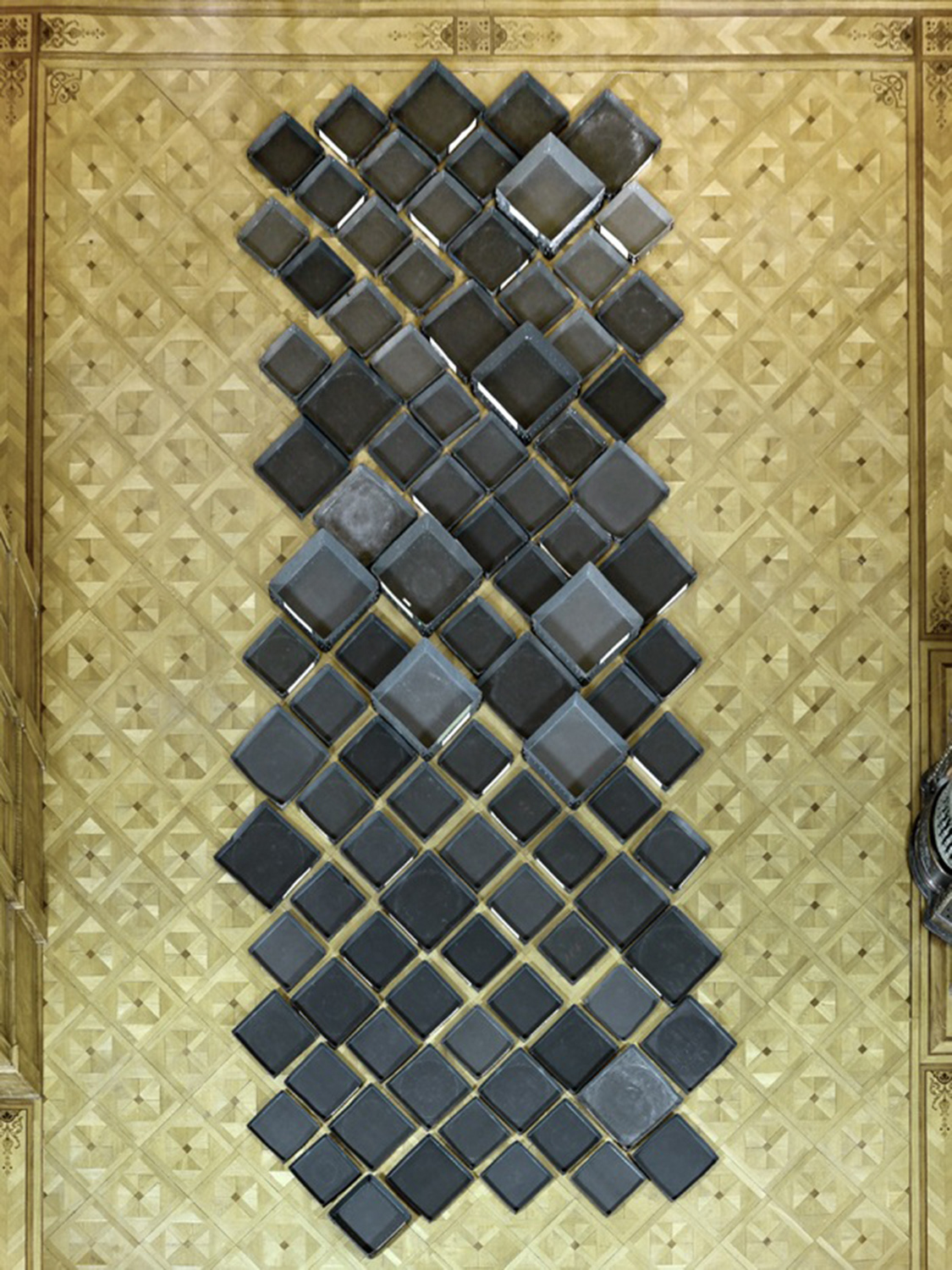
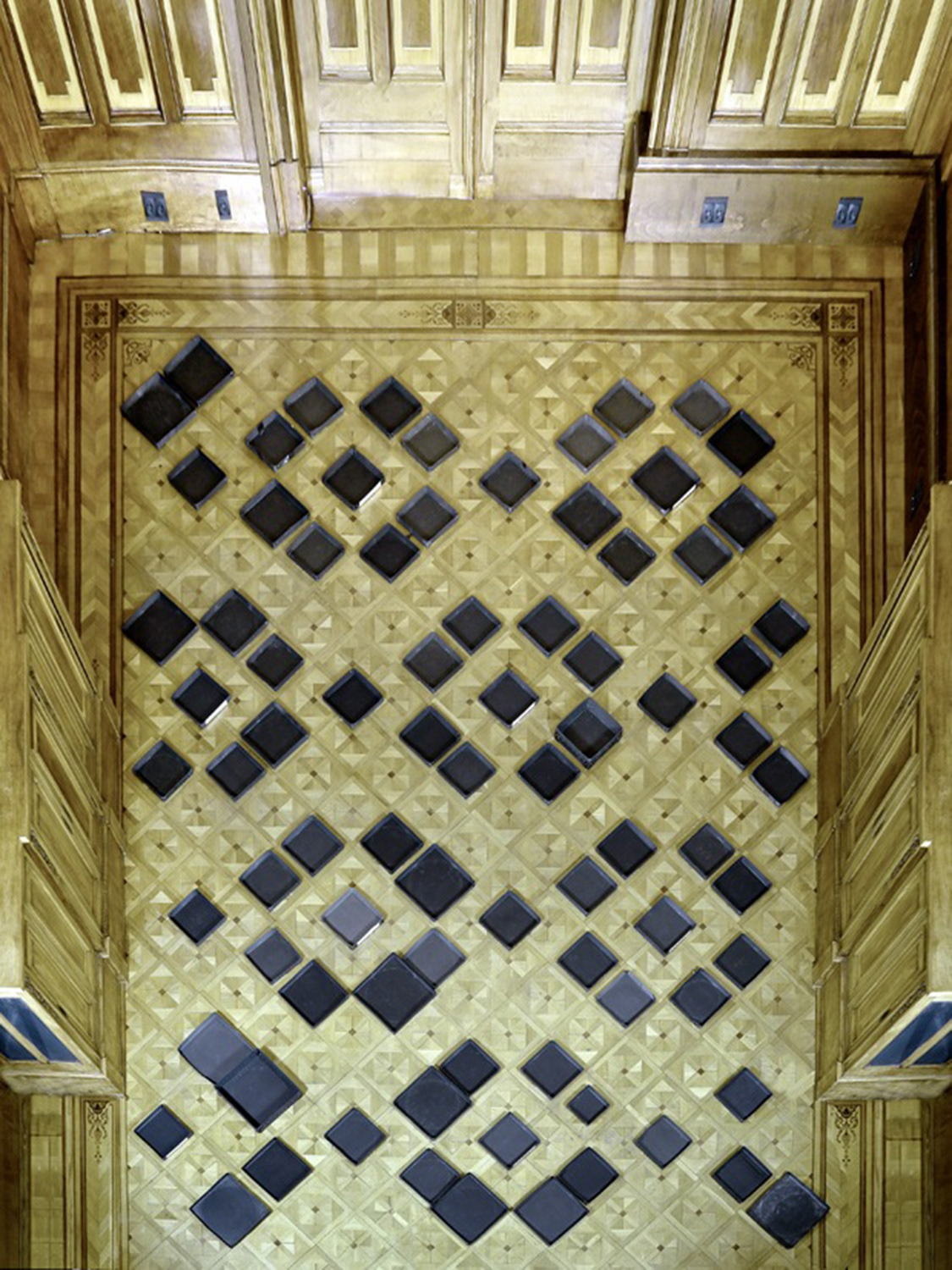
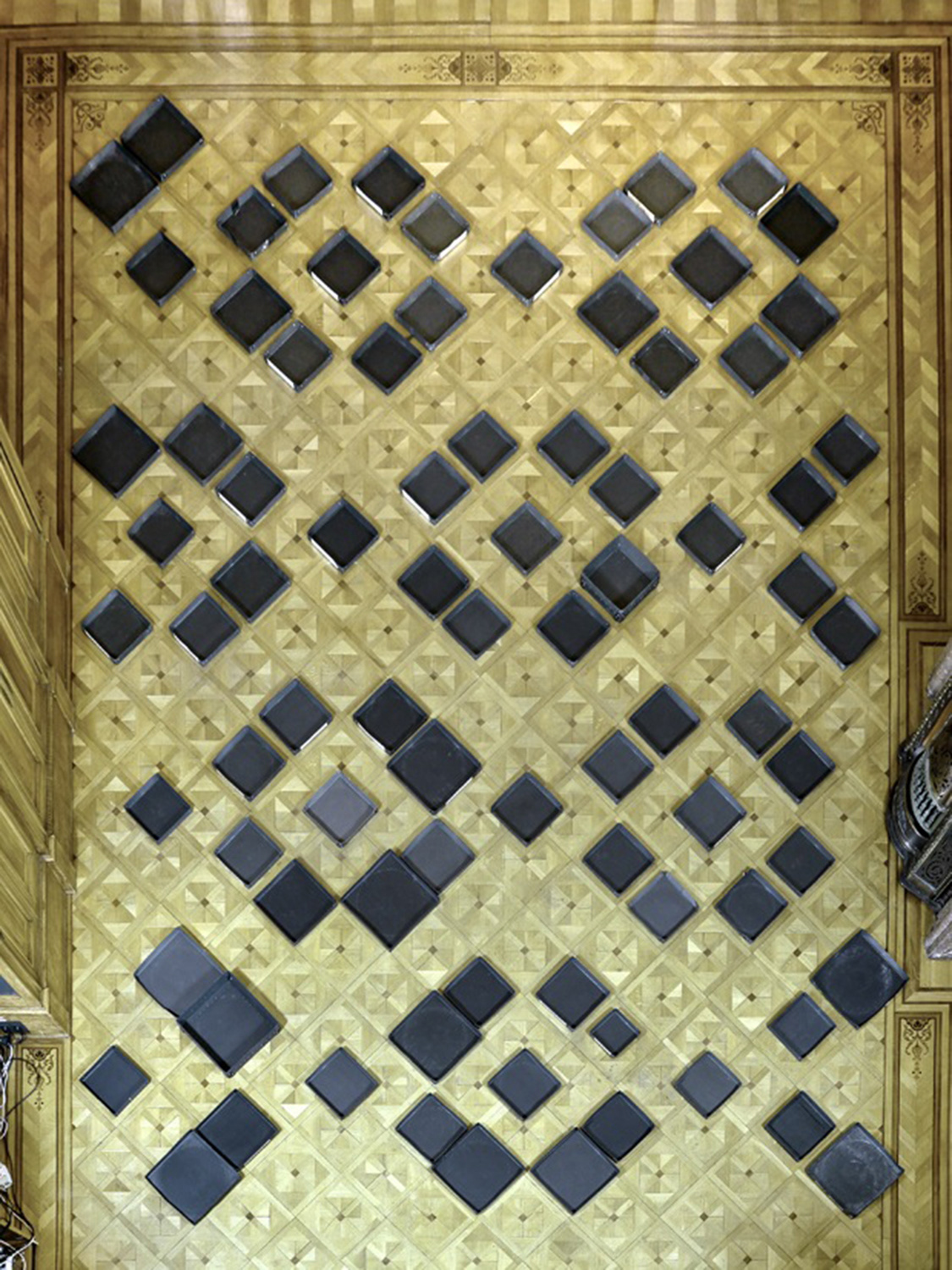
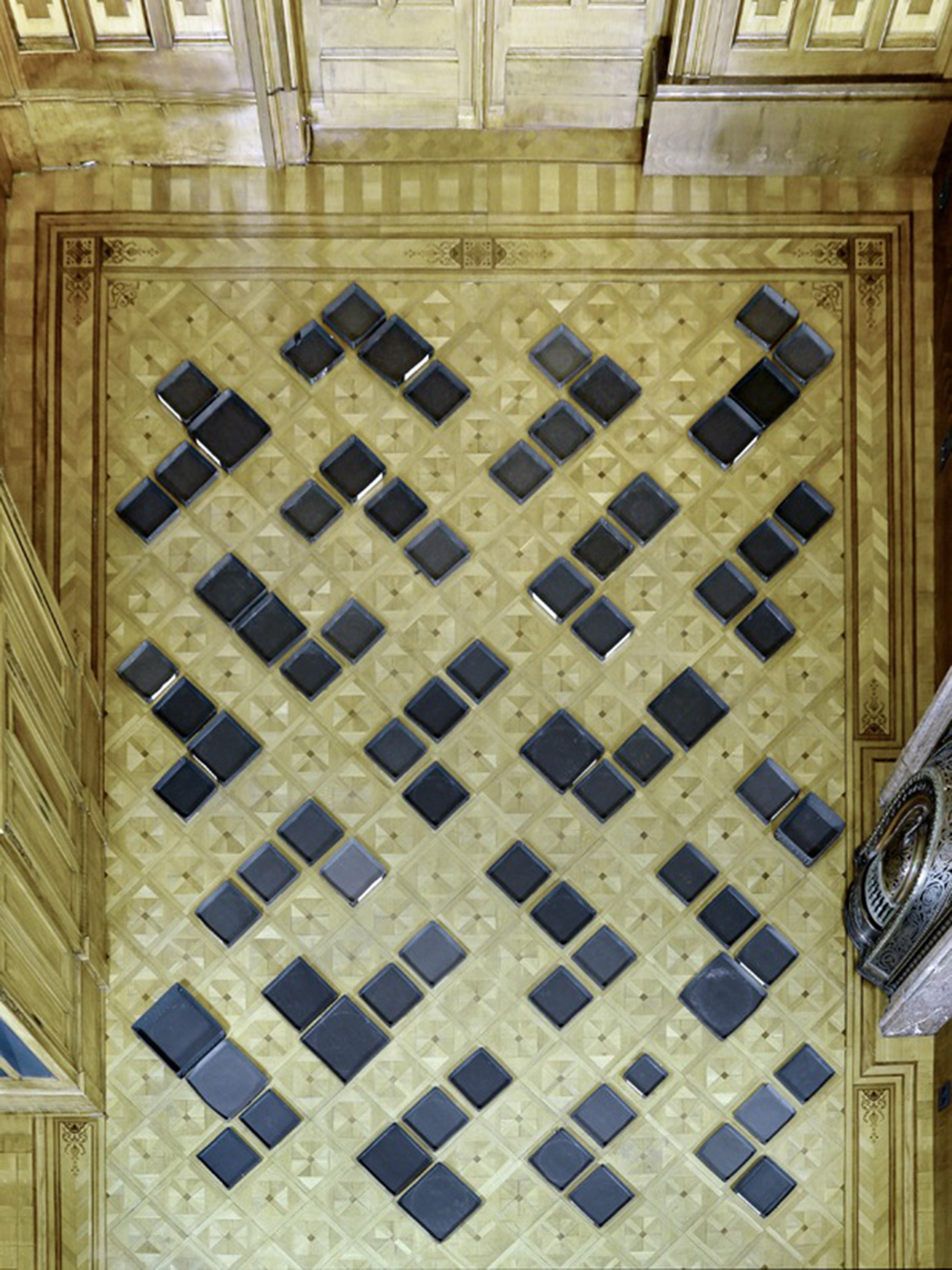
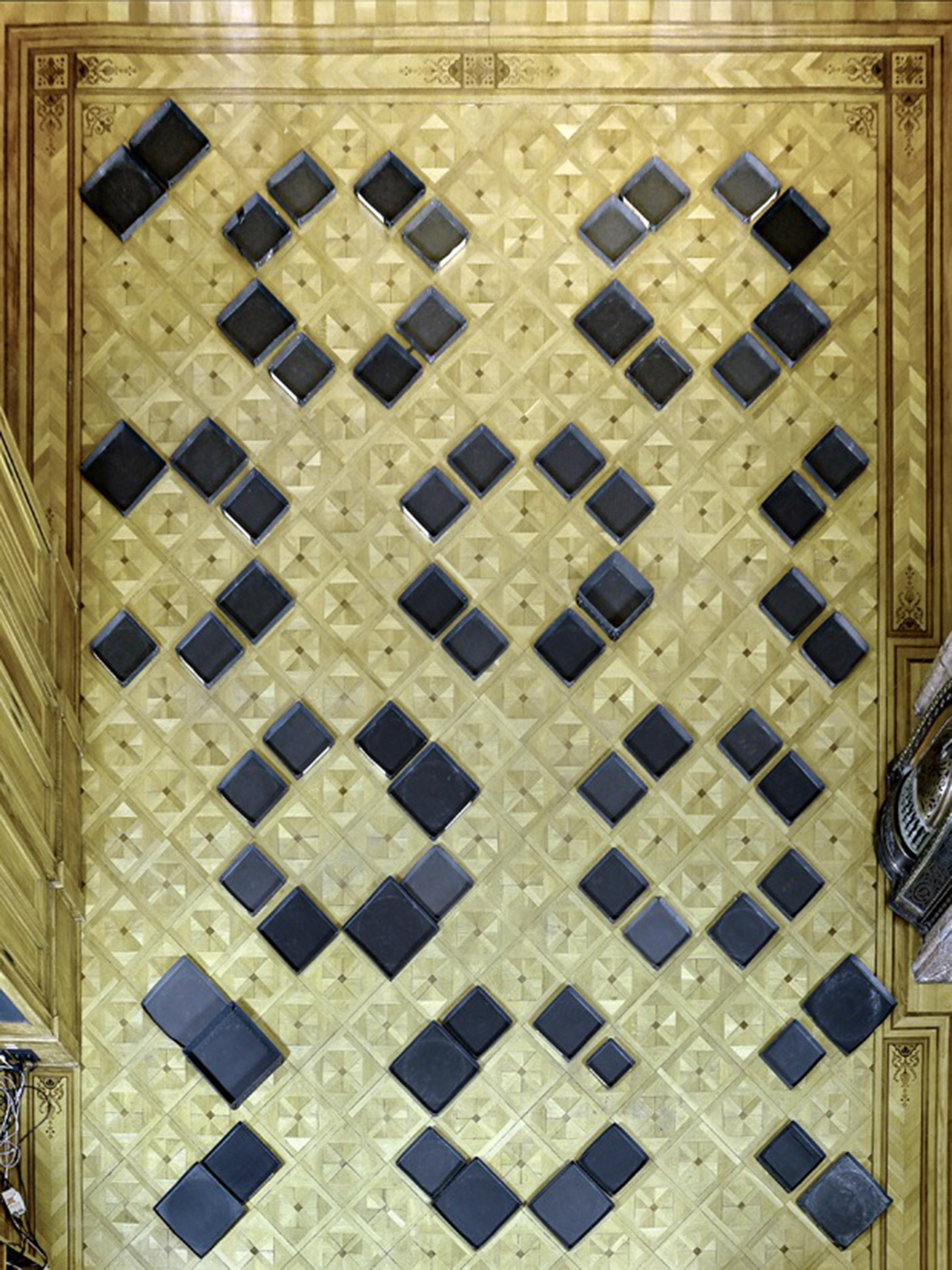
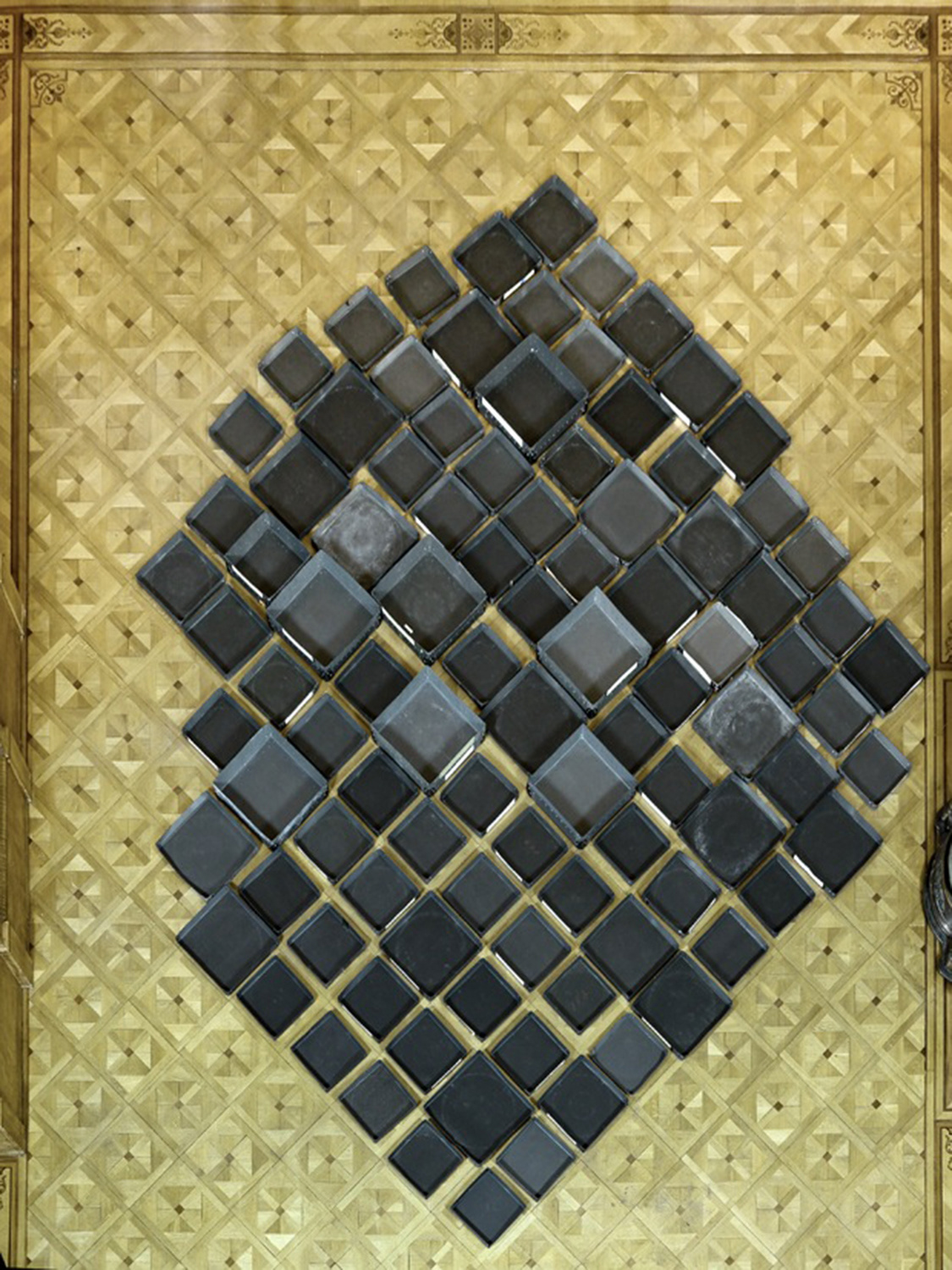
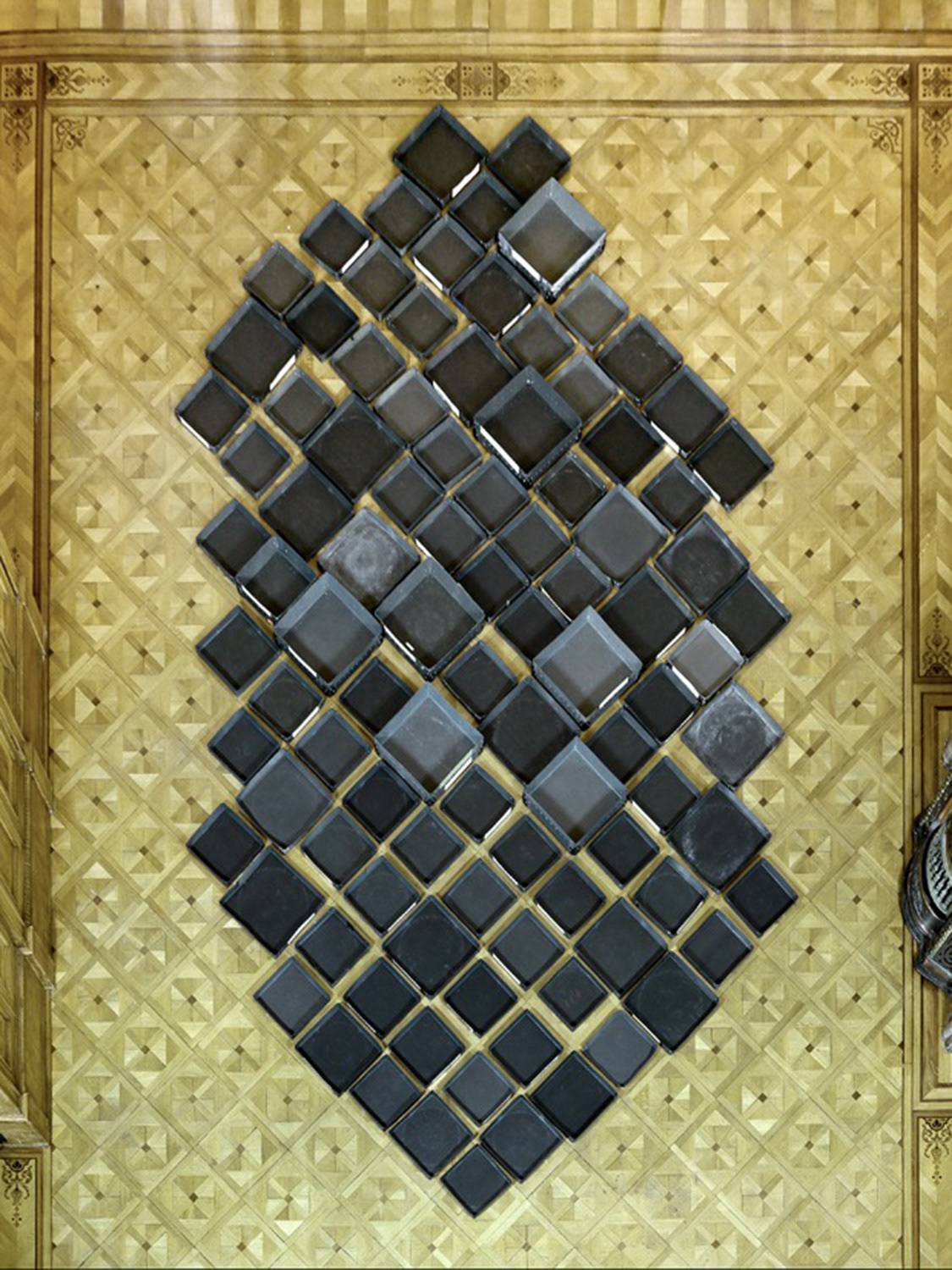
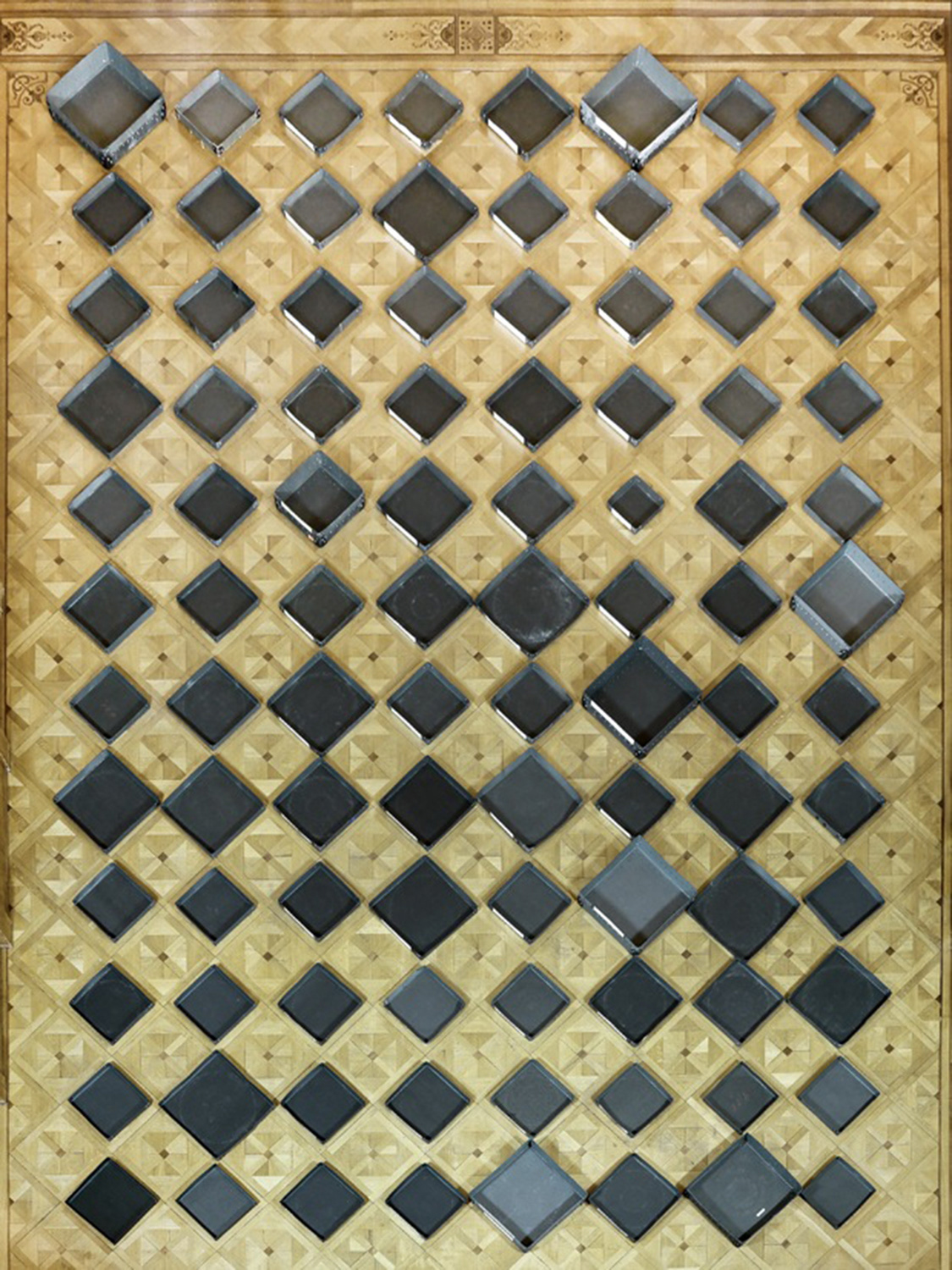
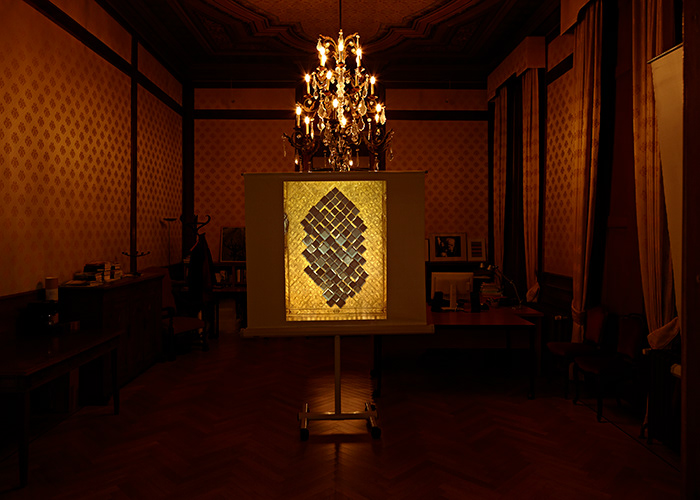
Installation view, 'The Goethe-Institut’s Reading Room Pyongyang: Between Object and Shadow', slide projection with 80 35mm slides, 2013 ( photo: Johannes Schwartz)
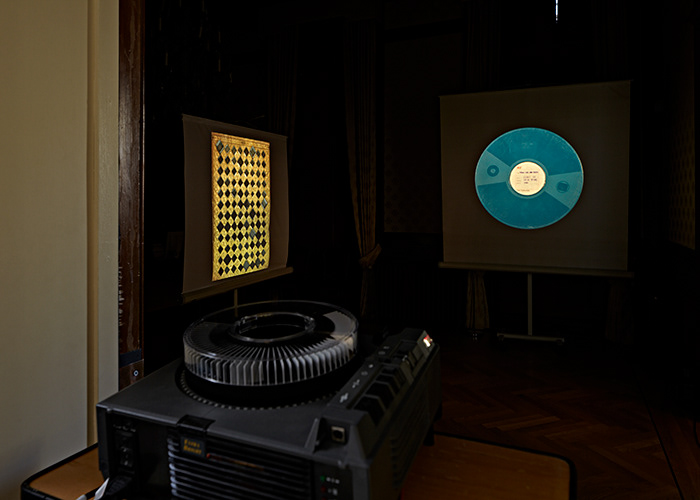
photo: Johannes Schwartz
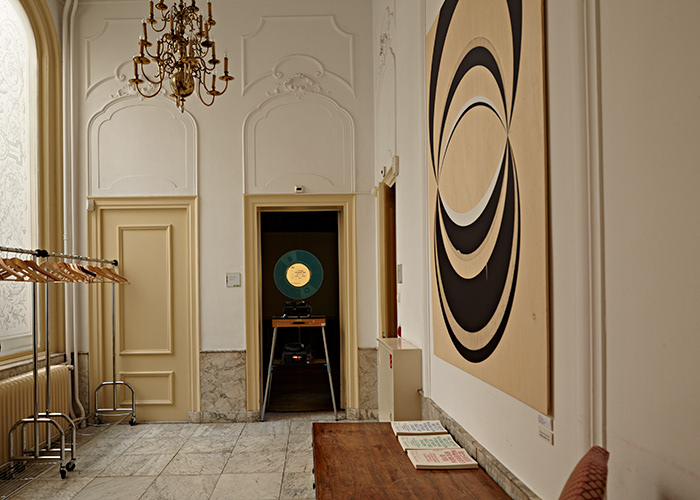
photo: Johannes Schwartz
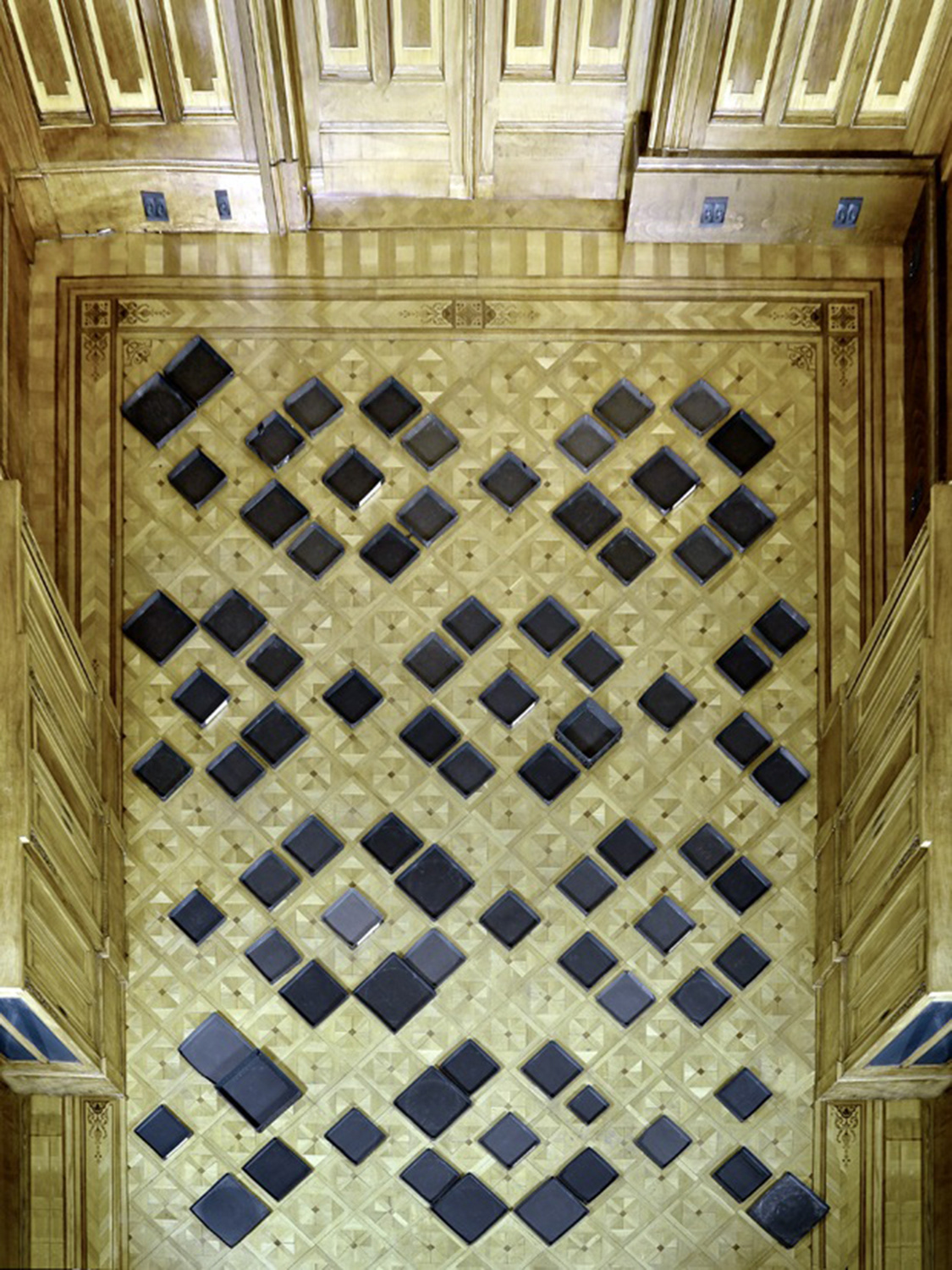
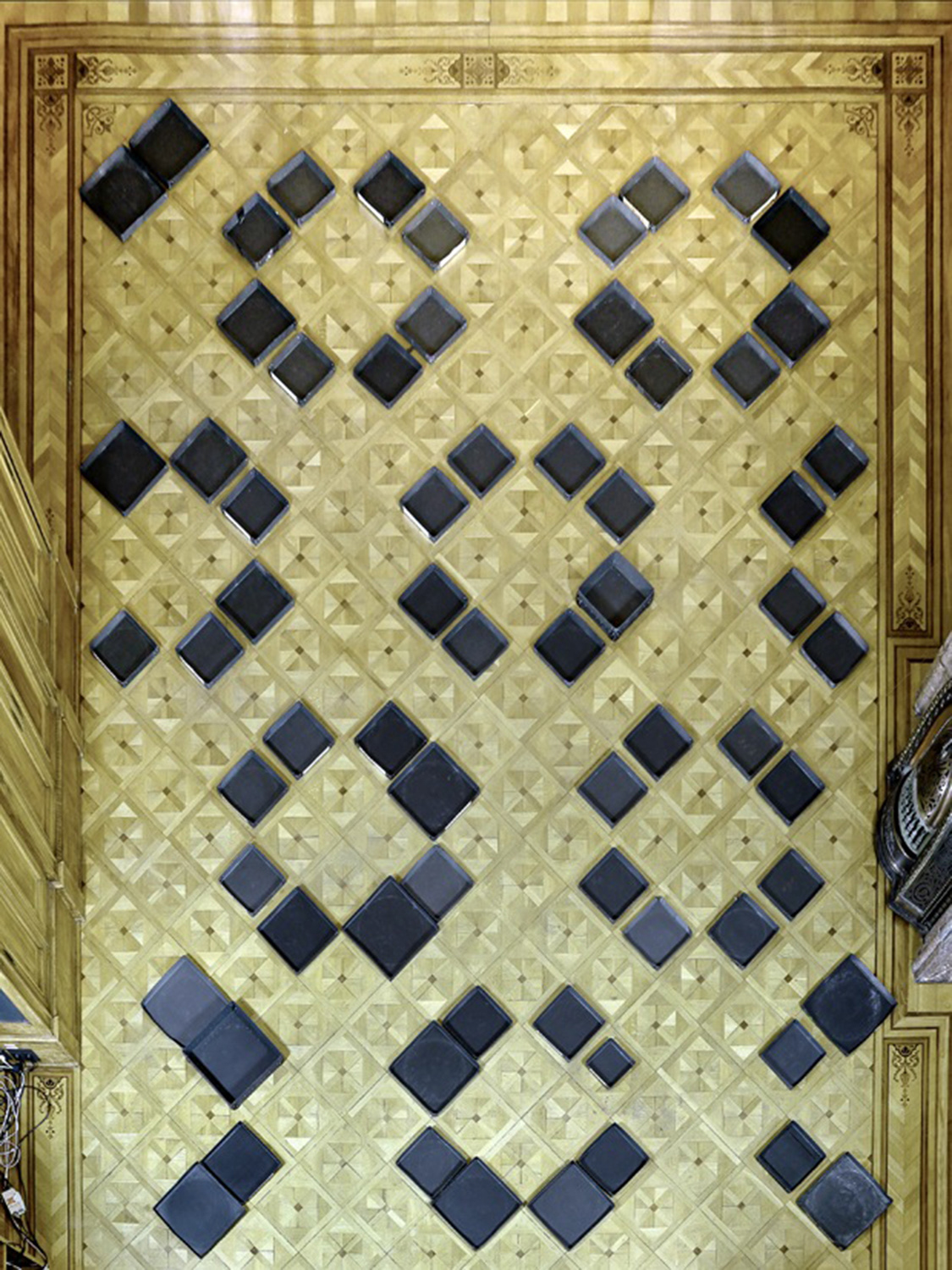
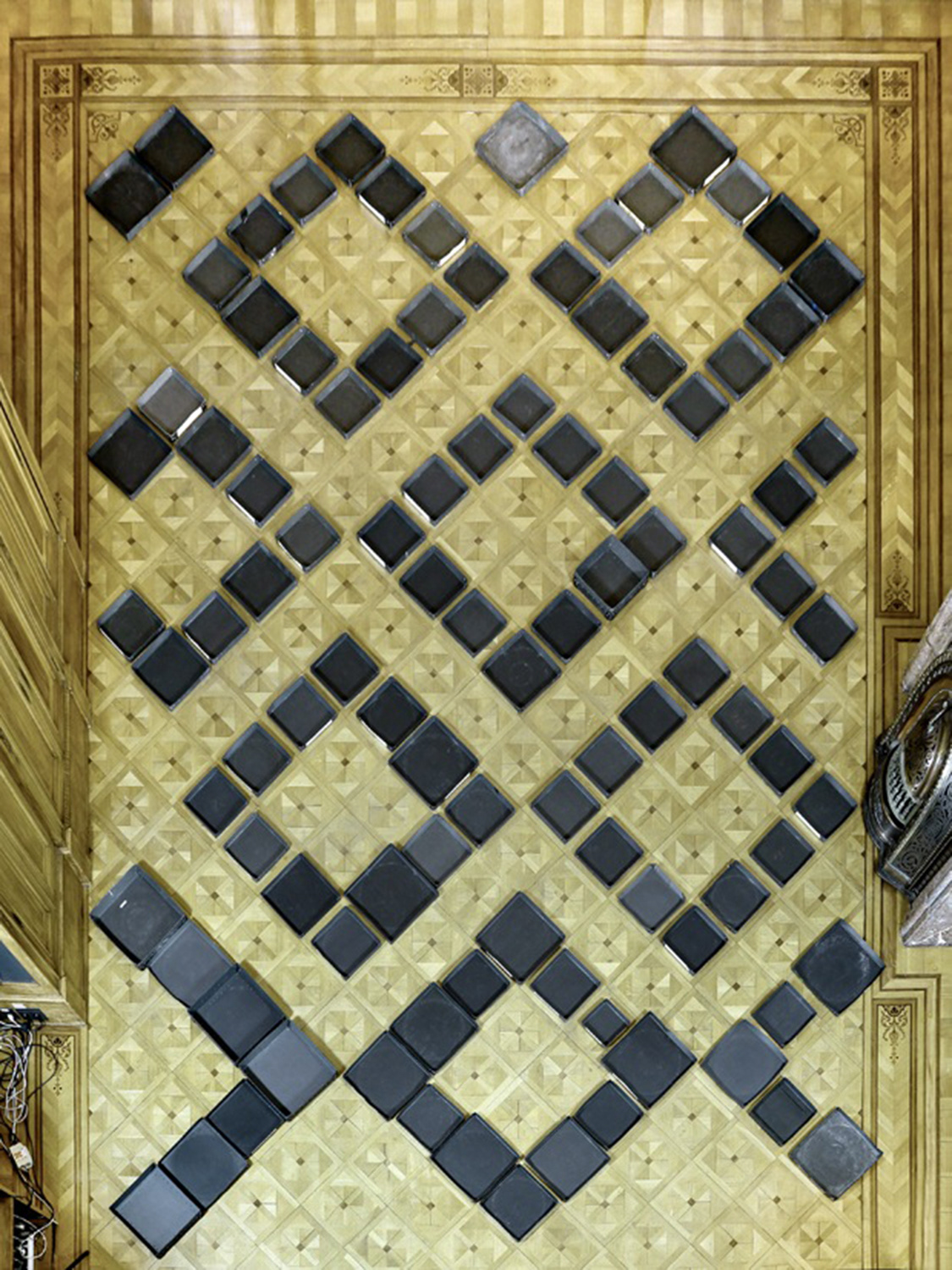
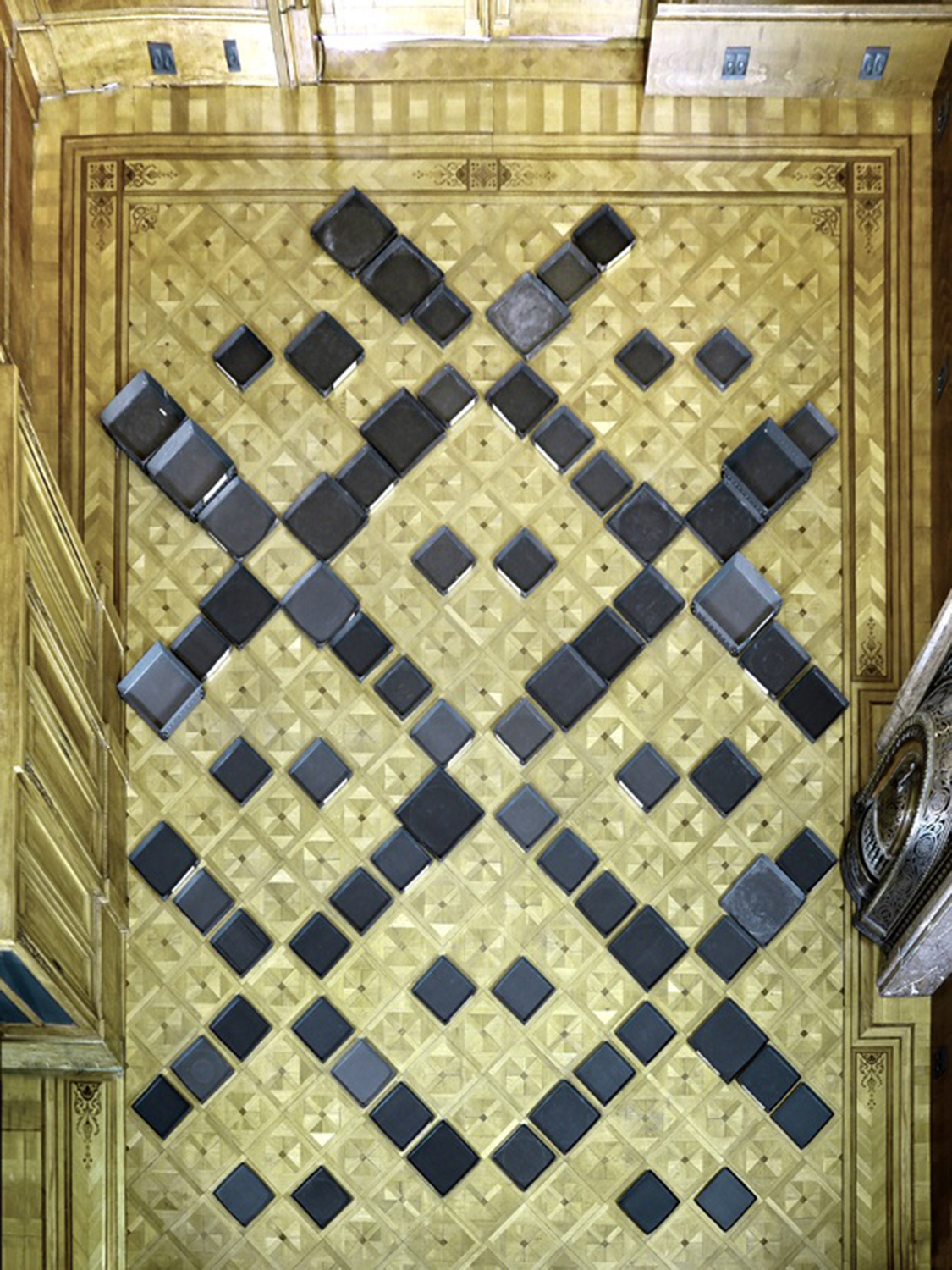
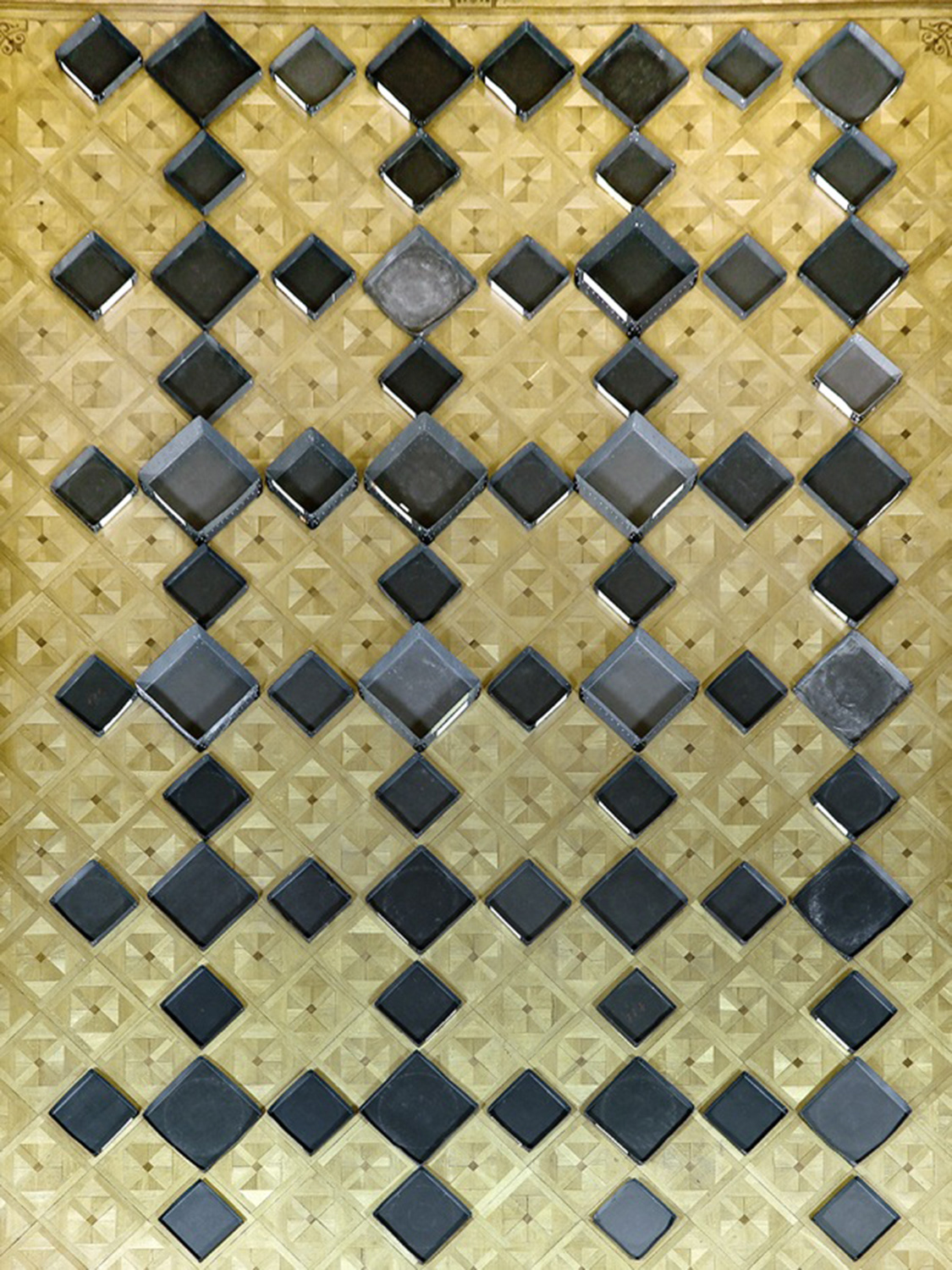
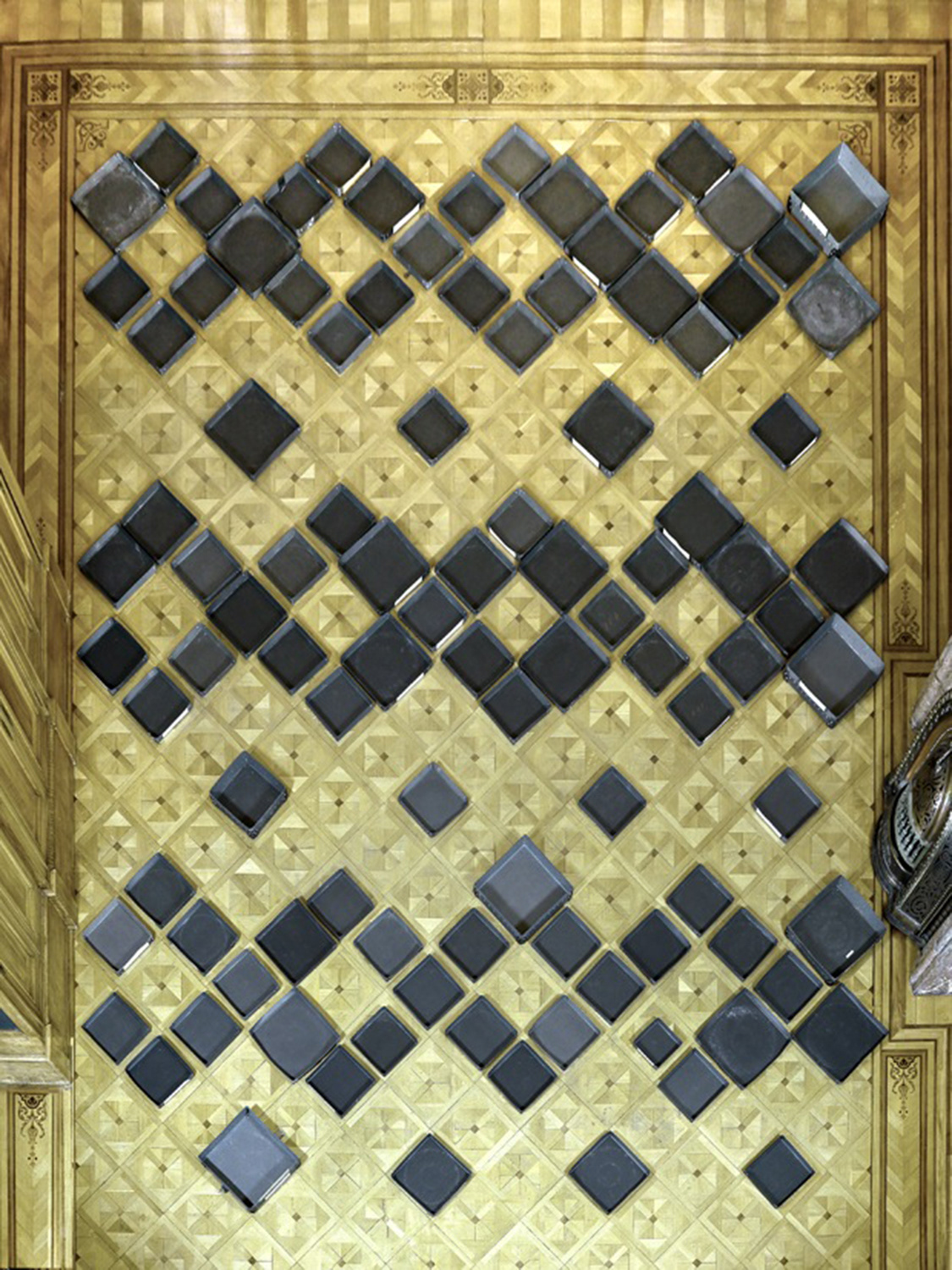
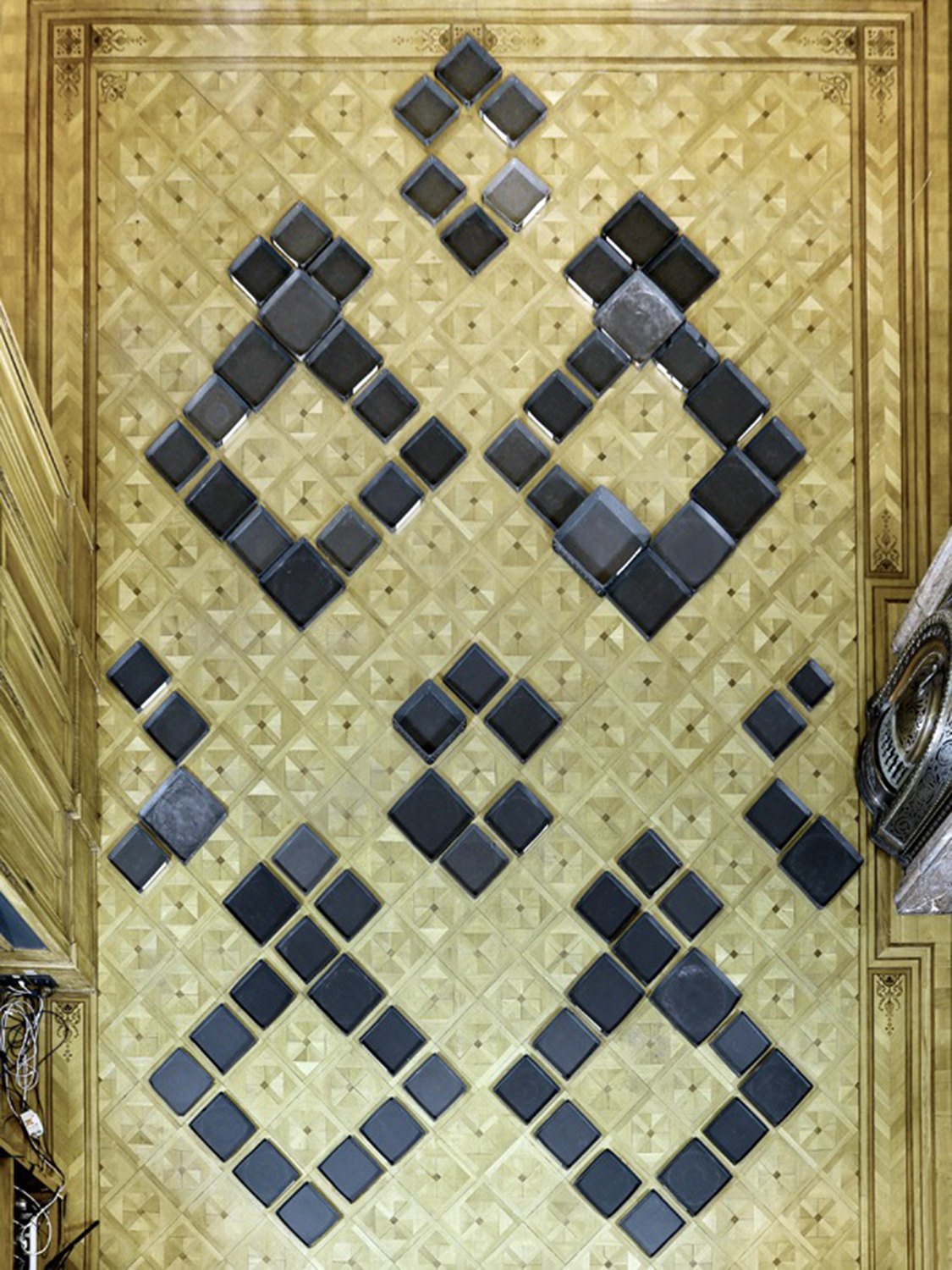
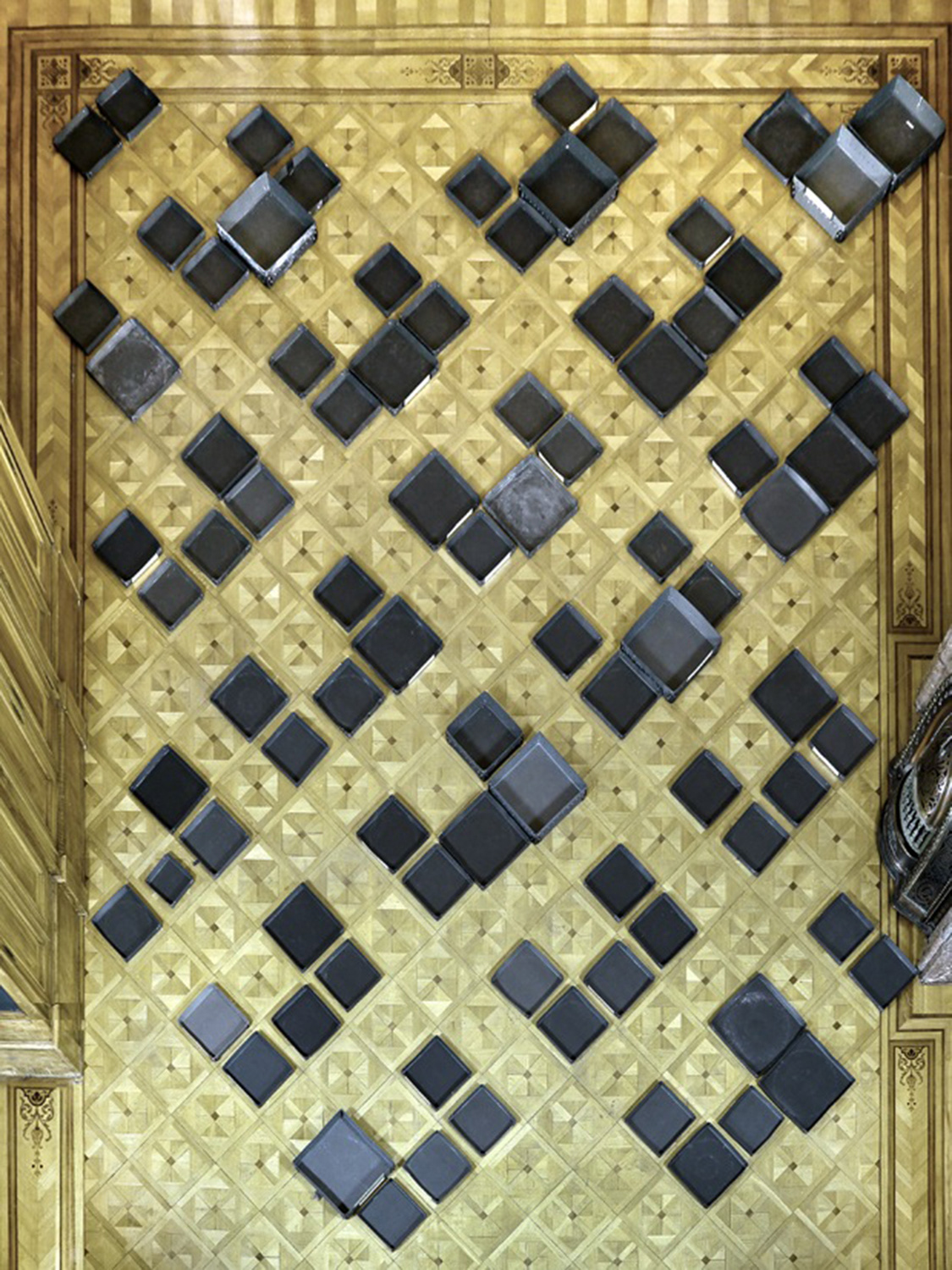
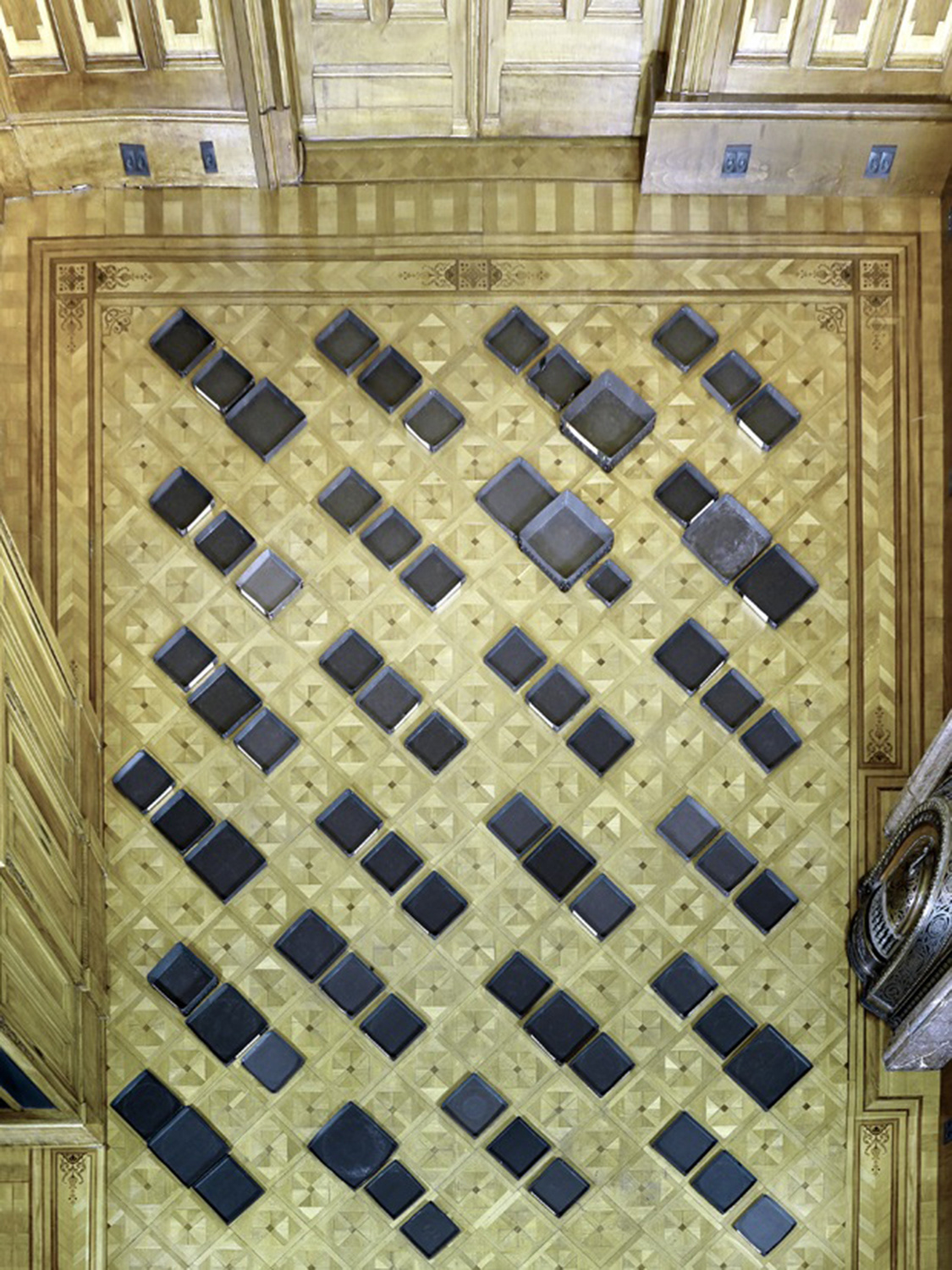
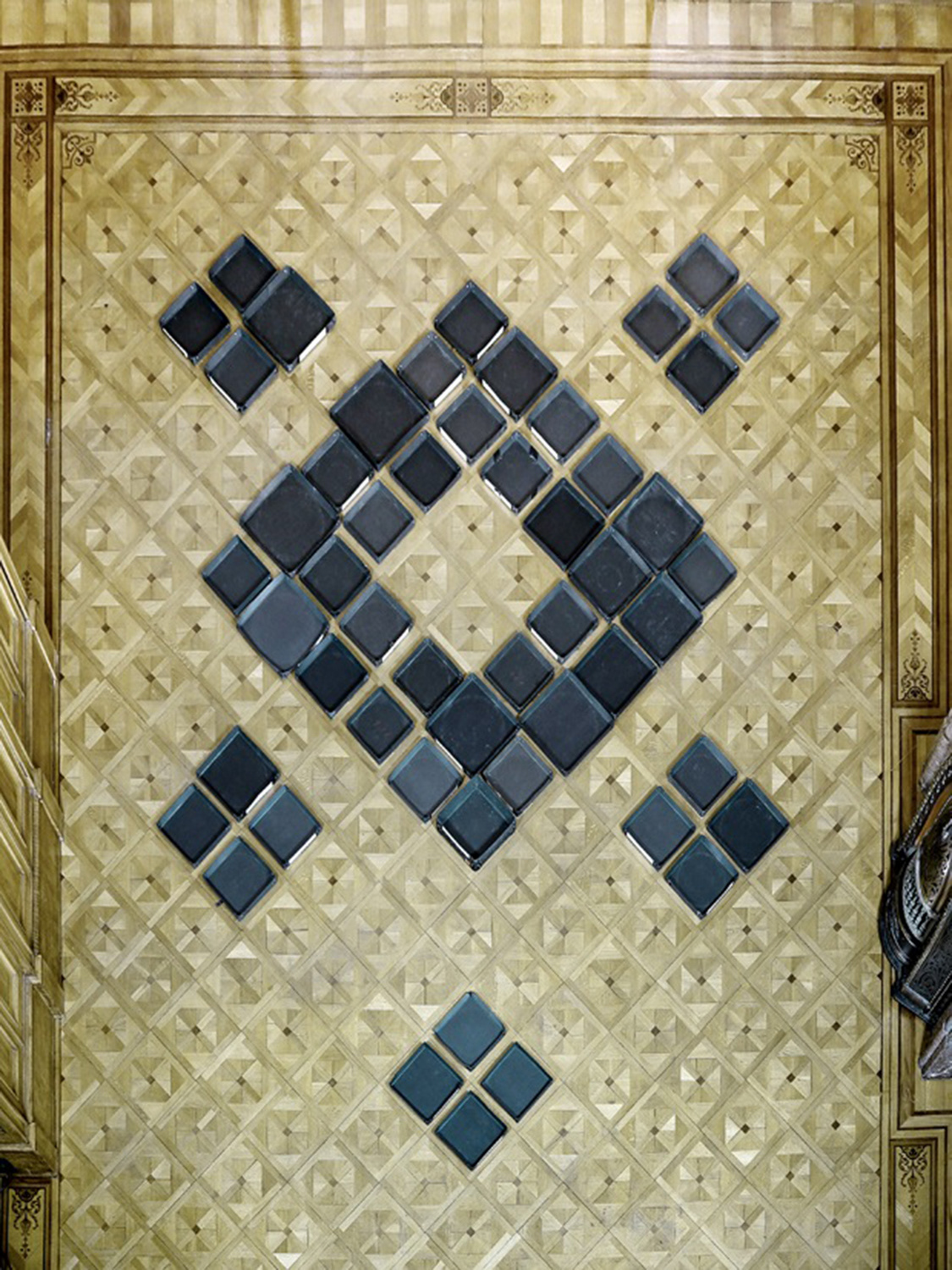
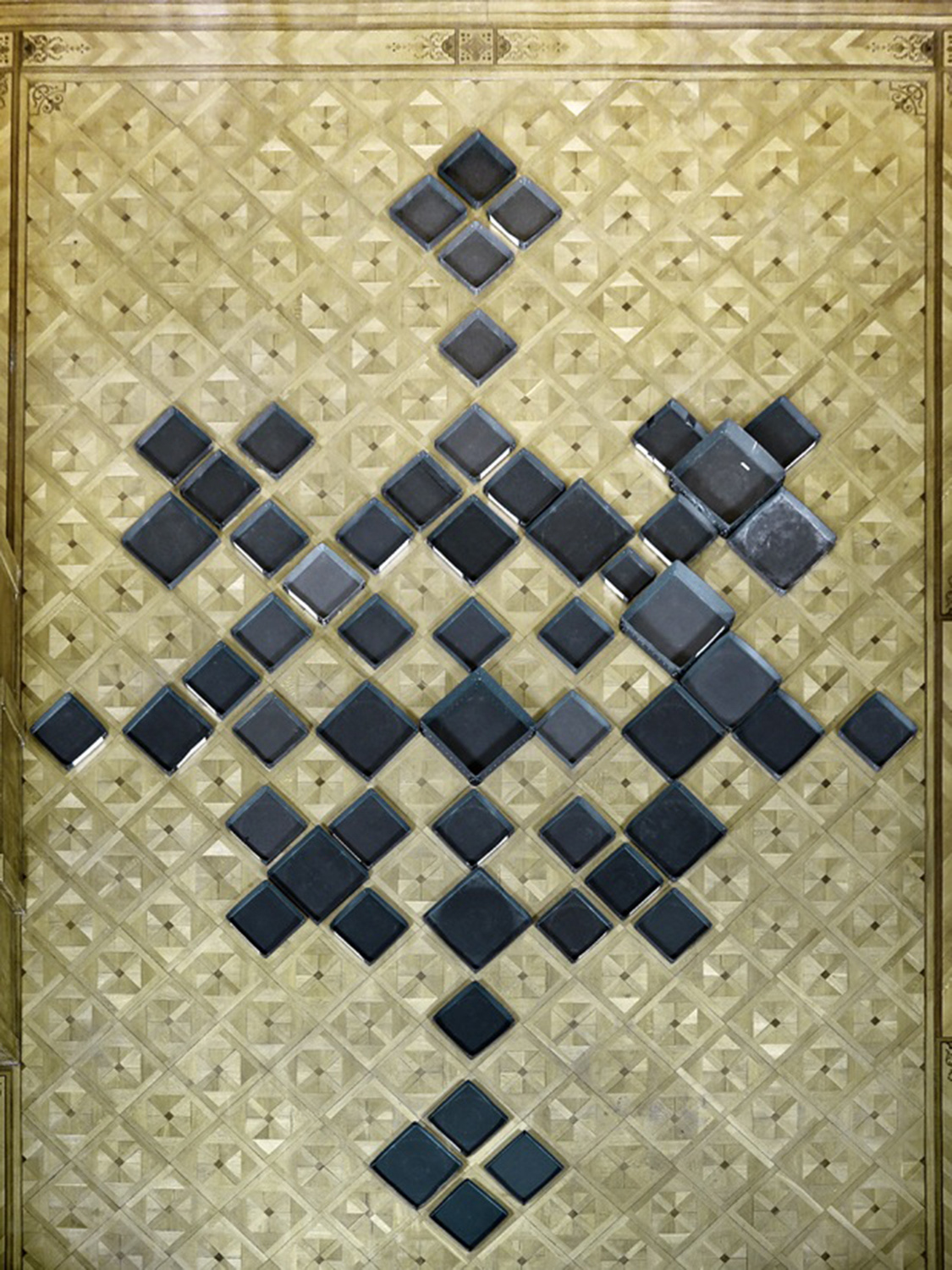
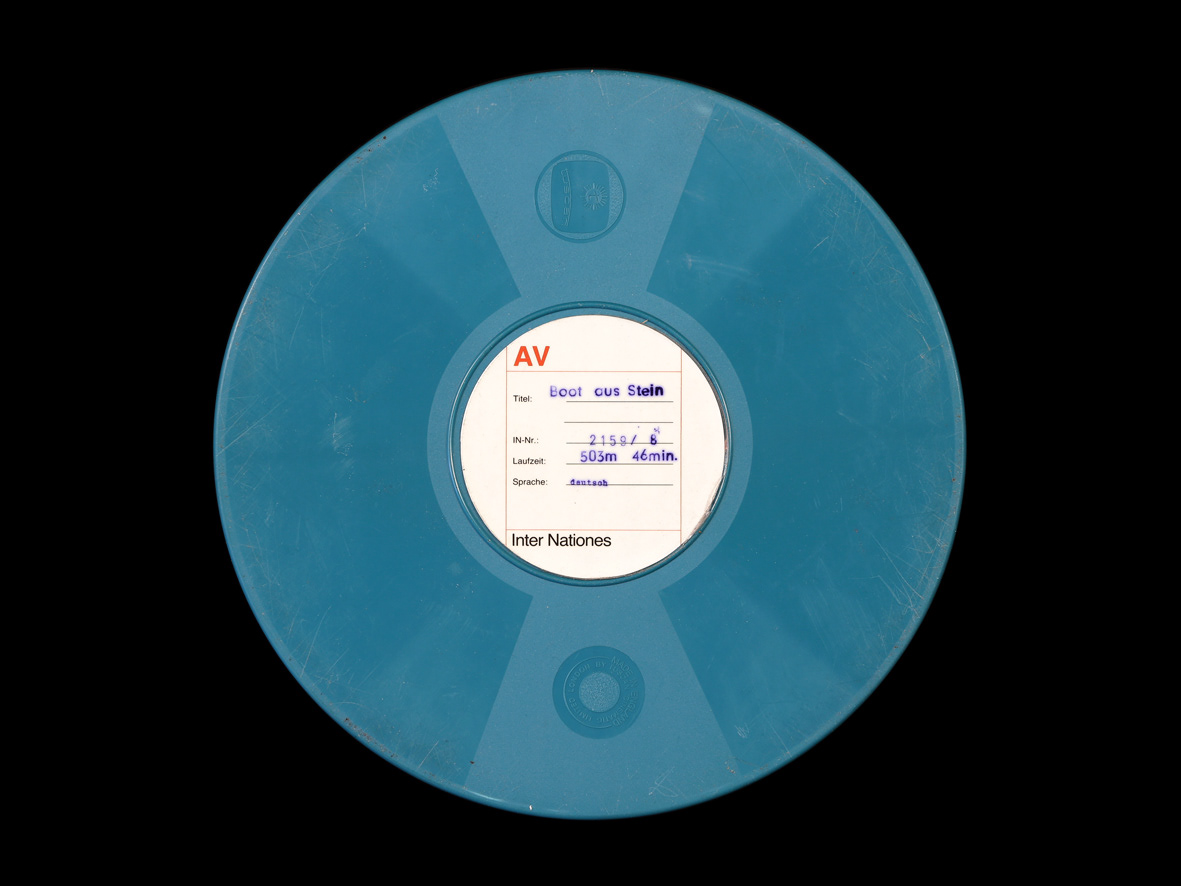
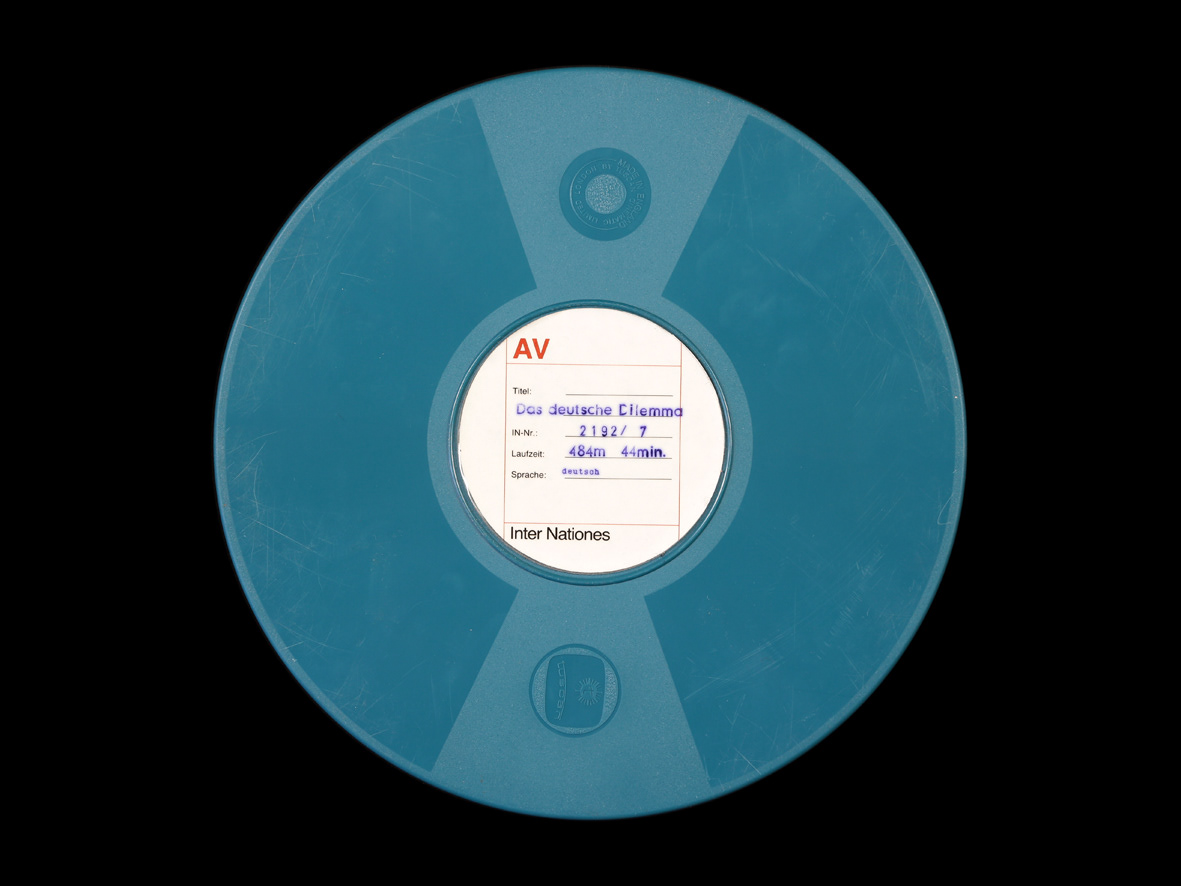
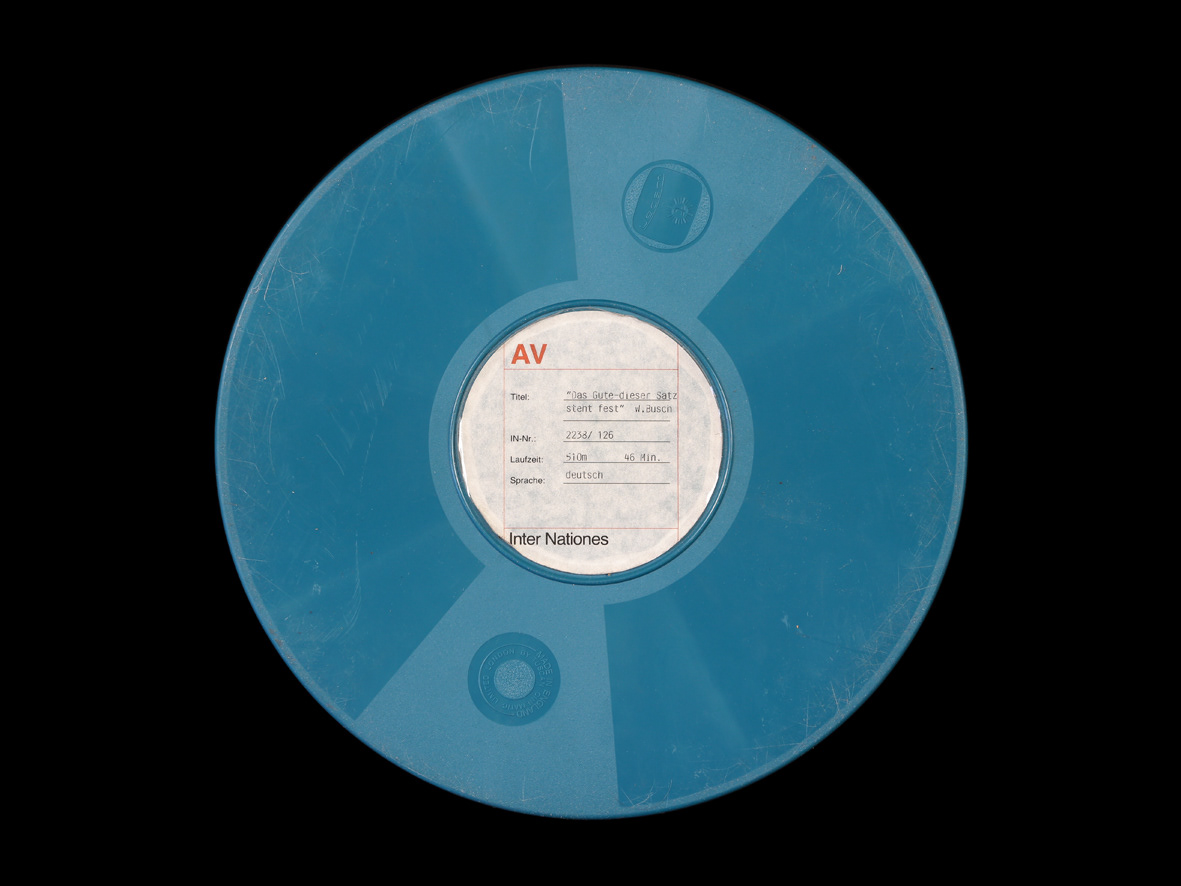
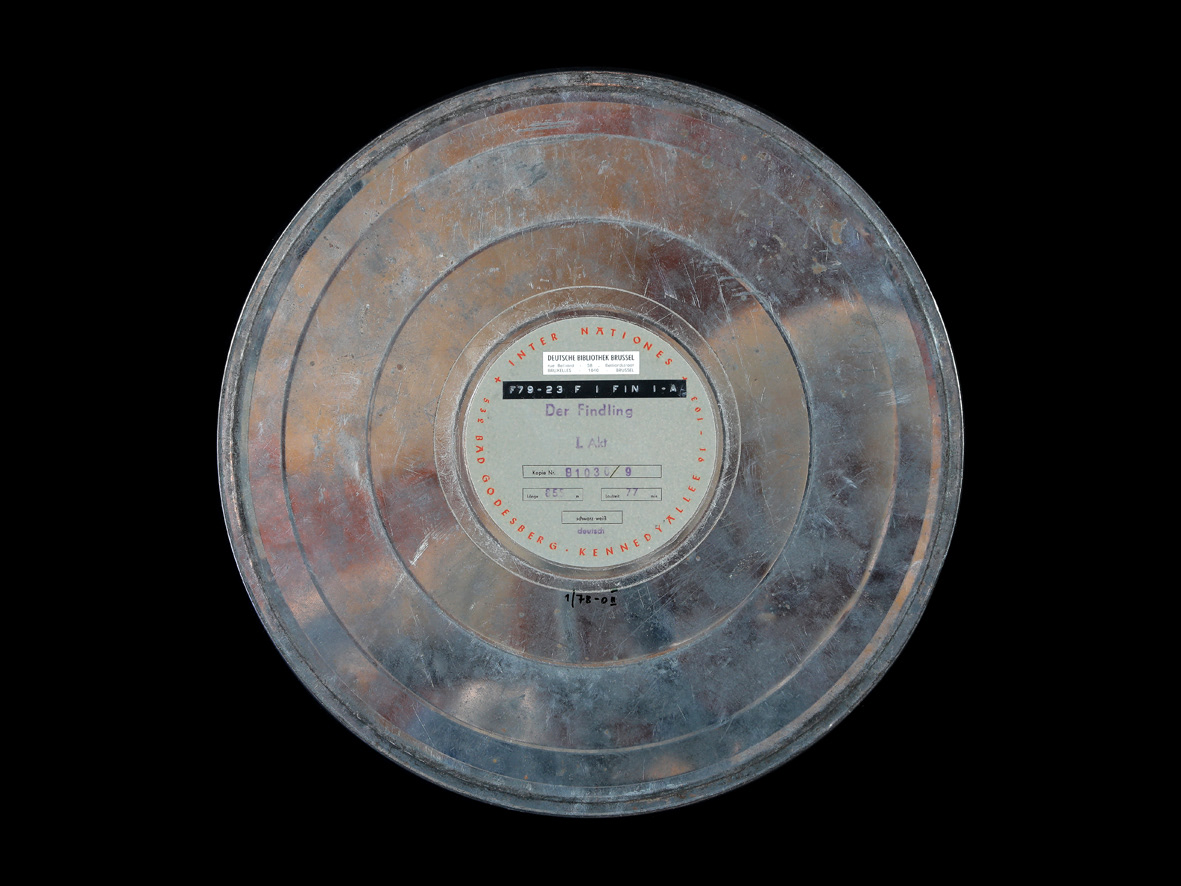
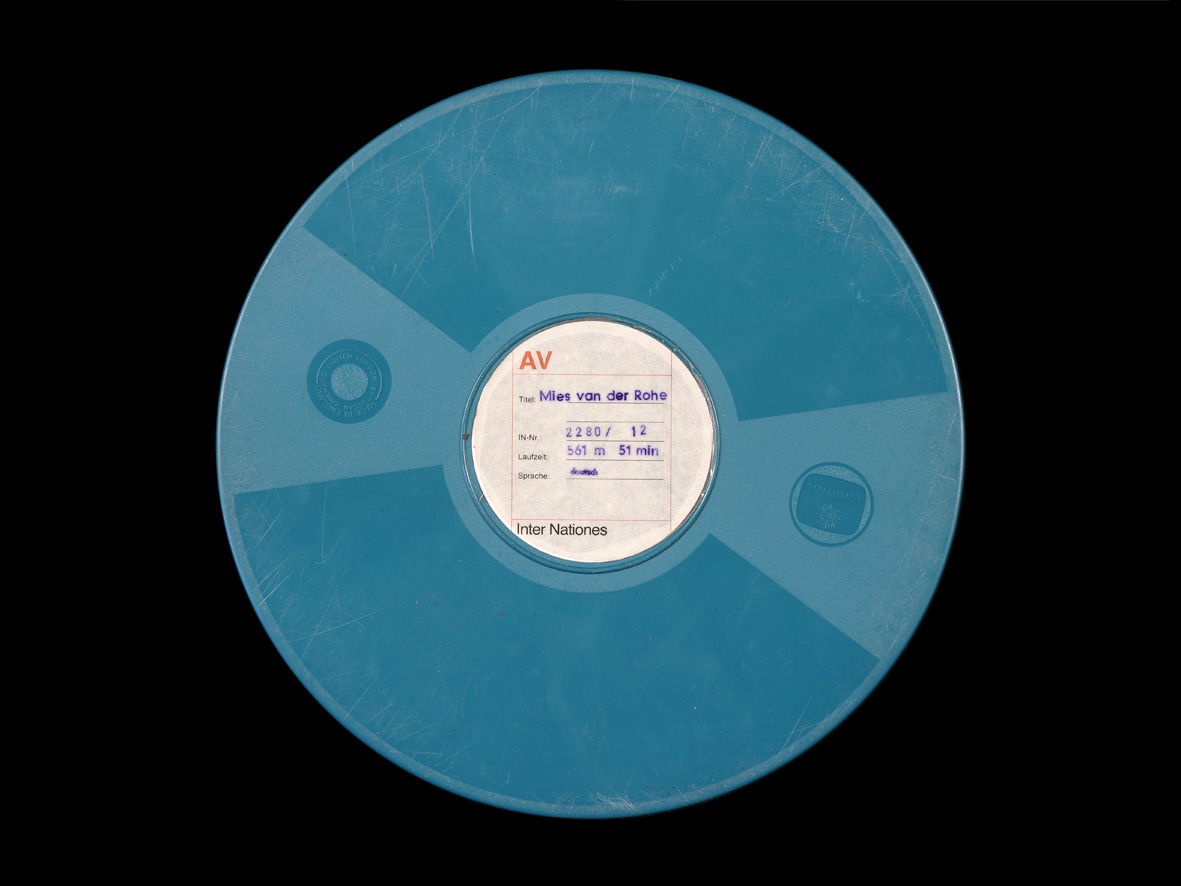
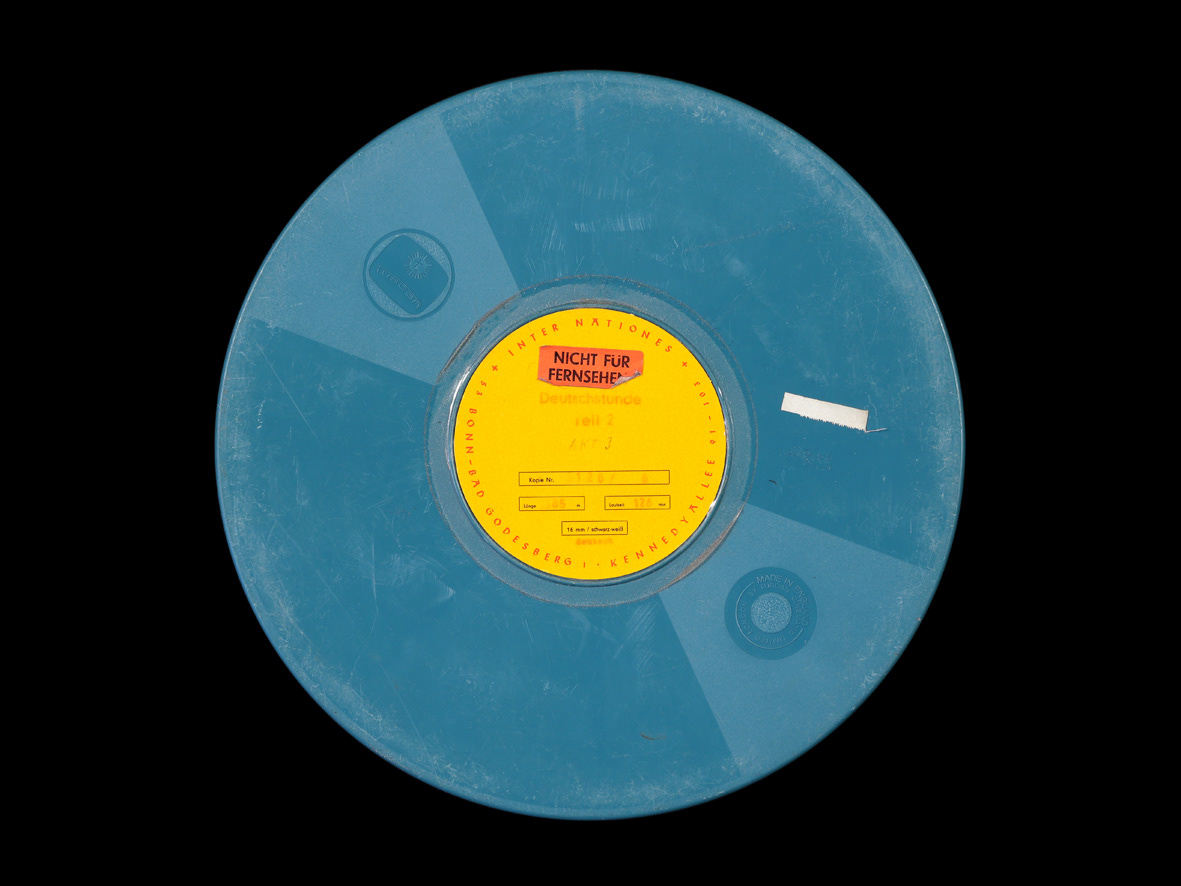
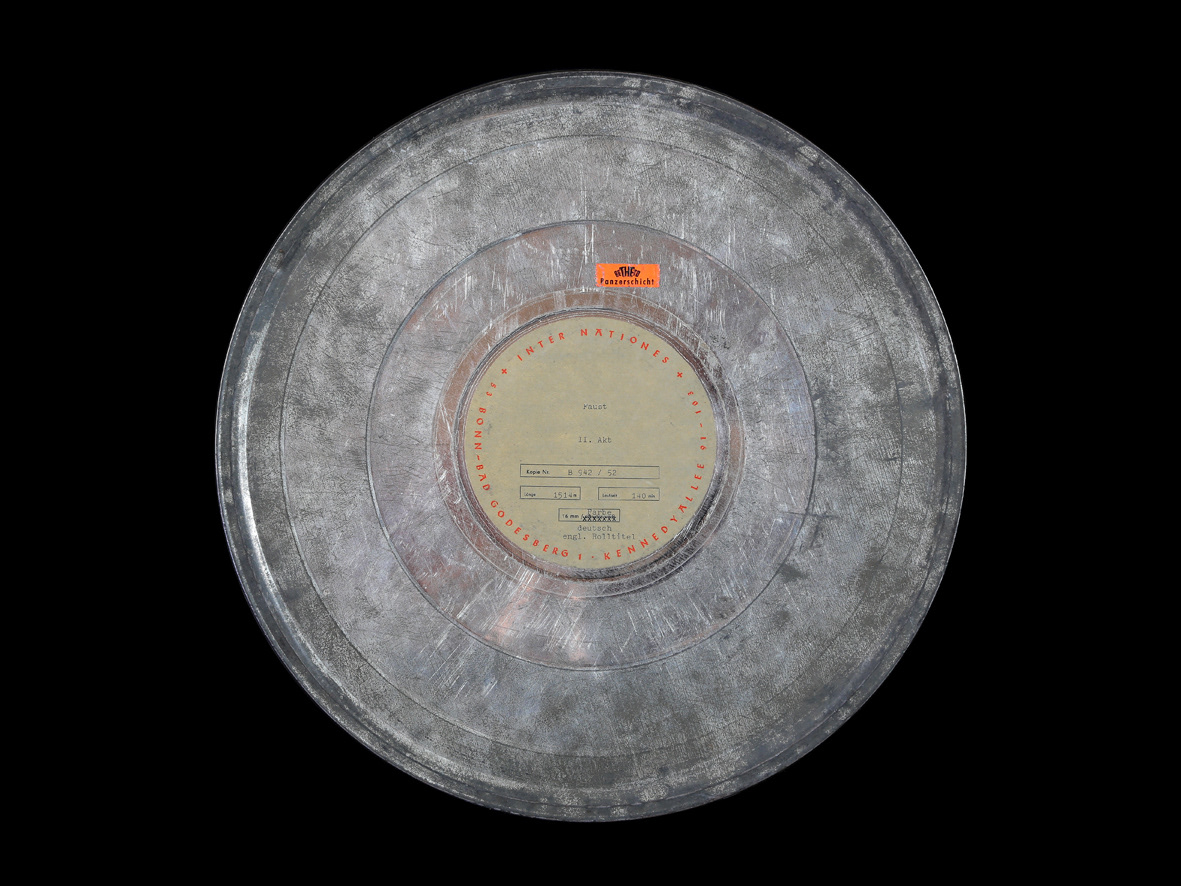
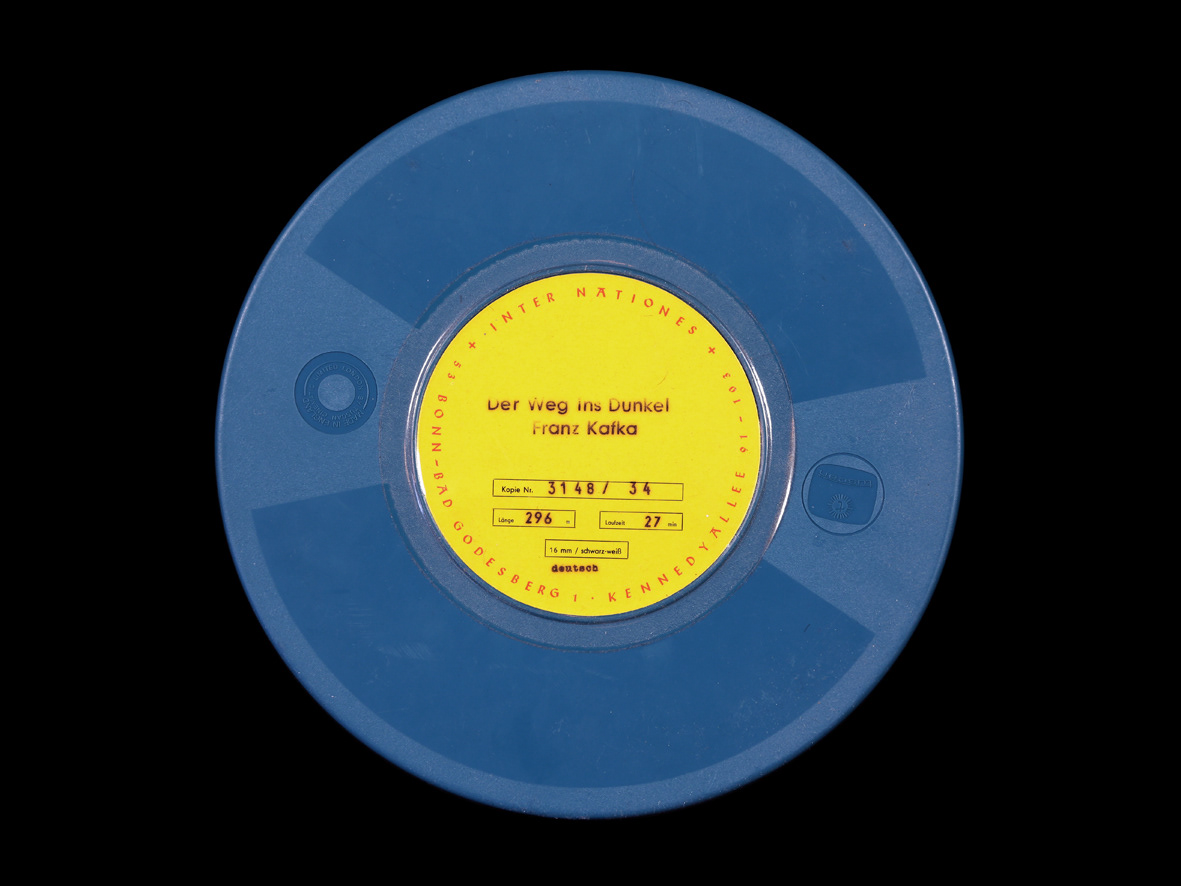
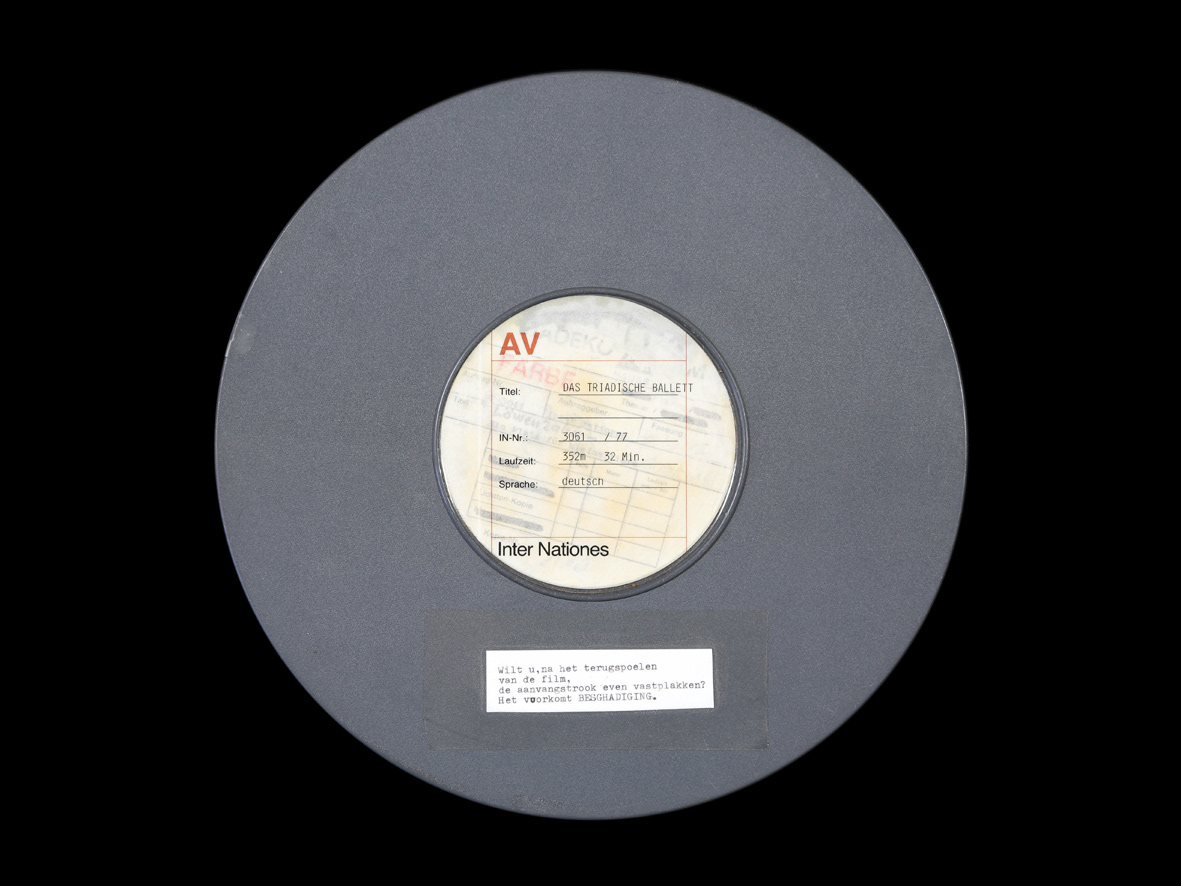
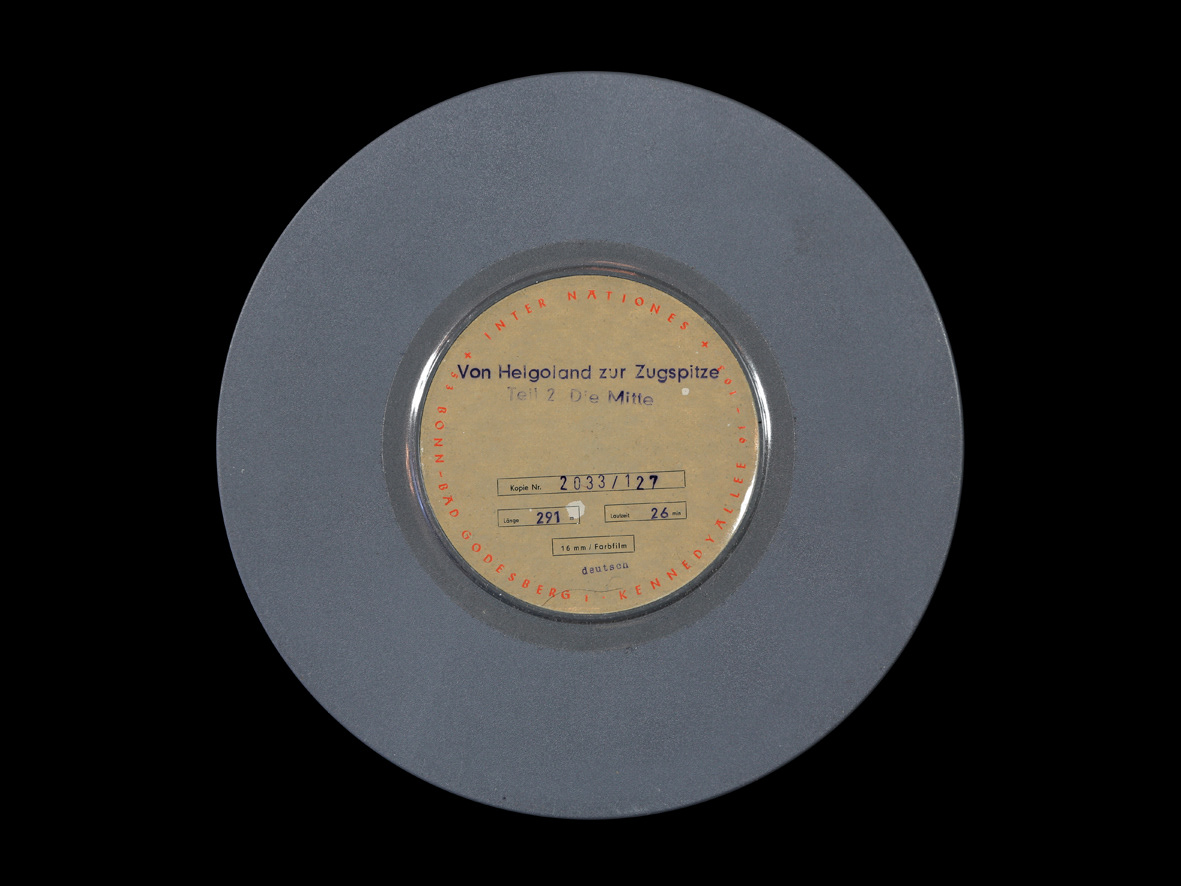
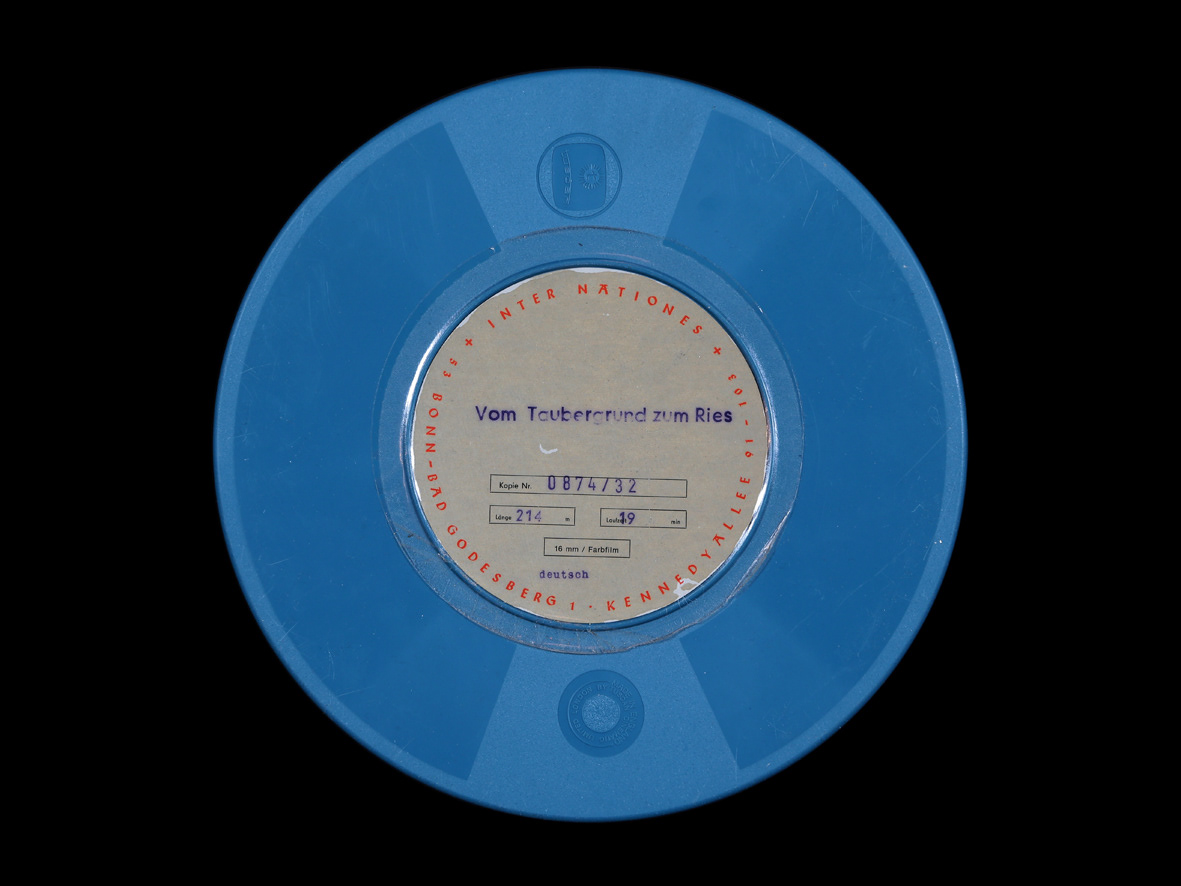
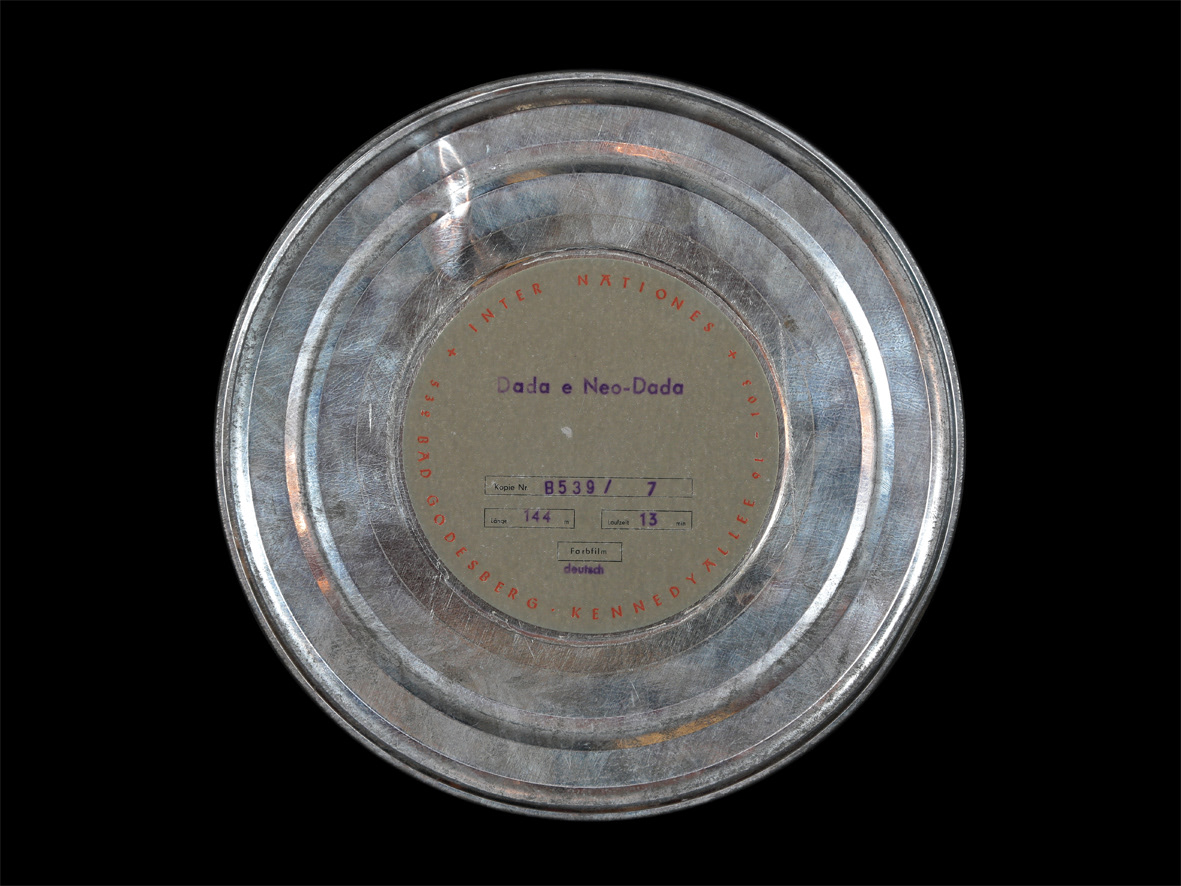
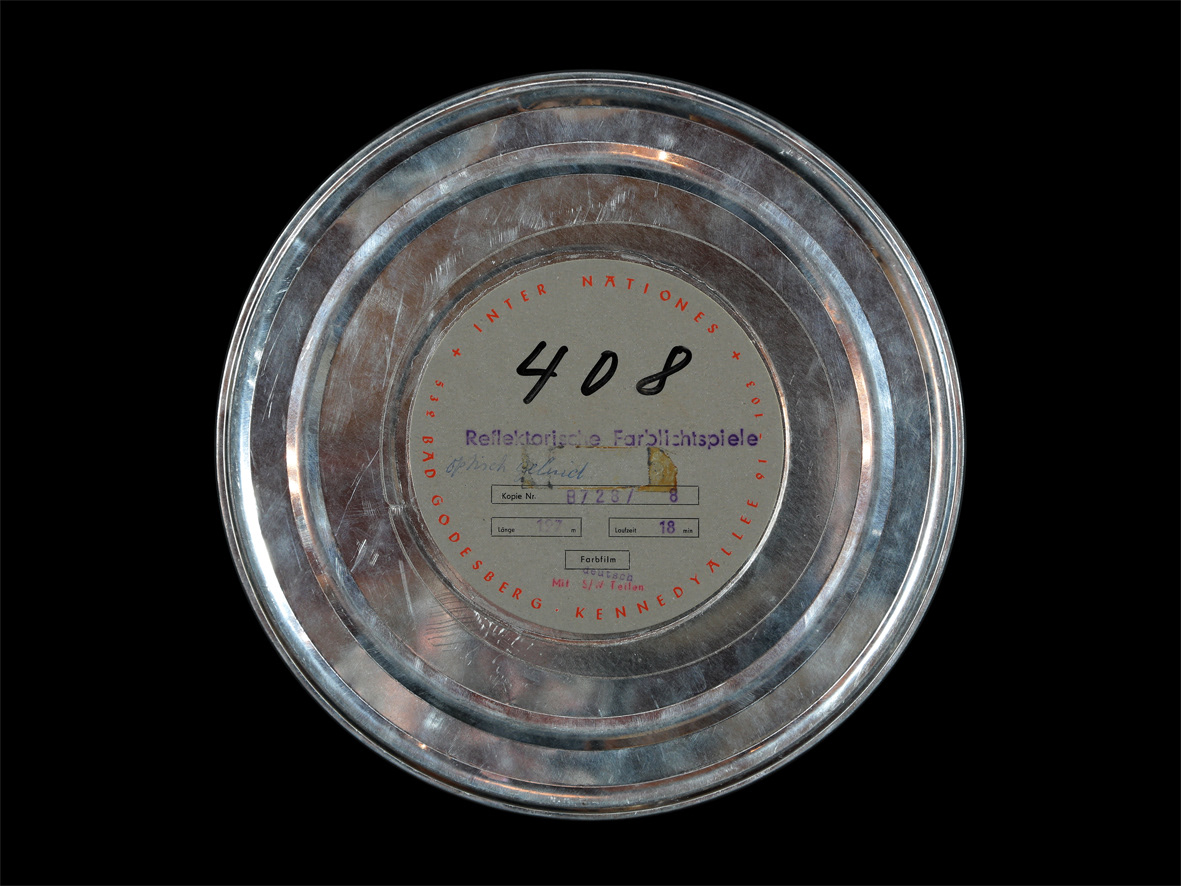
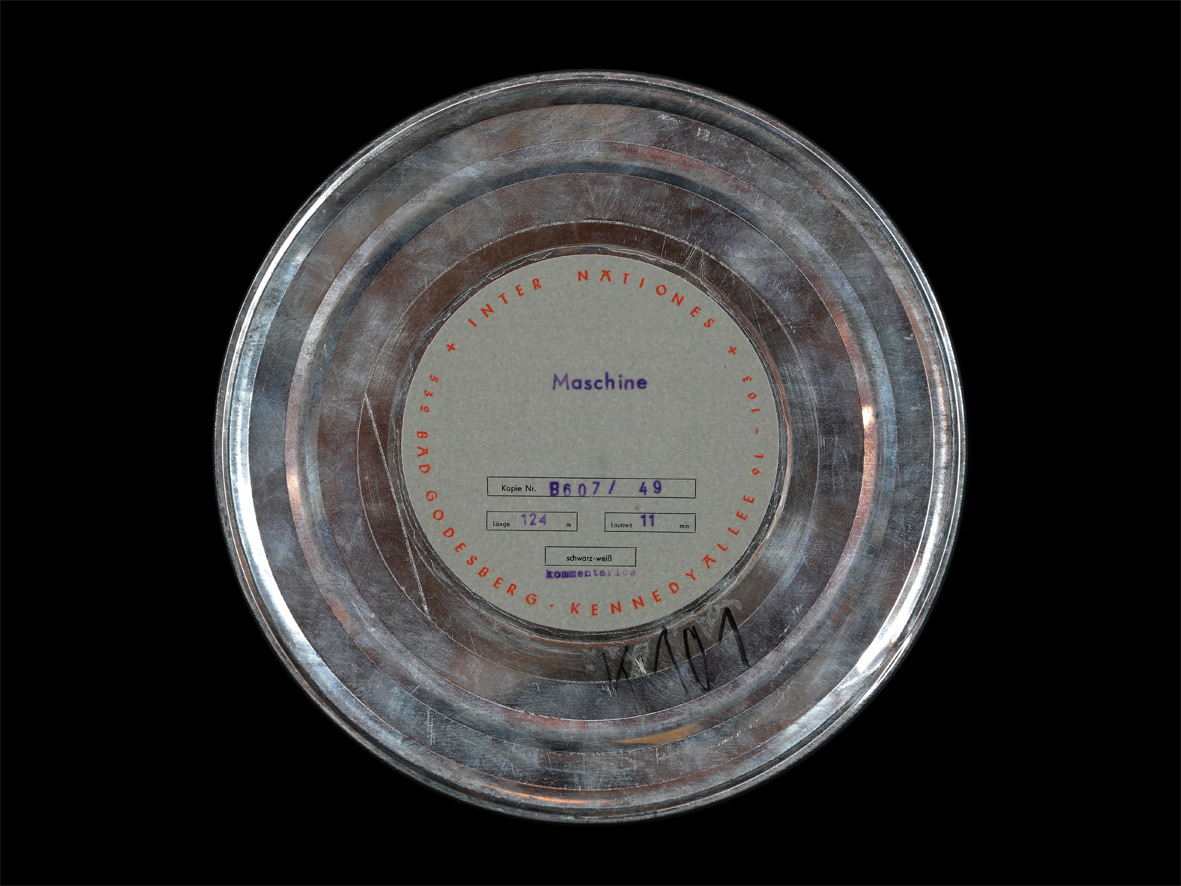
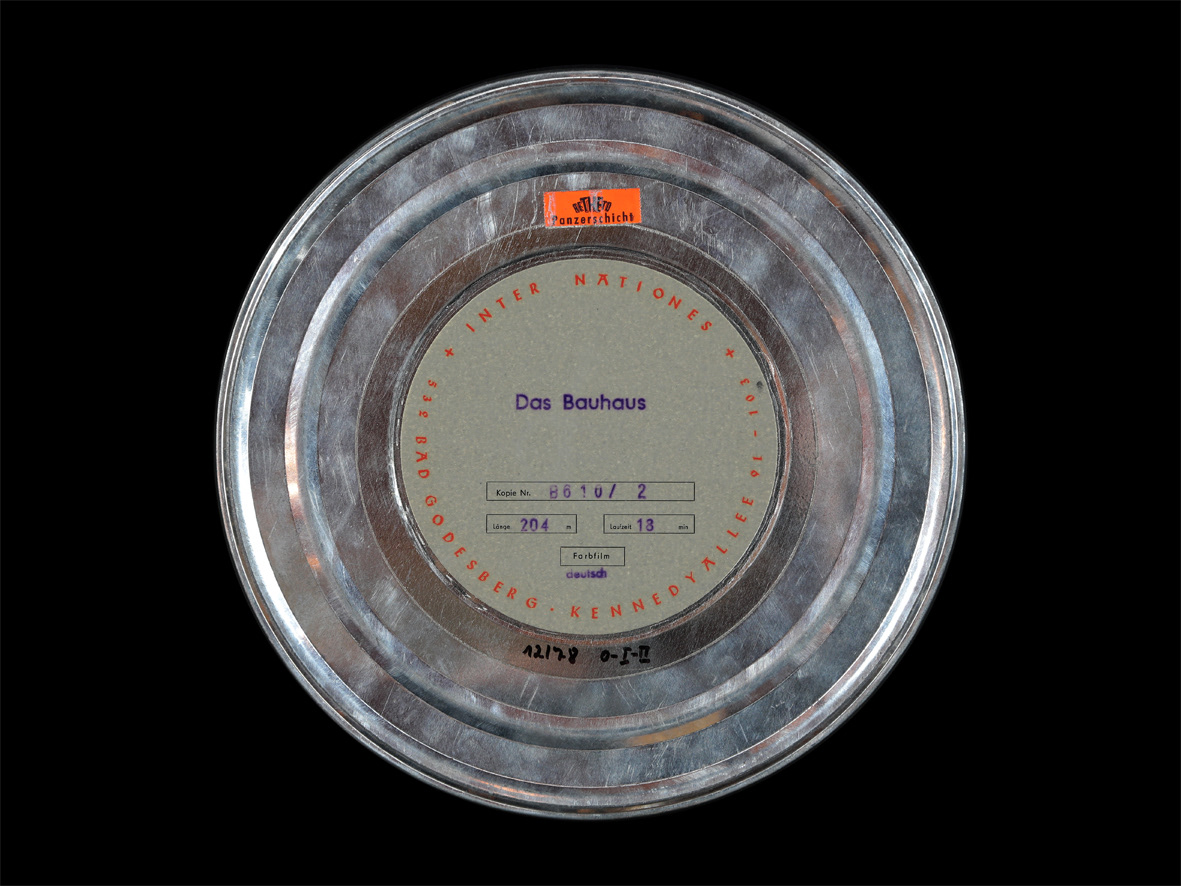
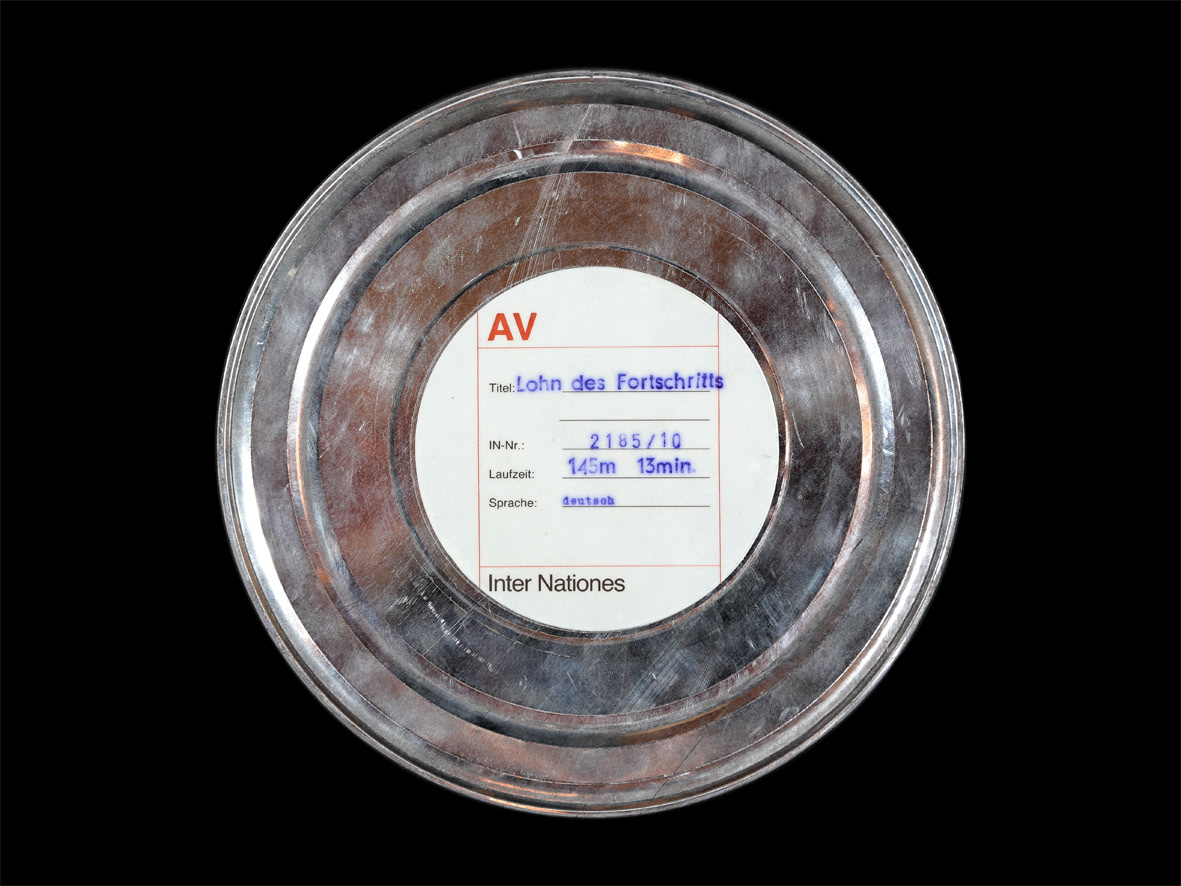
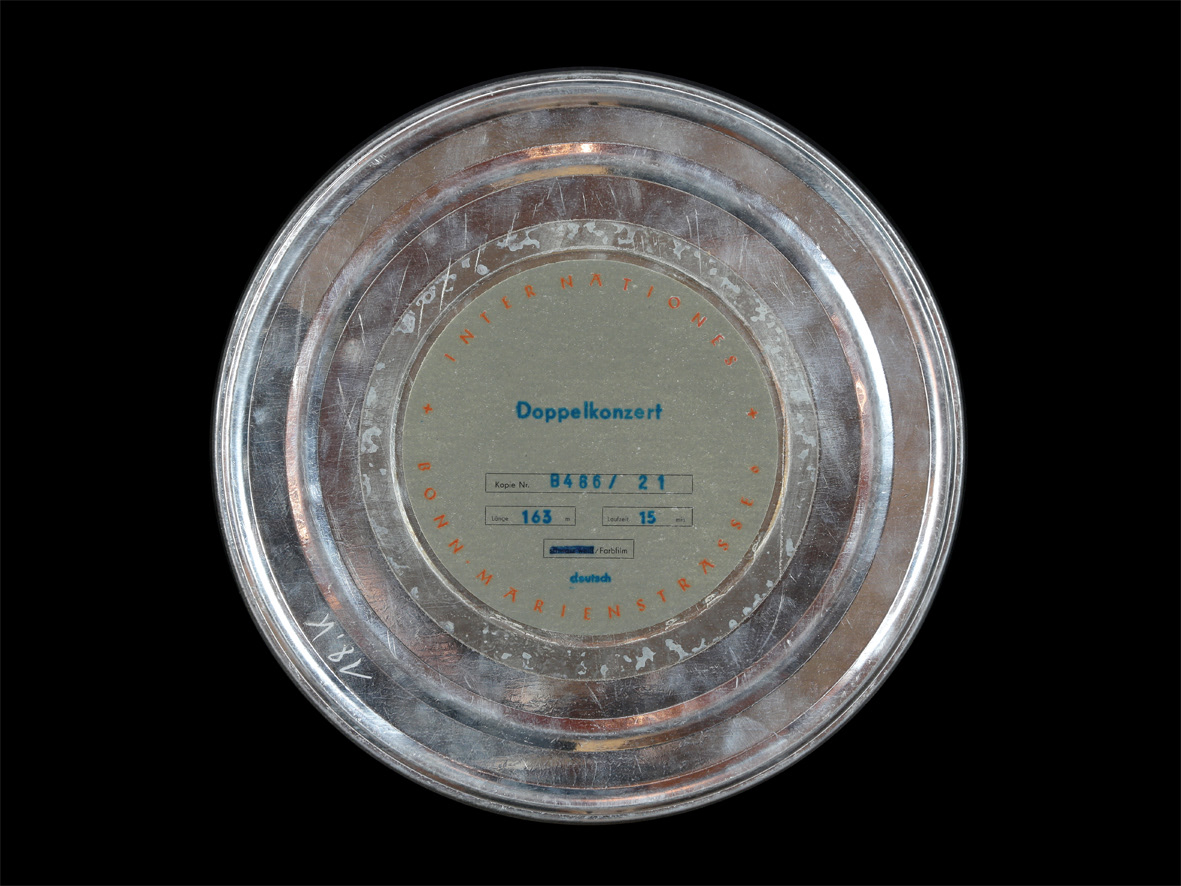
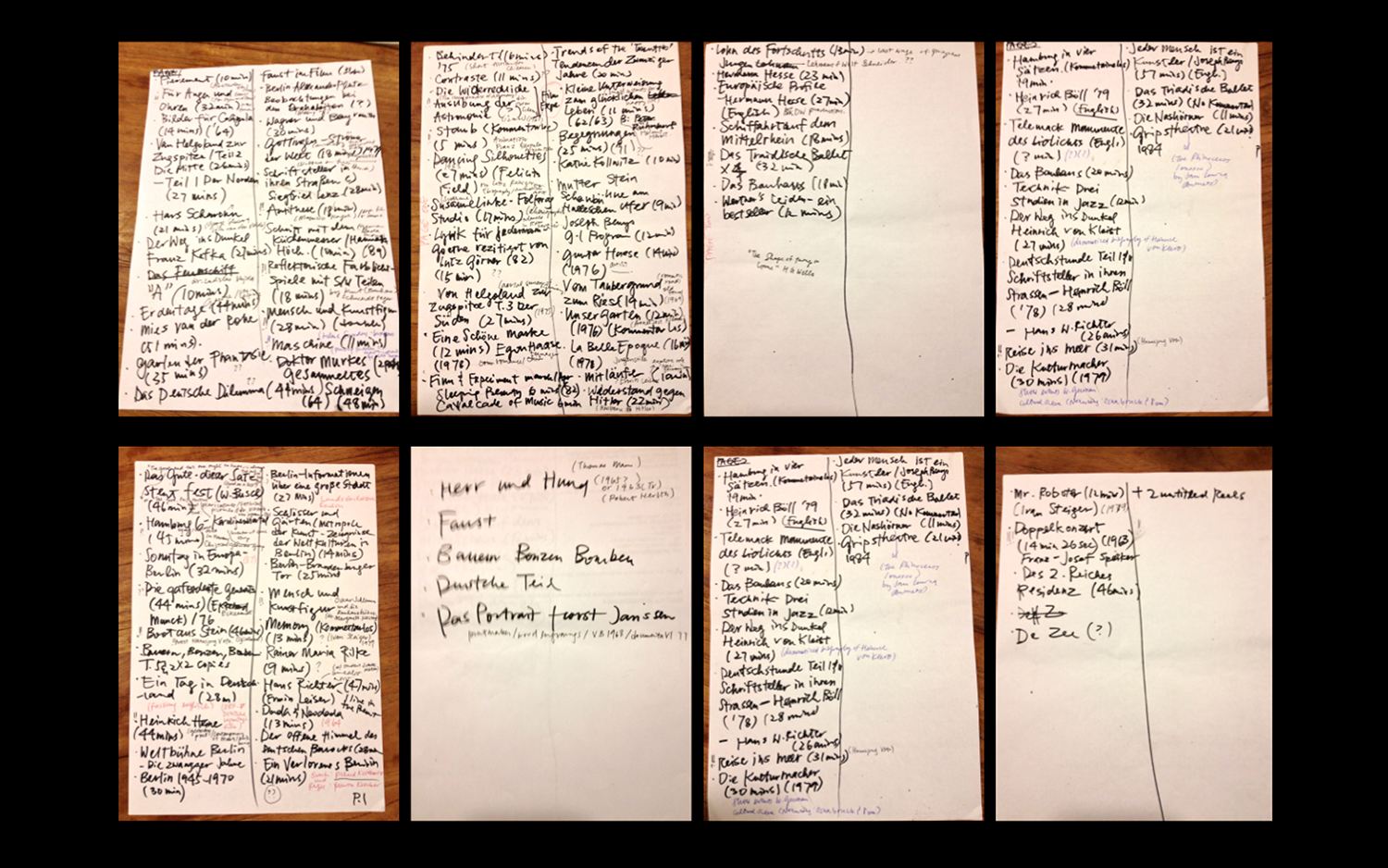
Listed 16 mm films (Christina Li)
'Transfer Korea/NRW', Kunstmuseum Bonn, 2014