The trilogy Attachments, The Residue Atlas and Minhwamorphosis (in progress) intervene in Malraux’s “Imaginary Museum” by destabilizing its seemingly universal order through interventions. They shift the question from “Which pictures belong in a museum?” to “Who is allowed and how to select, organize, transfer and bring images into new relationships?”
Malraux's museum is produced through acts of decontextualization, selection and recontextualization. My works perform these operations again, but from a different, domestic and culturally position. The “imaginary” in my works becomes a form of artistic appropriation, by inscribing itself into a museum collection.
ATTACHMENTS 2015
2015, paravent, 405 m x 175 cm, slide projection, 81 35 mm slides
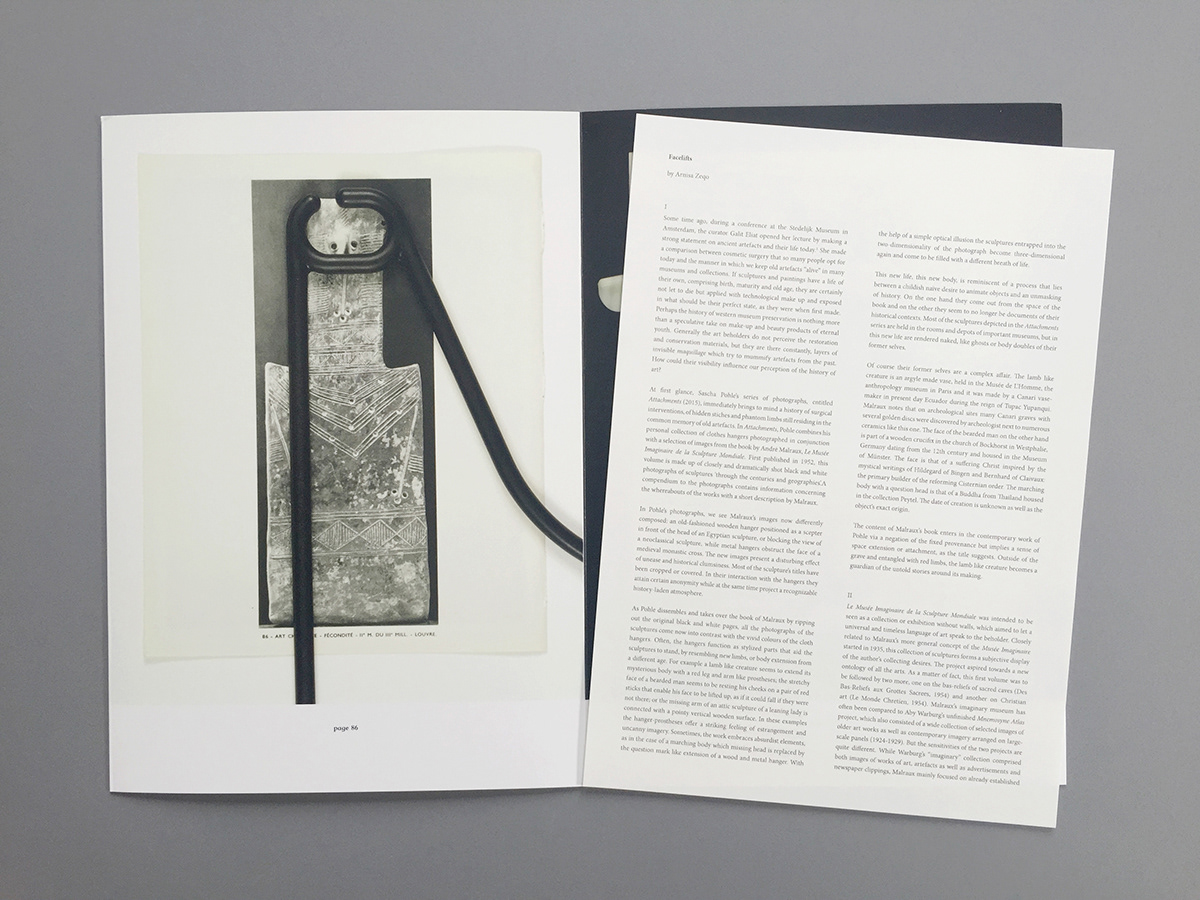
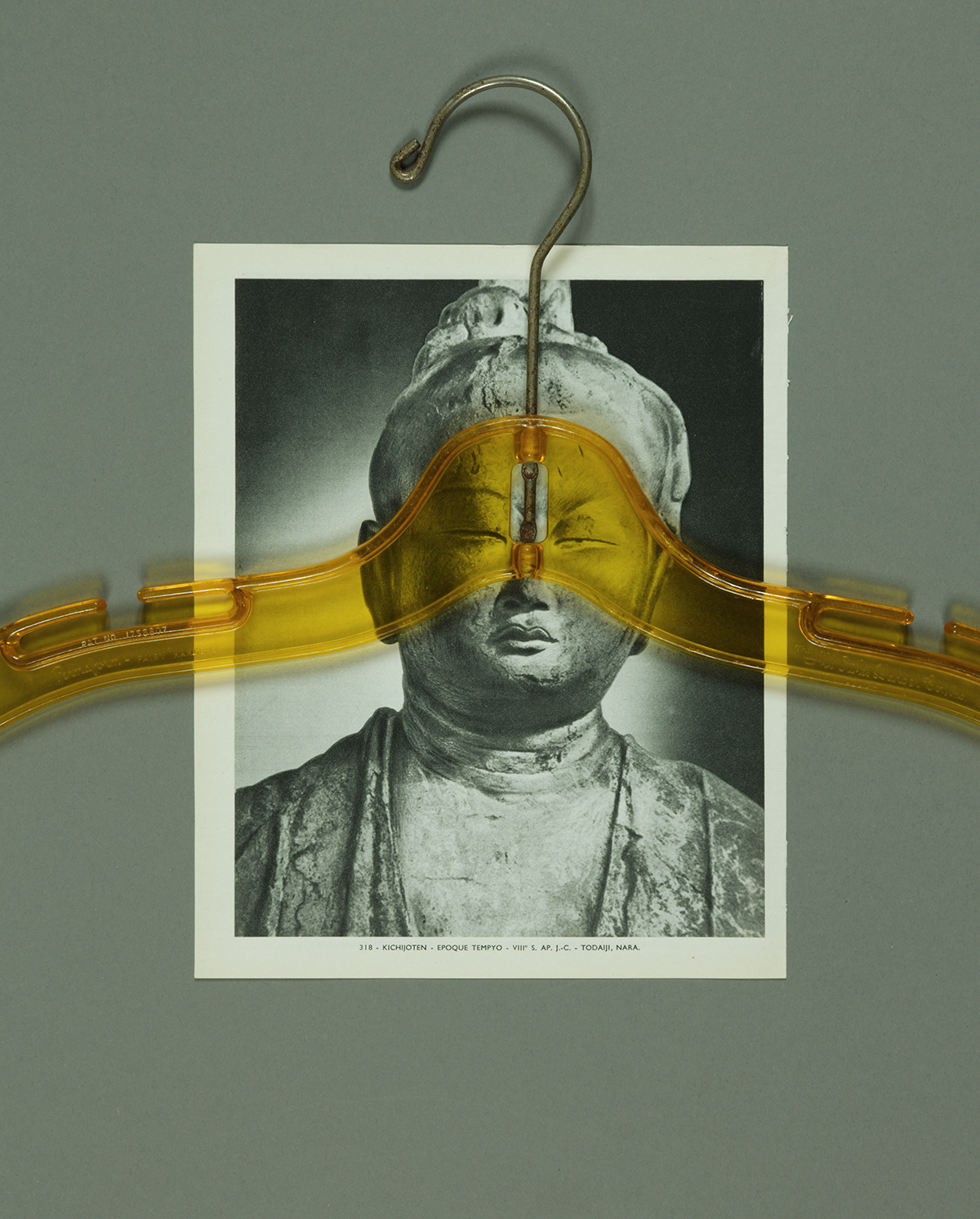
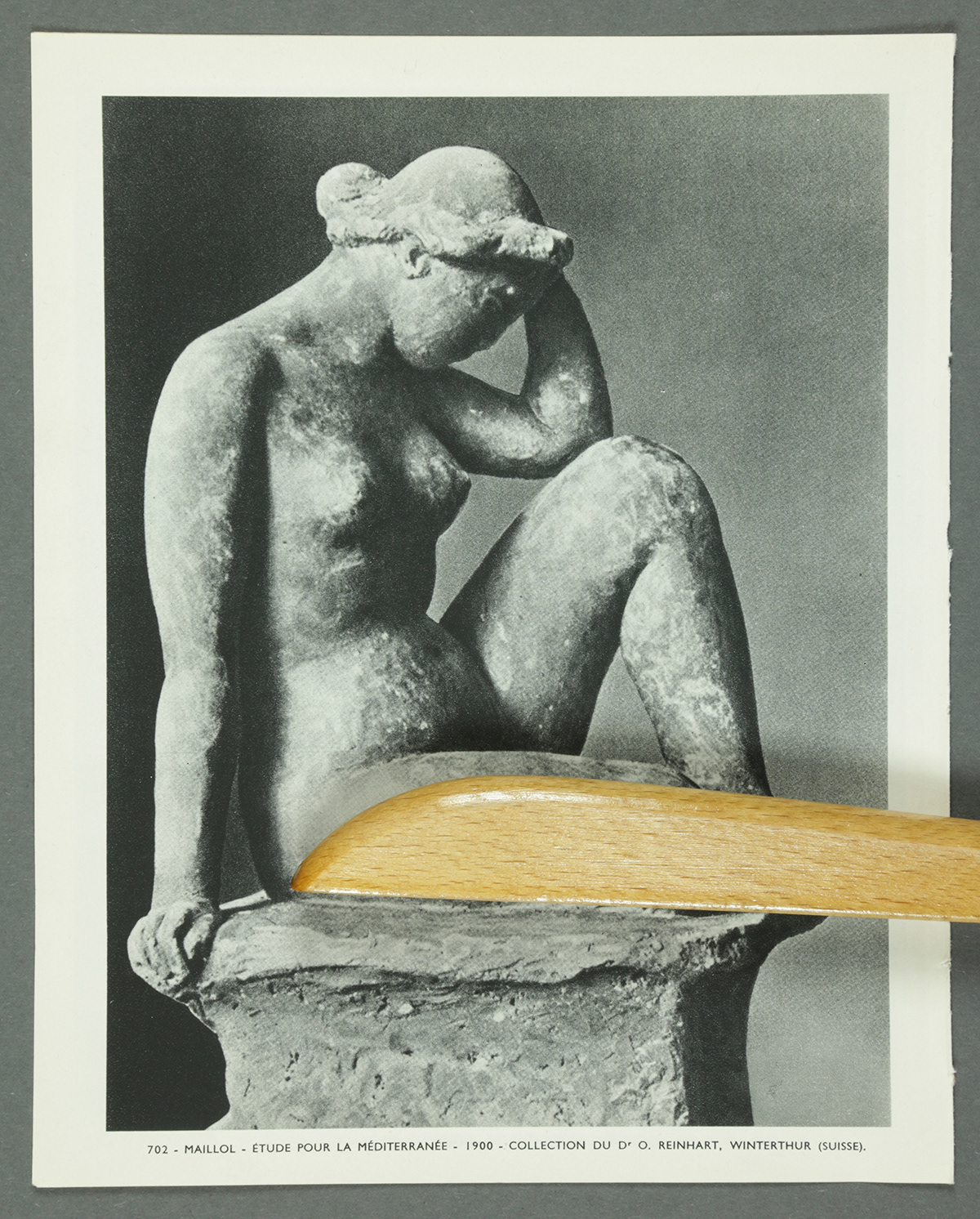
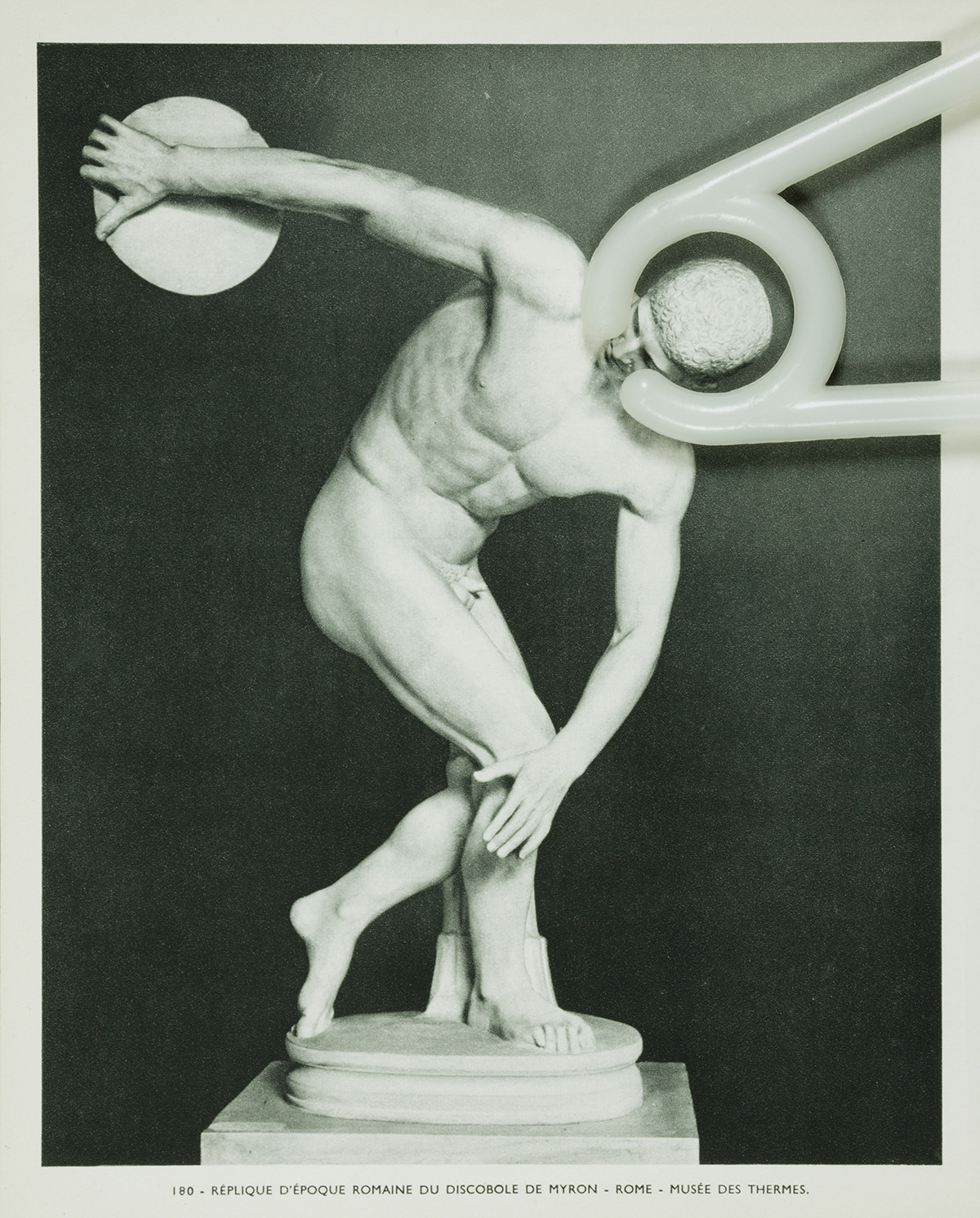
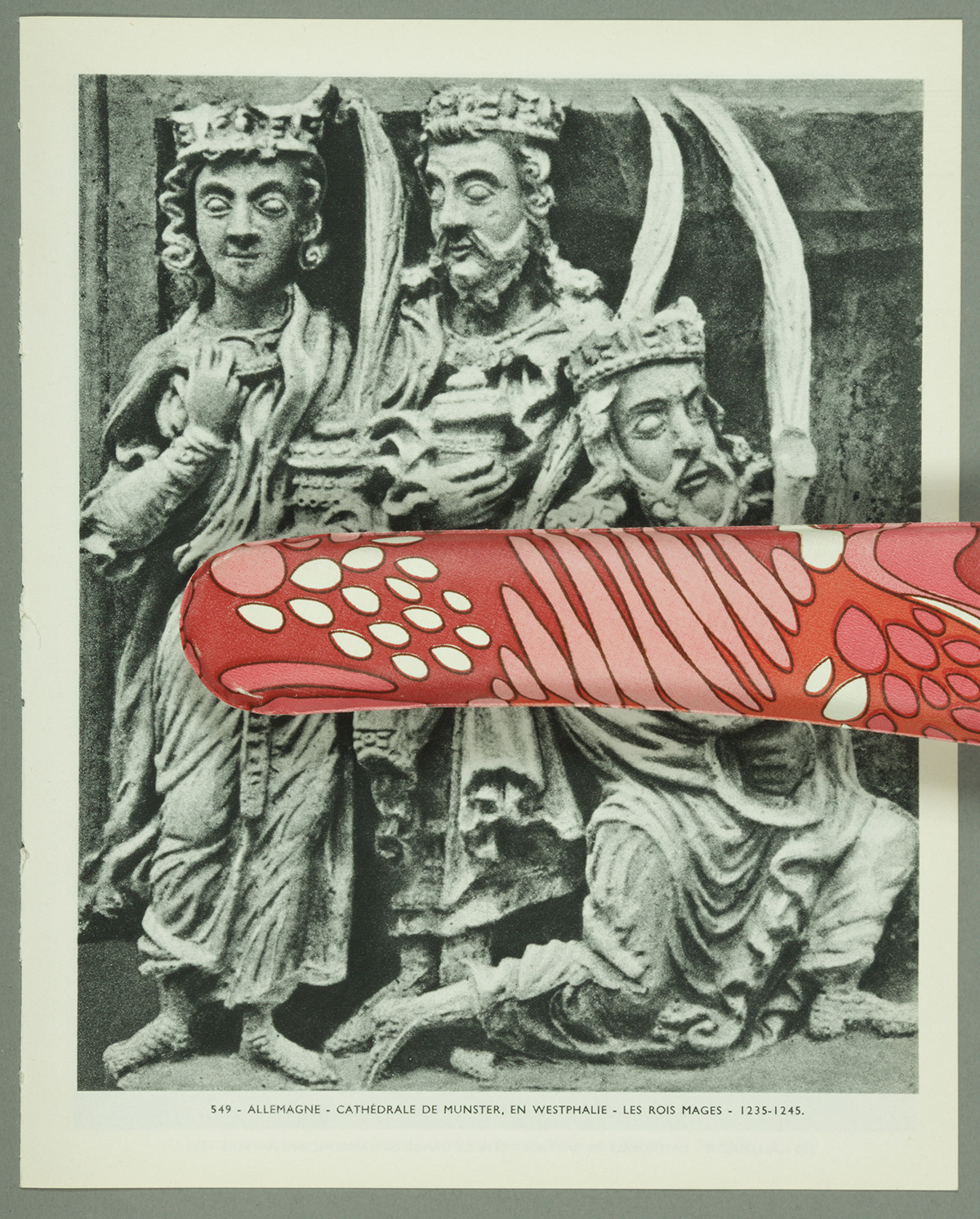
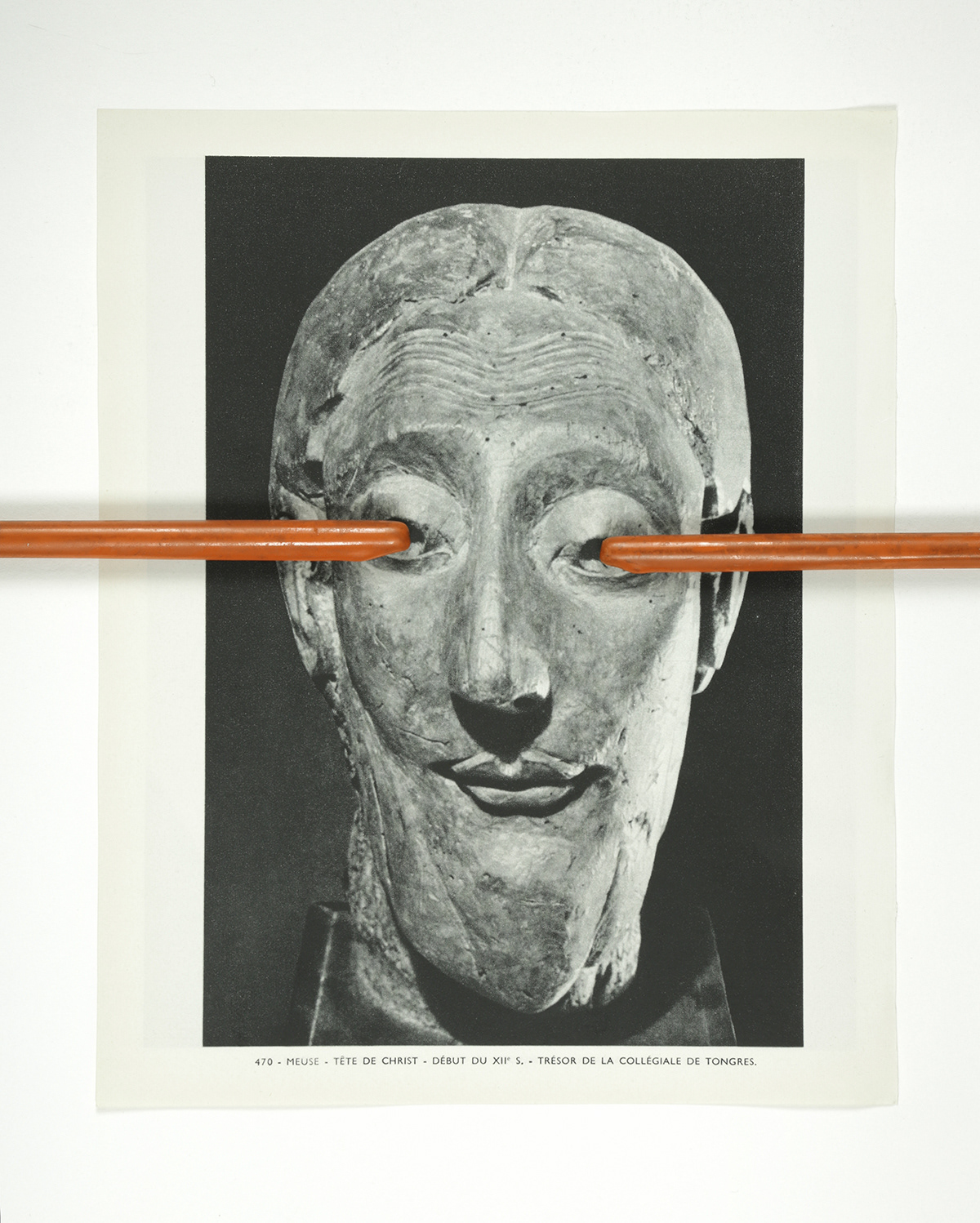
In the photo series Attachments, cloth hangers from my private collection meet ripped pages from André Malraux's Le Musée Imaginaire de la Sculpture Mondiale (1952). This classic organizes universal resemblances across centuries through Western perspective. Here, black-and-white photographs of an imaginary museum encounter colorful domestic objects from my closets.
Hangers attach mimetically—imitating sculptural gestures, matching shapes, extending bodily over page edges, or prosthetically commenting on, adapting, and repairing damaged forms. Attachments describes both physical connection and emotional bonds to objects. "Malraux's universal language fragments when viewed through one's uncanny closet interior," notes Arnisa Zeqo (Facelifts).
„Attachments make us aware that we can find iconic resonances and analogies everywhere if we were to look, but that is hardly a ground for establishing universal visual types.“ (Surface Structures: Memory, Mimicry and the Non-Archive, Alena Alexandrova)
For further readings Facelifts by Arnisa Zeqo; Surface Structures: Memory, Mimicry, and the Non-Archive by Alena Alexandrova

Exhibition view, Granpalazzo, Weingruell, Rome, 2015
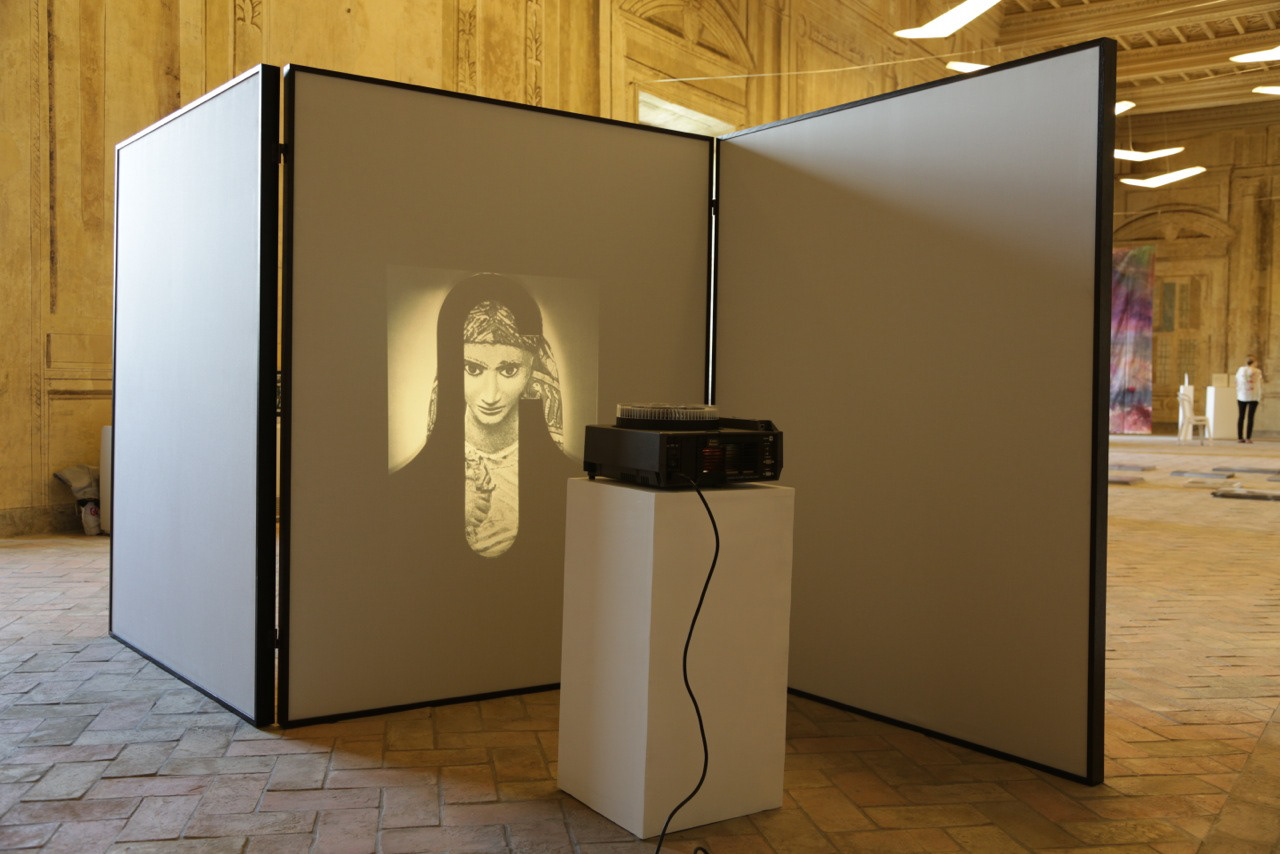
Exhibition view, Granpalazzo, Weingruell, Rome, 2015
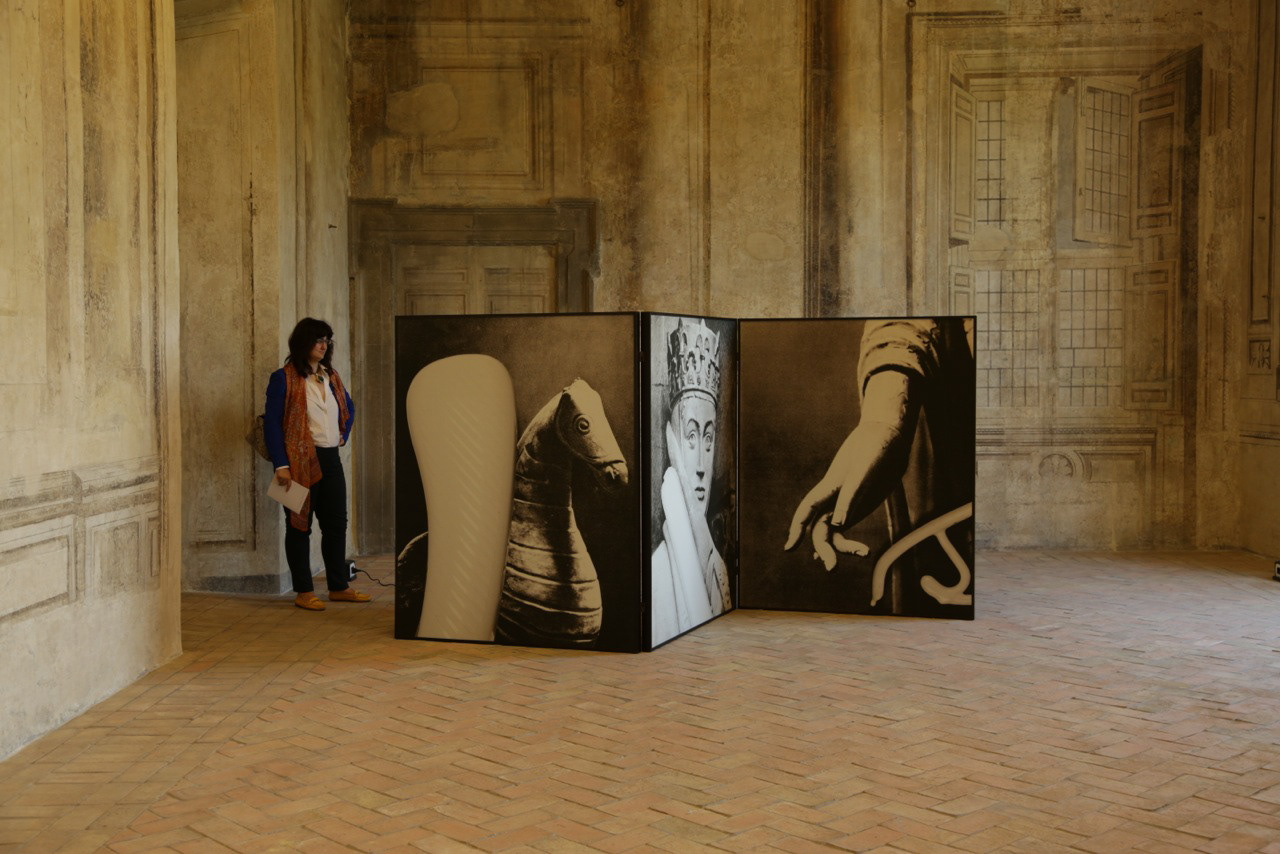
Exhibition view, Granpalazzo, Weingruell, Rome, 2015
Attachments slides







THE RESIDUE ATLAS
IN THIS LE MUSÉE IMAGINAIRE WORK, COFFEE STAINS NAMED AFTER SATELLITE‑SEEN DISASTERS PAIR WITH MALRAUX’S PHOTOS FORMING AN EARTH OBSERVATION BACKCASTING REPORT THAT READS WASTE RESIDUES AS SIGNS OF CLIMATE DAMAGE.
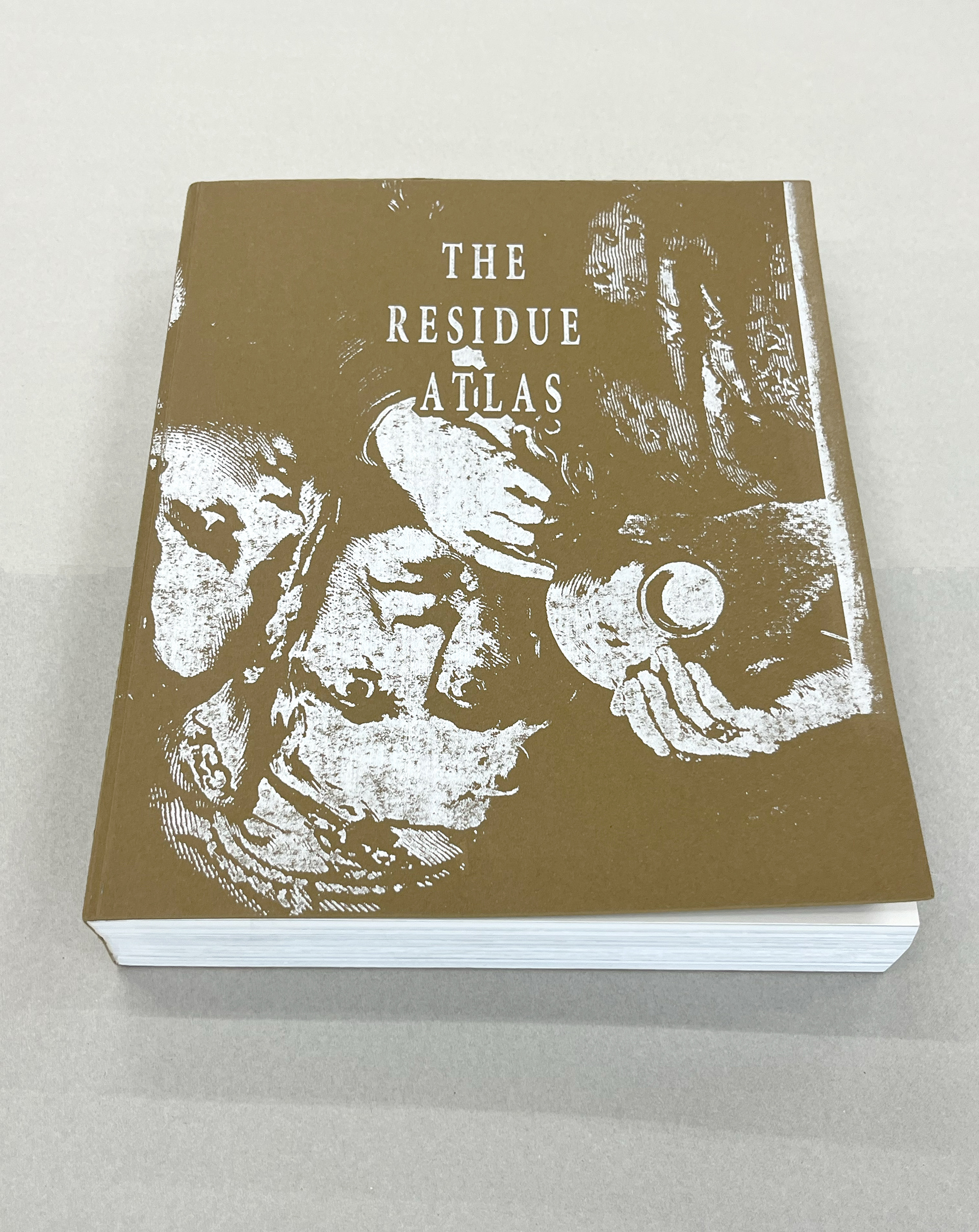
2026, artist book, 29,5 x 24 cm, b&w, 380 pages, bronze, dimensions variable
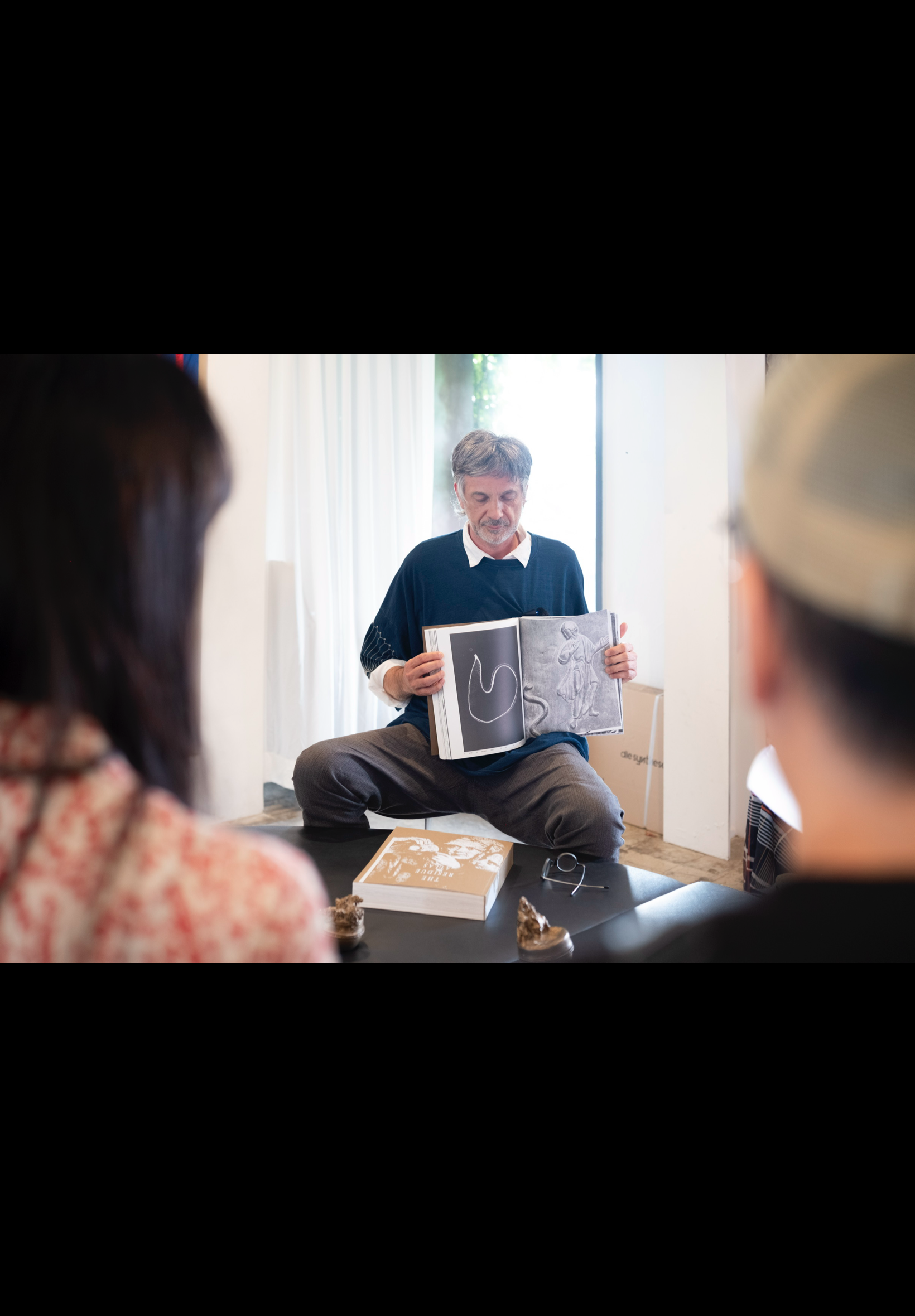
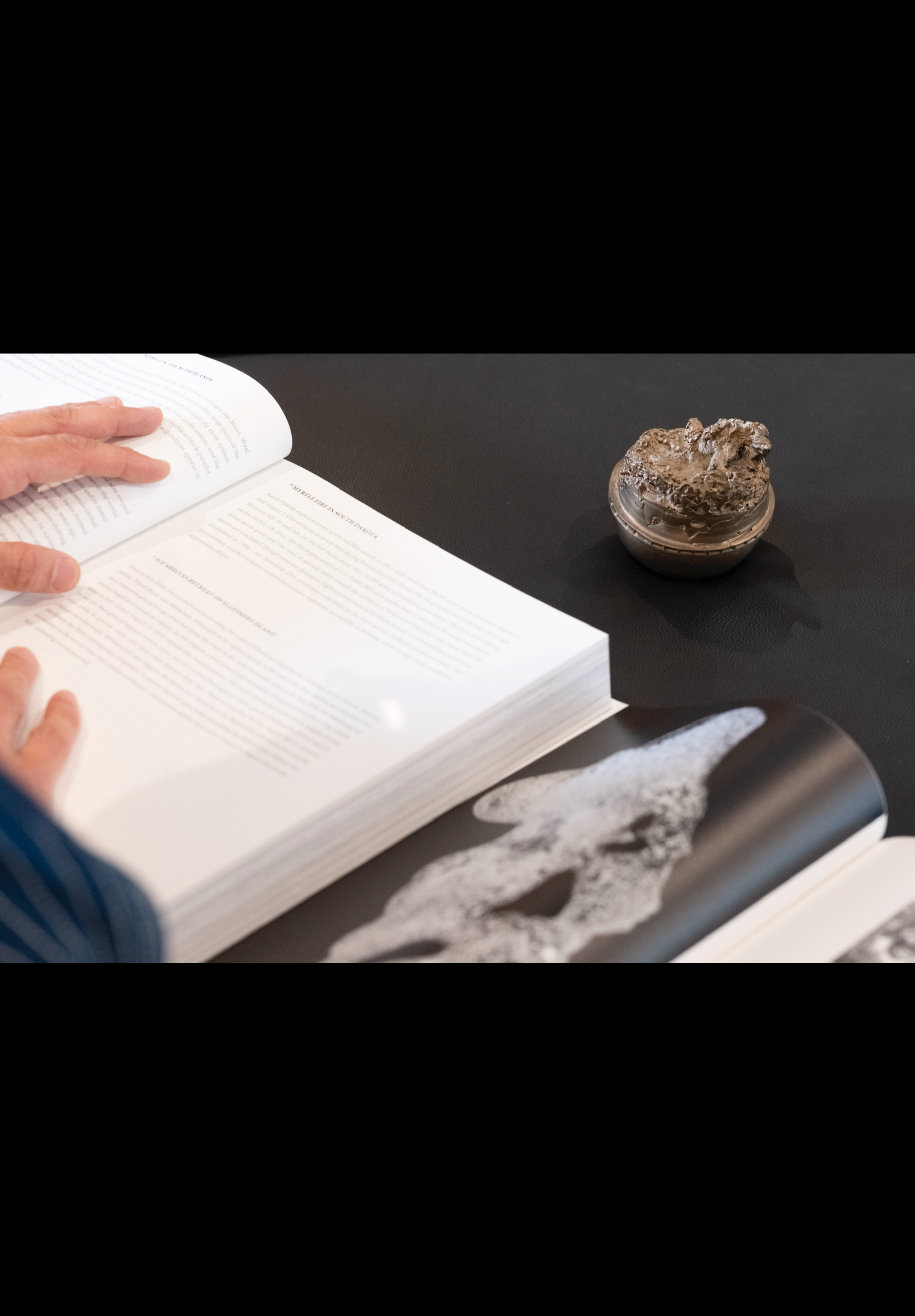
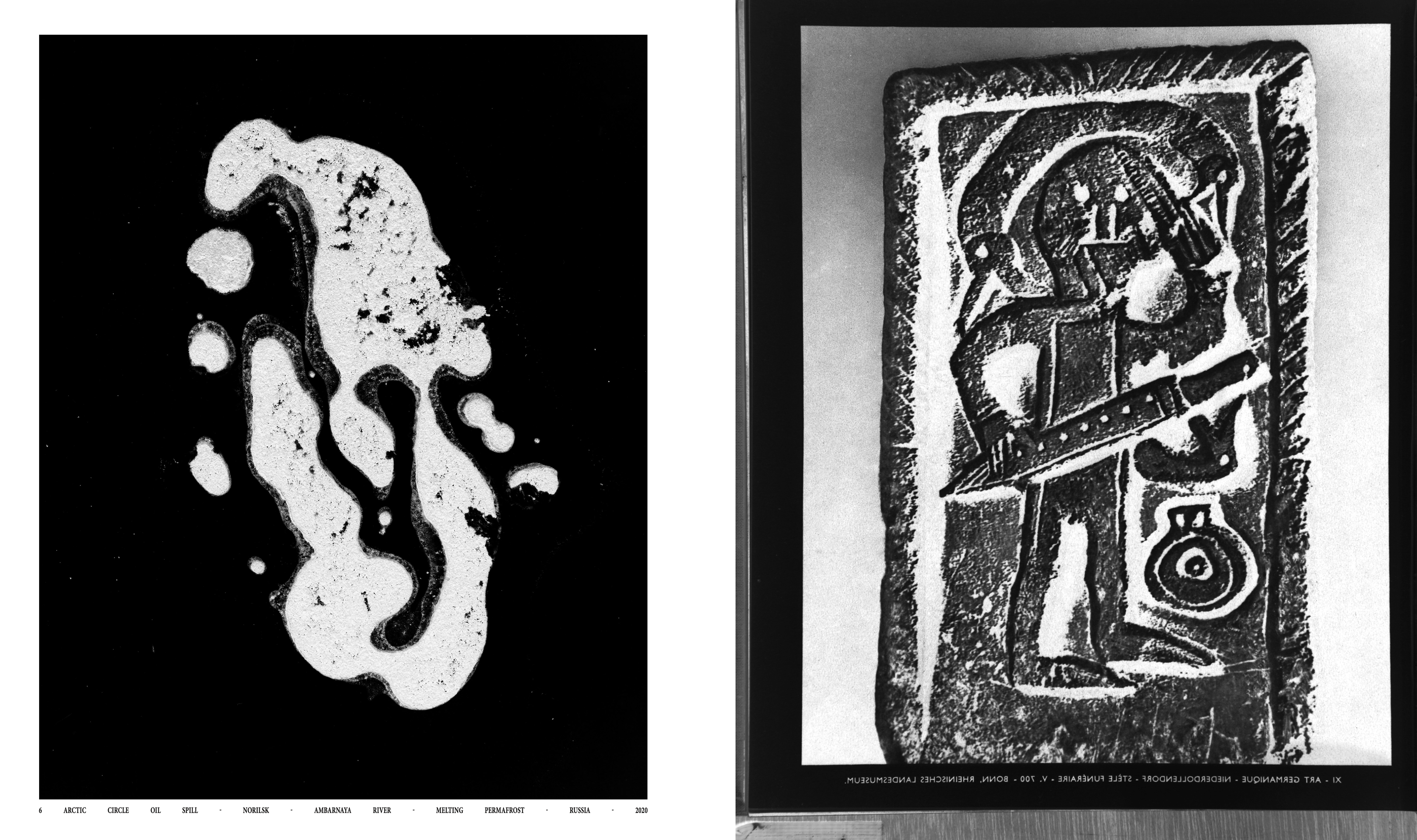
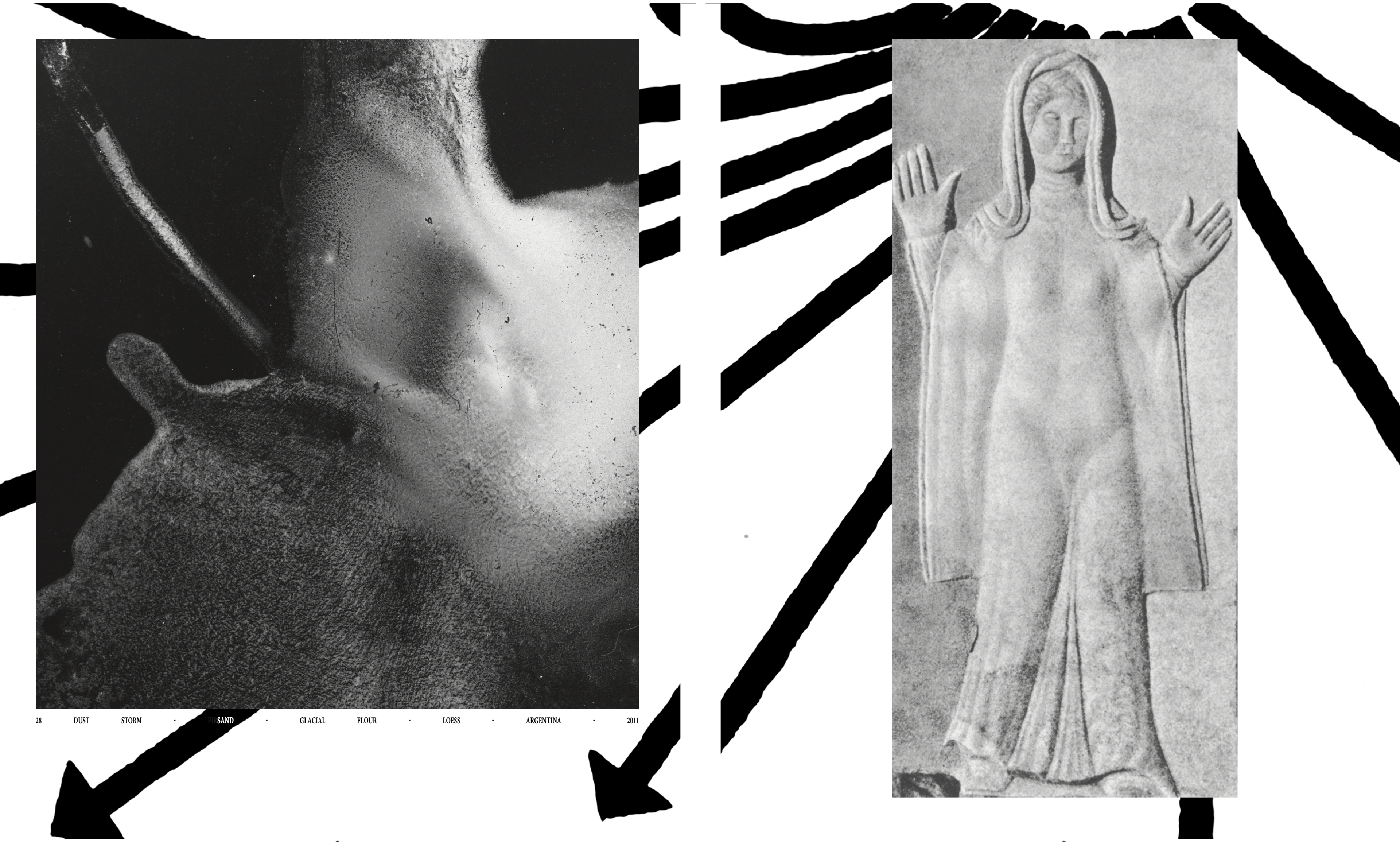
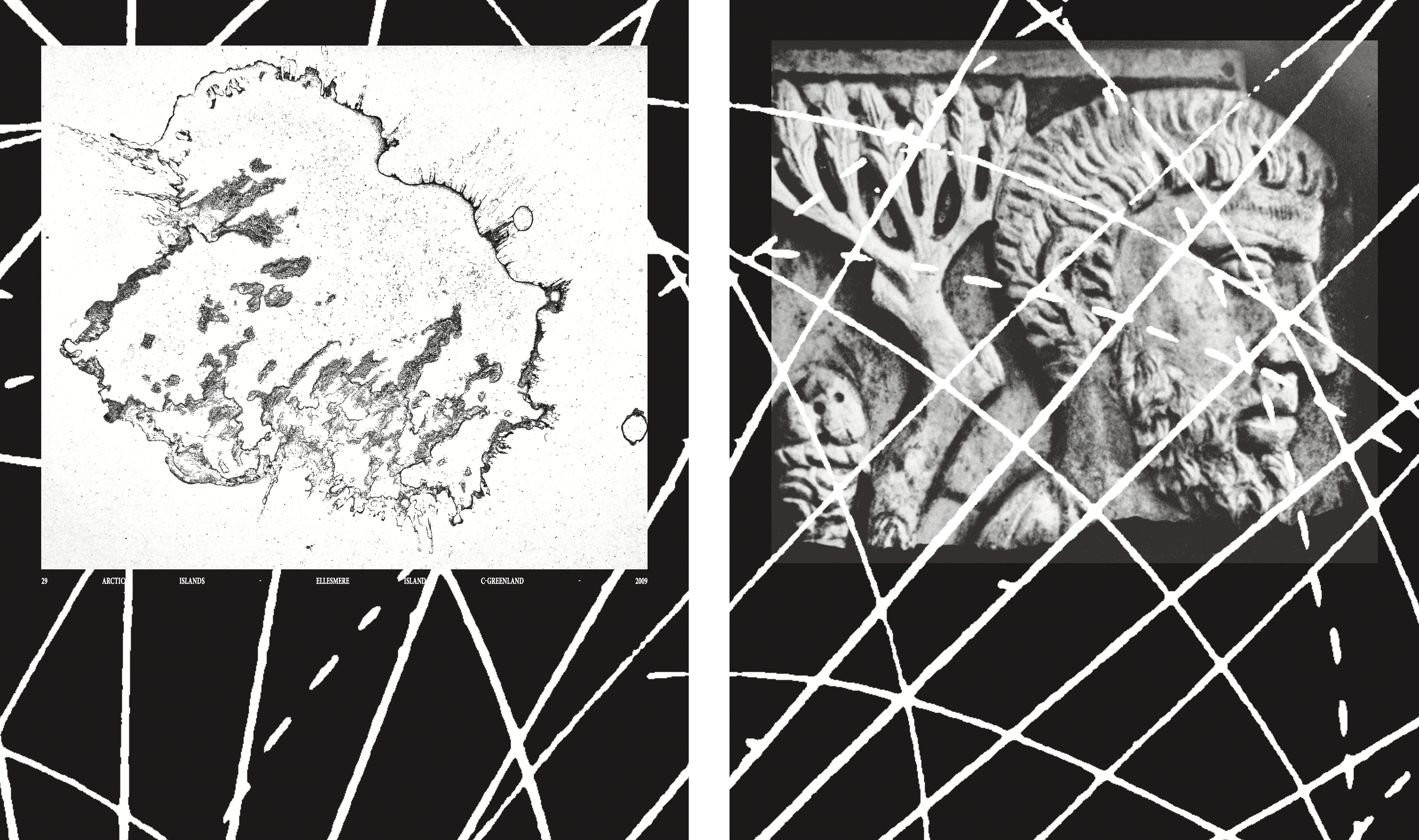
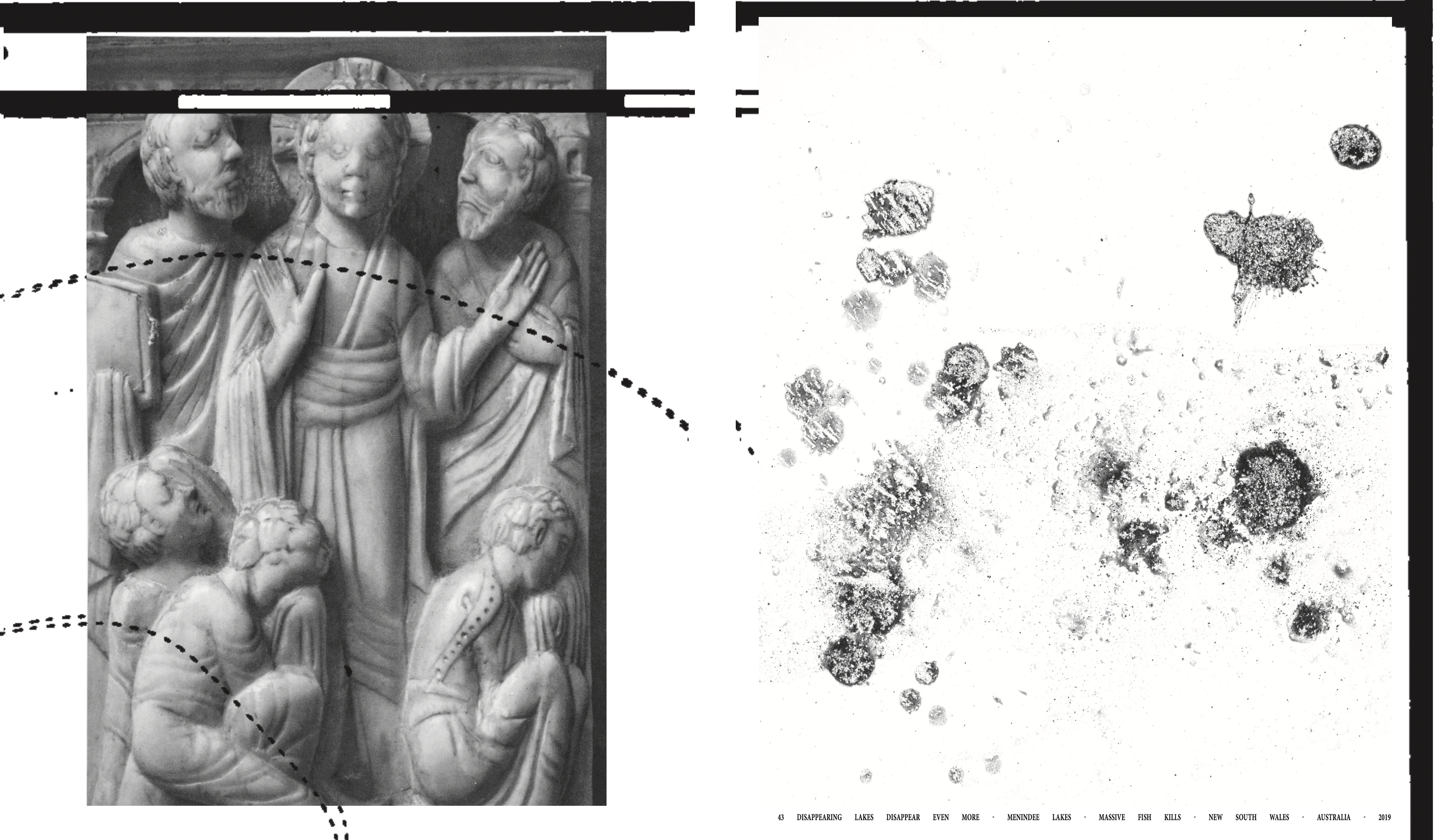
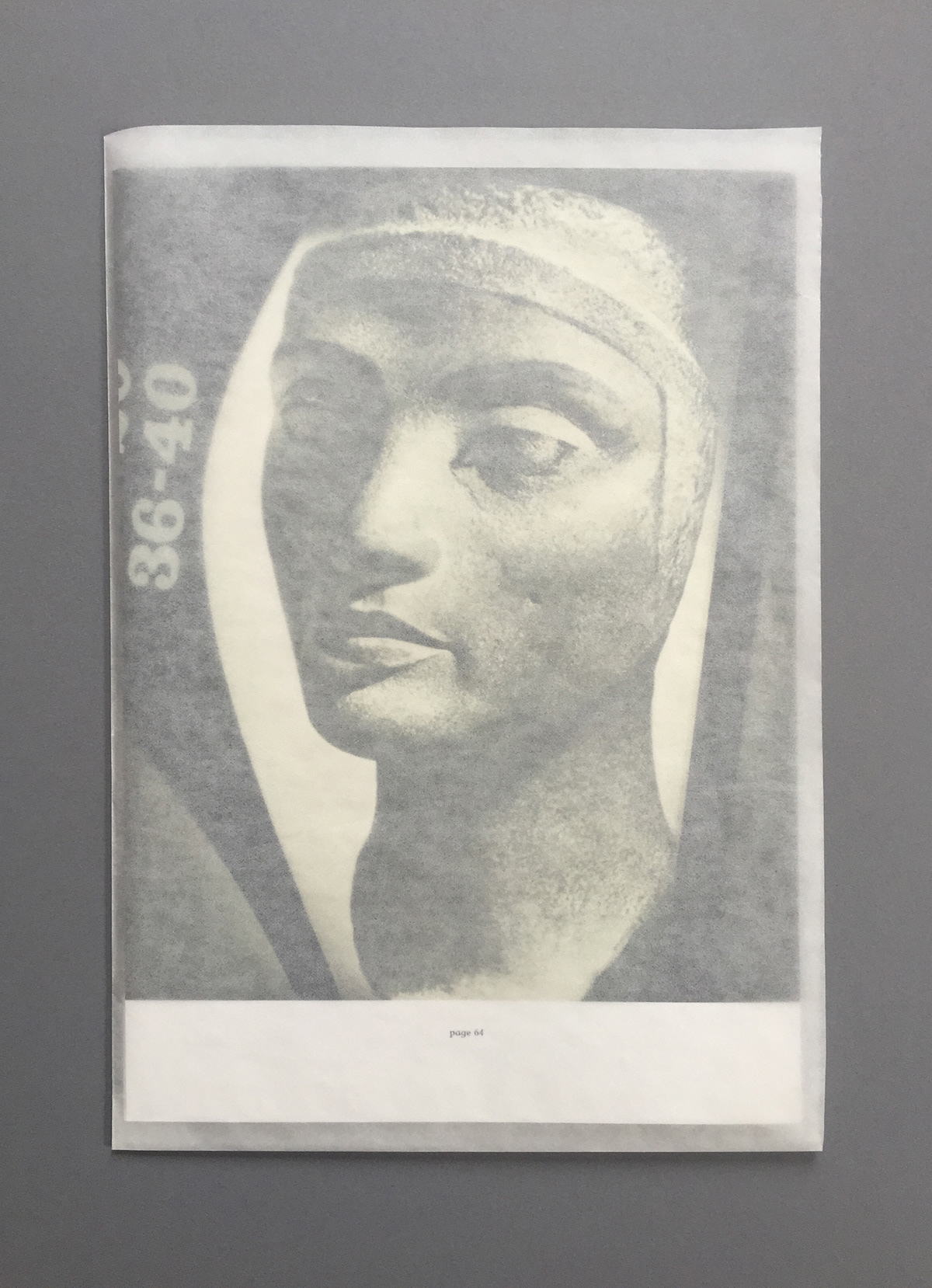
On each of the continuous double-page spreads, a photographed page from the volume Le Monde Chrétien appears alongside a photograph of a coffee stain. The book serves as a tool for speculative Earth observation, in which coffee stains become the visual material for a reverse divinatory reading. Instead of foretelling the future, they point to past events and, by implication, to potential future catastrophes.
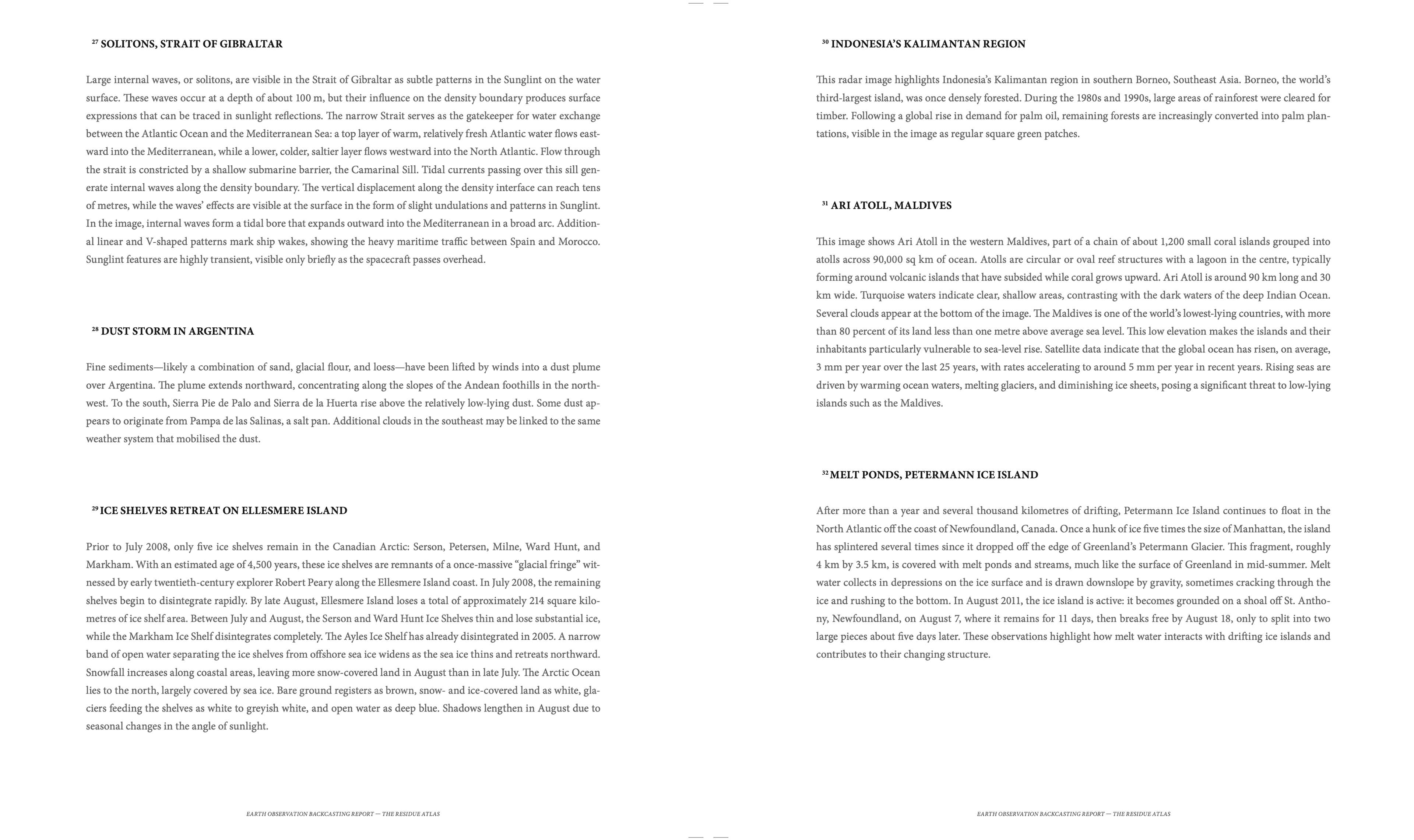
To achieve this, a search was conducted for scientific imagery from Earth observation programs—such as NASA or the European Space Agency—that document climate change phenomena and visually resemble the coffee stains. However, instead of the actual photographs, their descriptions—such as floods, wildfires, or sites of resource extraction—are used. Formally, the captions remain closely aligned with the style of the Musée imaginaire and are sometimes placed over Malraux’s photographs as full-page graphic elements. Each coffee stain is numbered and linked to an index, where the events are described in detail using adapted texts from the Earth observation programs.
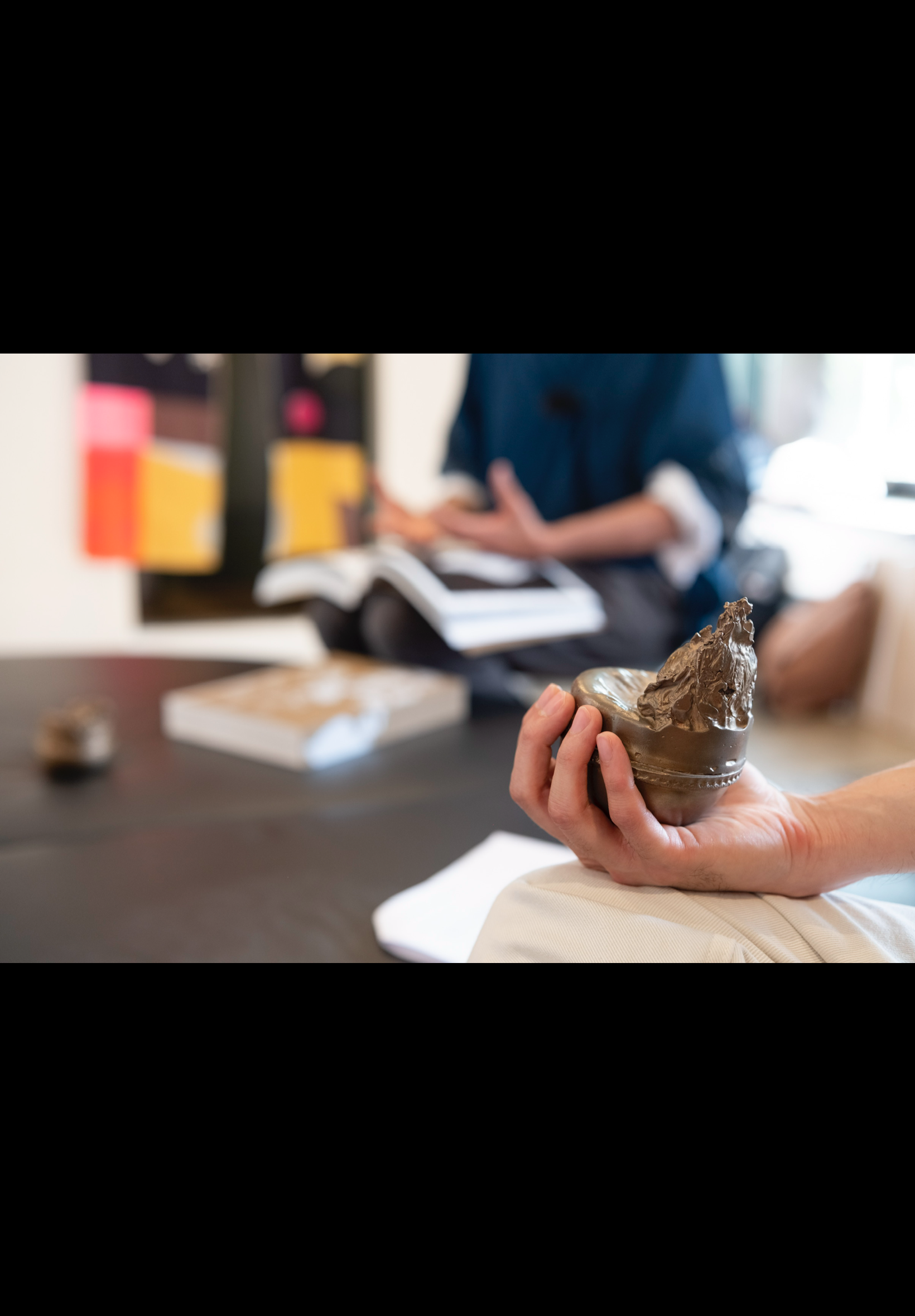
A bronze is casted of iced coffee lids and wax poured into cold coffee form a kind of global cruciger, conecting everyday coffee waste to broader systems of consumption, labor, belief, and extraction.
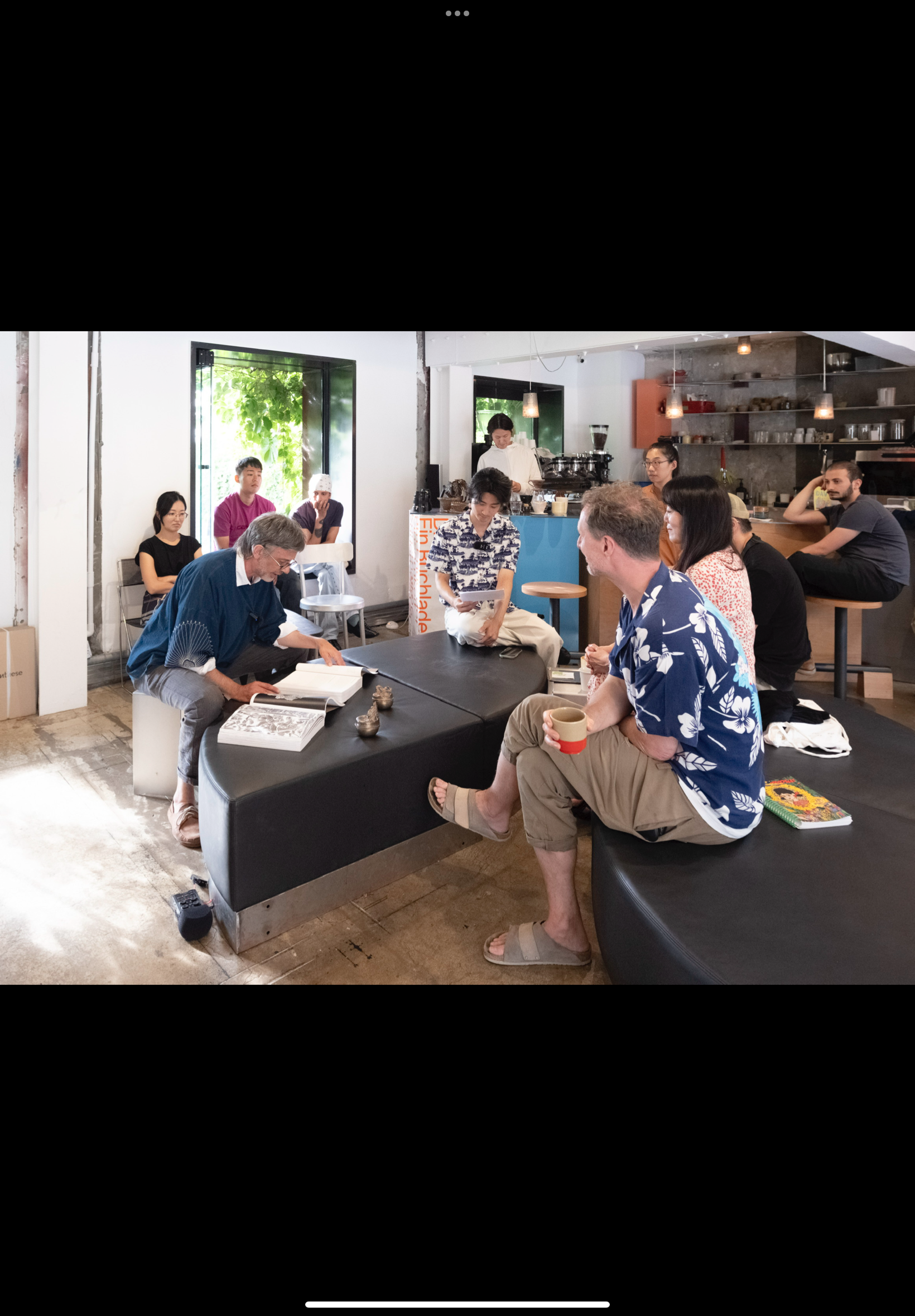
In a performative setting, the coffee table book is activated alongside the bronze [sculpture]. In the process, fortune-telling shifts from the individual to a tasseography of the Anthropocene, where climate, catastrophes, and human interventions in nature are discussed over coffee and cake.


audio except
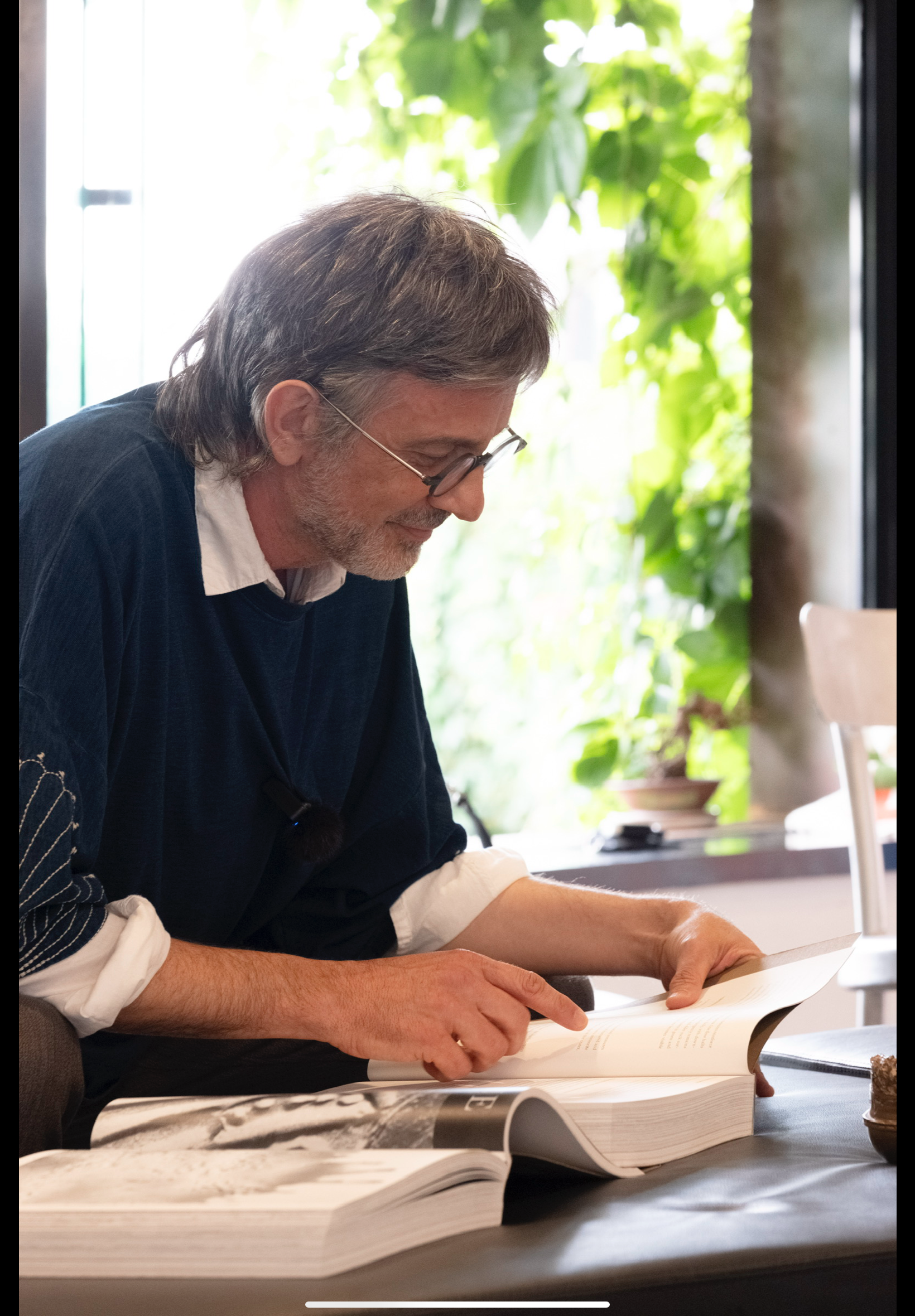
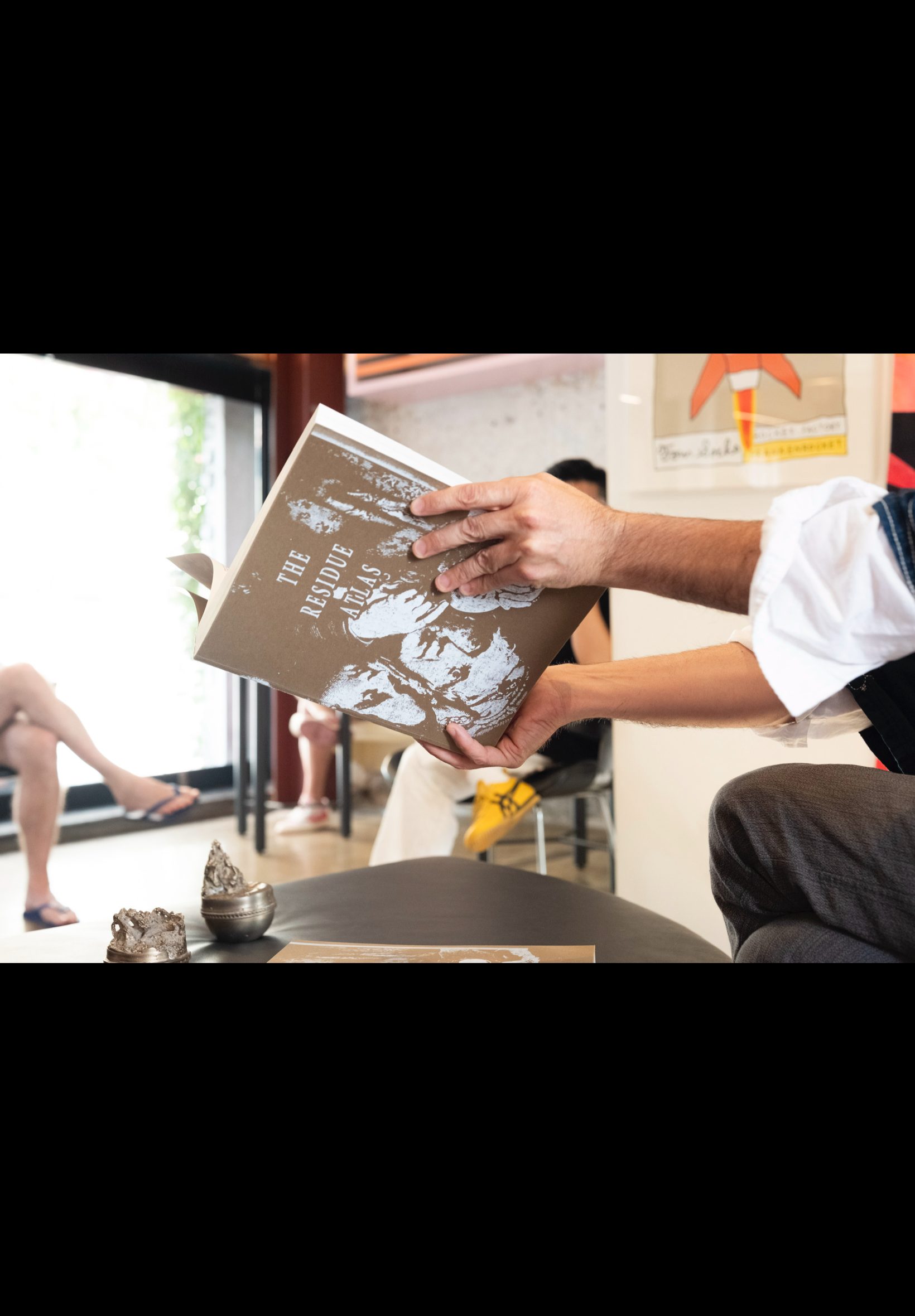
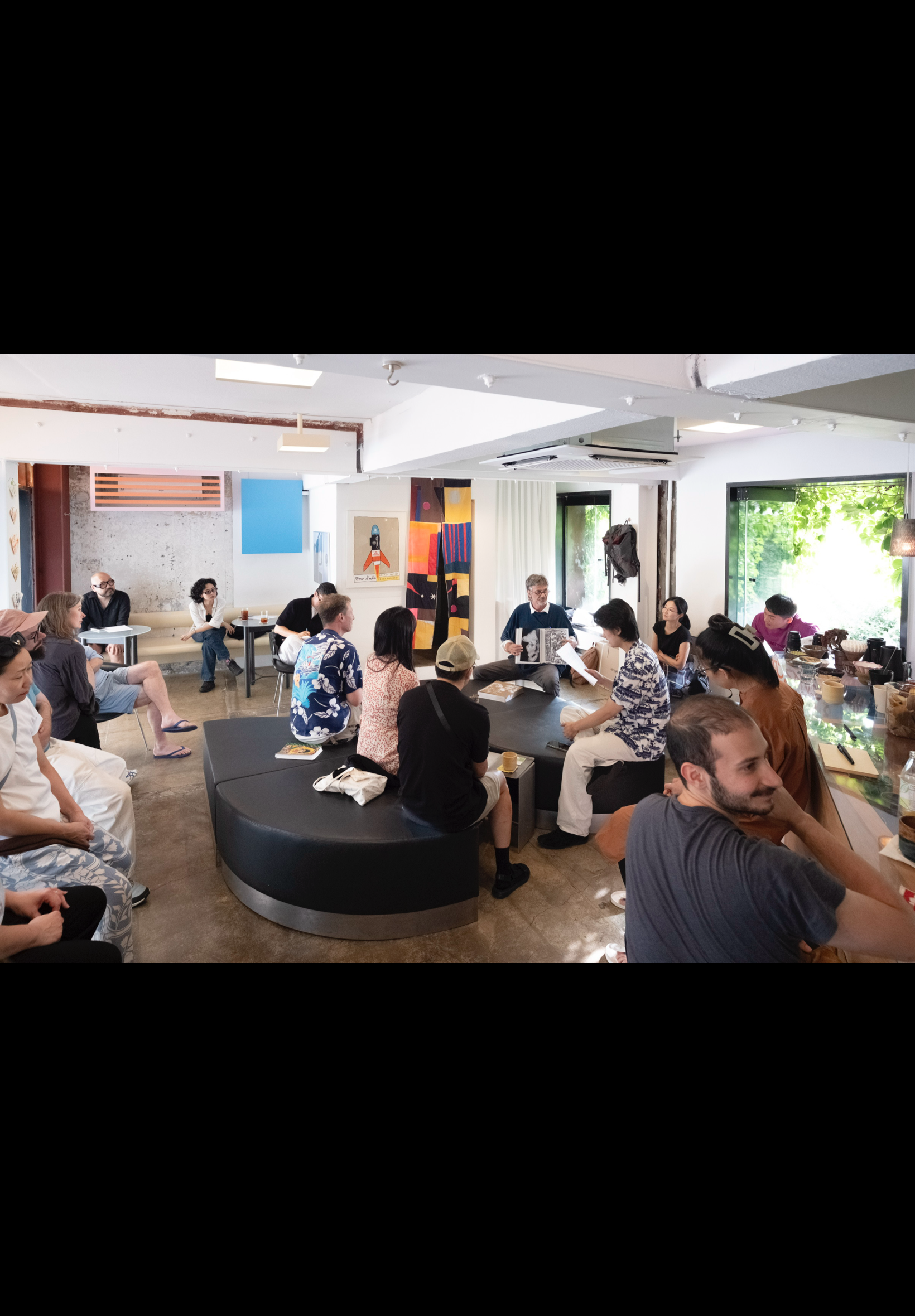
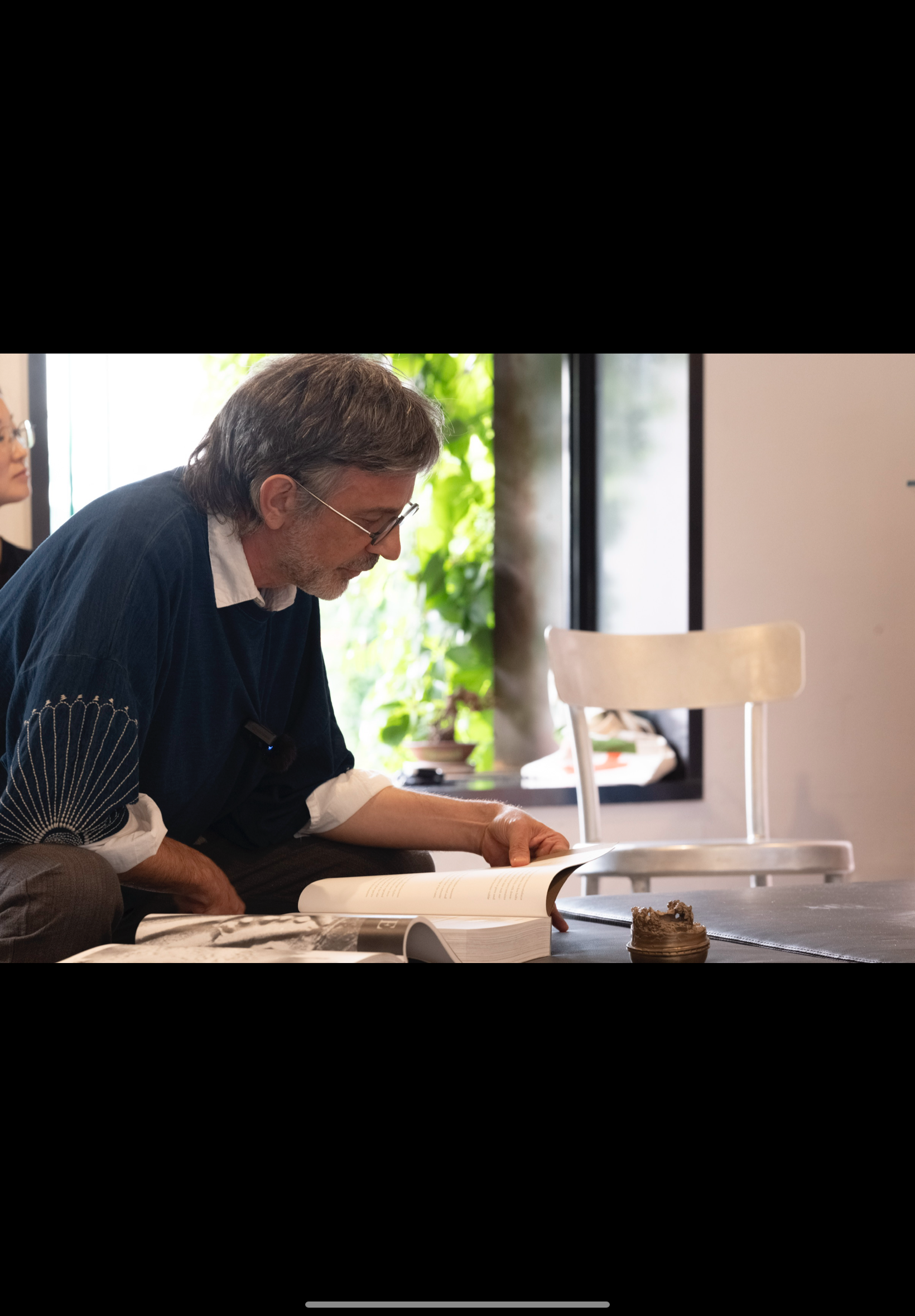
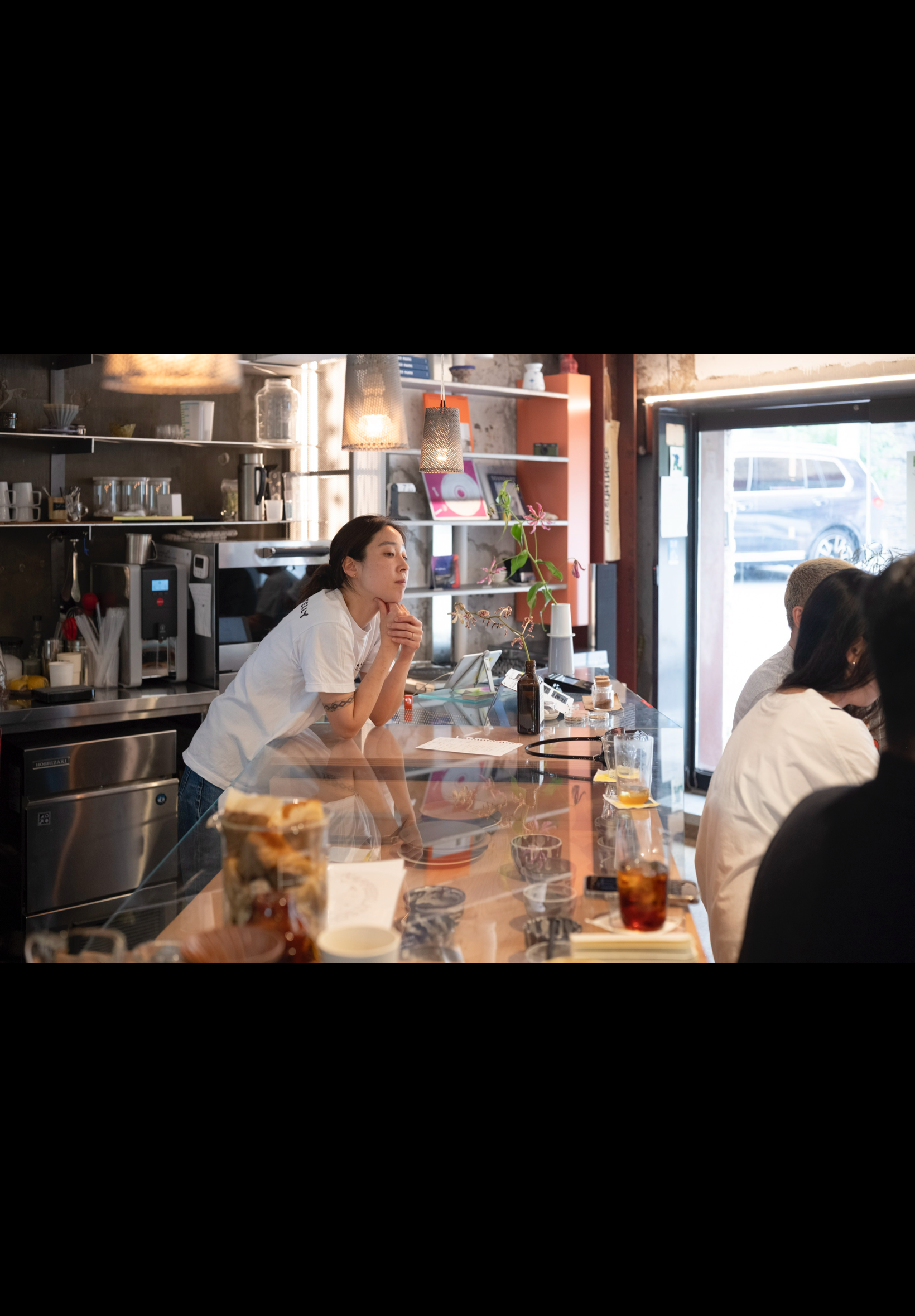
Images from Kaffeeklatsch organised by Marian Kaiser from the Mobile Academy Berlin in June at Cafe Die Synthese, Seoul. With Kat Austen, Sascha Pohle, Seokhyun Lee
At Kaffeeklatsch I performed “The Residue Atlas” - a coffee table book and a bronze object. Each double-page spread combines a page from André Malraux’s Le Monde Chrétien with a coffee stain on the facing one. The coffee stains serve for coffee ground reading turning the book into a speculative tool of Earth observation. Instead of predicting the individual future, the stains trace climate events of the past and thus their possible continuations. Based on similar looking satellite imagery (NASA, ESA), only textual descriptions—like floods, wildfires, extraction sites—are used. Each stain is indexed and linked to these events. A bronze cast of iced coffee lids and formations of hot wax poured into ice coffee extends this logic into sculpture. Activated in a reading performance, the work becomes a tasseography of the Anthropocene—naming climate crisis through everyday residue.
“Kaffeeklatsch is a gathering where people share coffee and conversation. The word “KLATSCH” (meaning “gossip” or “chatter” in German, but also the sound of a splash or slap) originates from the past, when people would gather and share stories. When a wet cloth hit a stone, people would say “klatsch!”—and the story would spread among them.KLATSCH is a unique form of conversation—both private and public—in which everyone can participate, rather than just one person. “
At Kaffeeklatsch I performed “The Residue Atlas” - a coffee table book and a bronze object. Each double-page spread combines a page from André Malraux’s Le Monde Chrétien with a coffee stain on the facing one. The coffee stains serve for coffee ground reading turning the book into a speculative tool of Earth observation. Instead of predicting the individual future, the stains trace climate events of the past and thus their possible continuations. Based on similar looking satellite imagery (NASA, ESA), only textual descriptions—like floods, wildfires, extraction sites—are used. Each stain is indexed and linked to these events. A bronze cast of iced coffee lids and formations of hot wax poured into ice coffee extends this logic into sculpture. Activated in a reading performance, the work becomes a tasseography of the Anthropocene—naming climate crisis through everyday residue.
“Kaffeeklatsch is a gathering where people share coffee and conversation. The word “KLATSCH” (meaning “gossip” or “chatter” in German, but also the sound of a splash or slap) originates from the past, when people would gather and share stories. When a wet cloth hit a stone, people would say “klatsch!”—and the story would spread among them.KLATSCH is a unique form of conversation—both private and public—in which everyone can participate, rather than just one person. “
Photographs: Janik Peltzer





André Malraux selects photographs for Le Musée Imaginaire de la Sculpture Mondiale, 1947, © Getty Image

Leporello, From the series Attachments, 2015 24 cm x 34cm (open: 96 cm x 34 cm), 300 g matt paper, 8 pages, color Design by Julie Peeters Edition of 350 With an accompanied text by Arnisa Zeqo, Facelifts, 2015
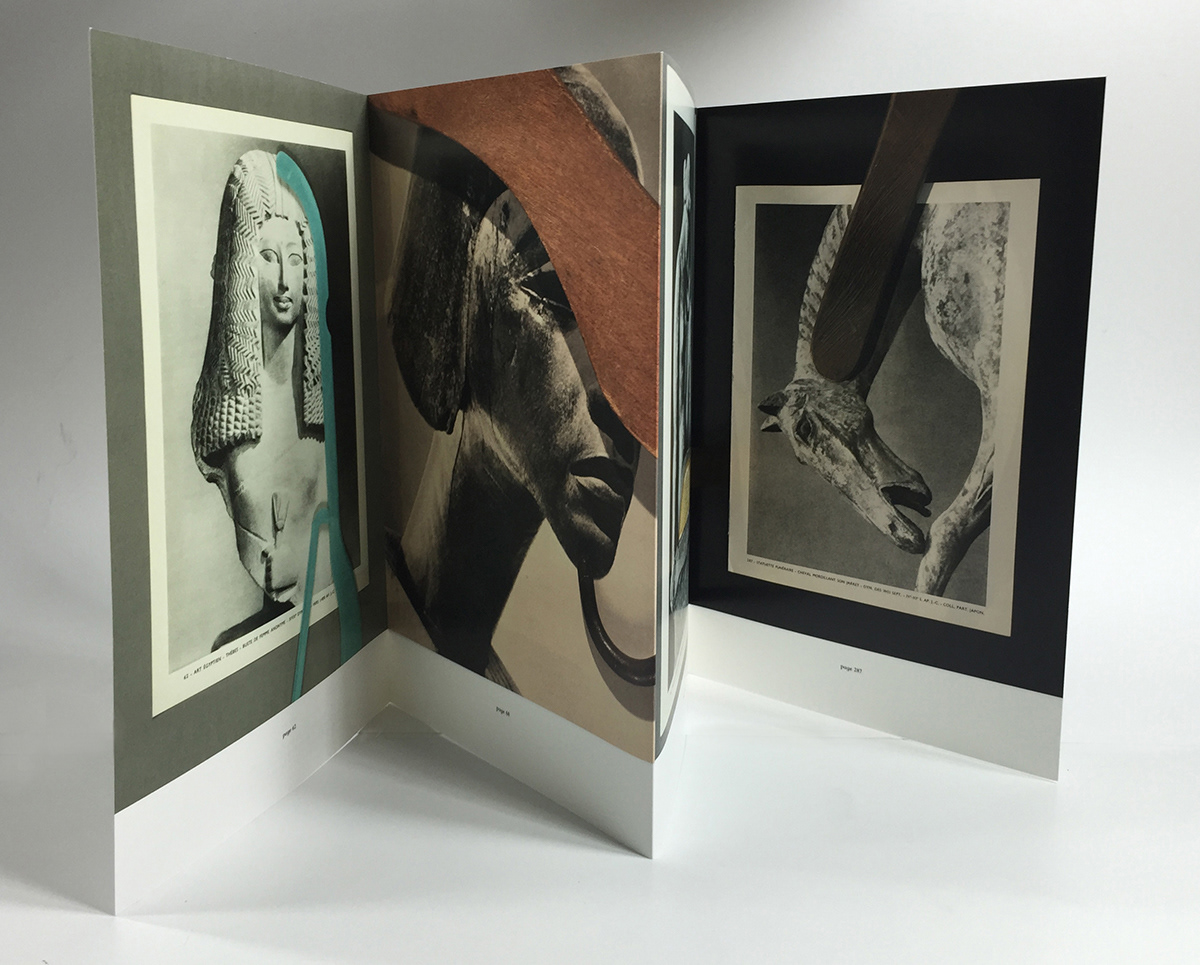
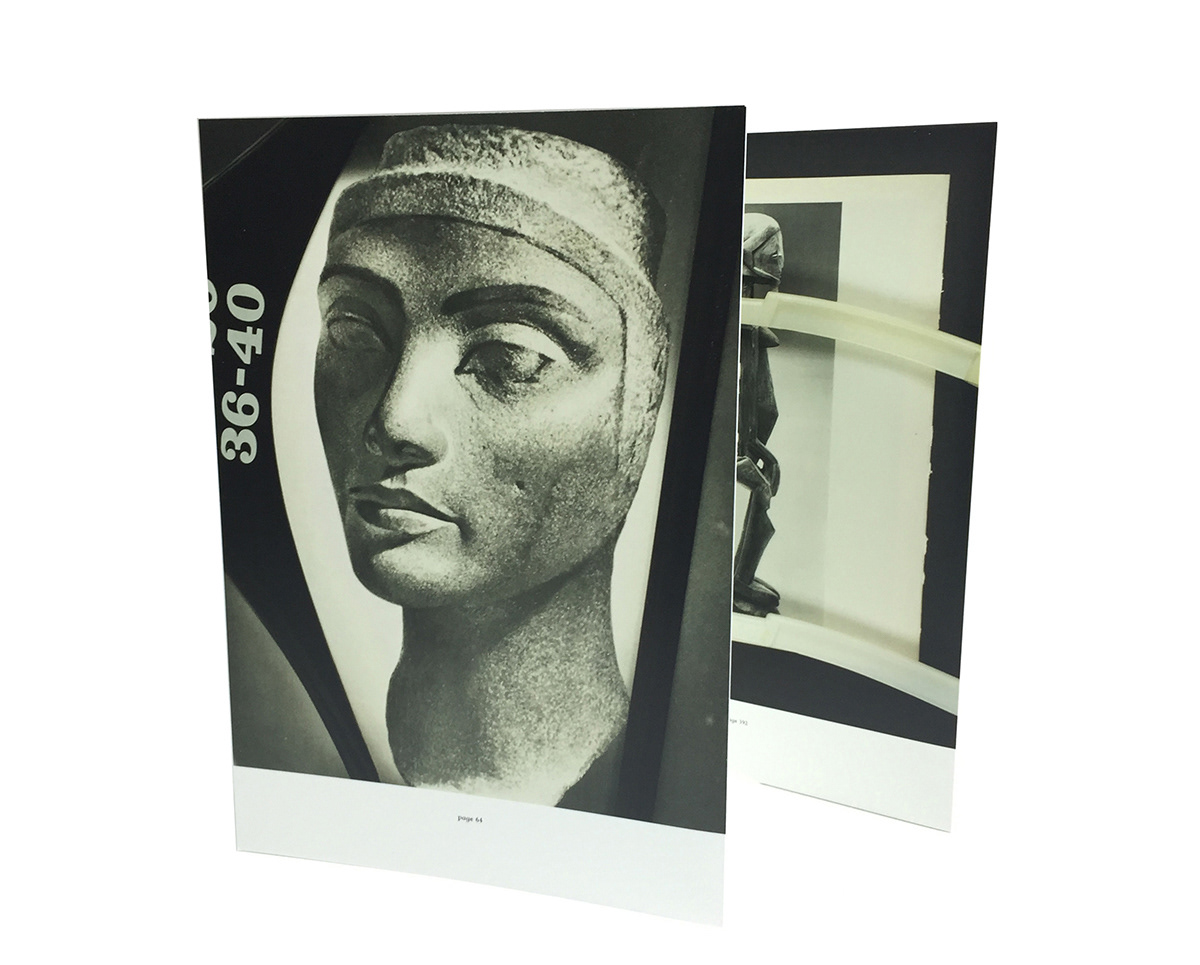

Leporello, From the series Attachments, 2015
24 cm x 34cm (open: 96 cm x 34 cm), 300 g matt paper, 8 pages, color
Design by Julie Peeters
Edition of 350
With an accompanied text by Arnisa Zeqo, Facelifts, 2015